
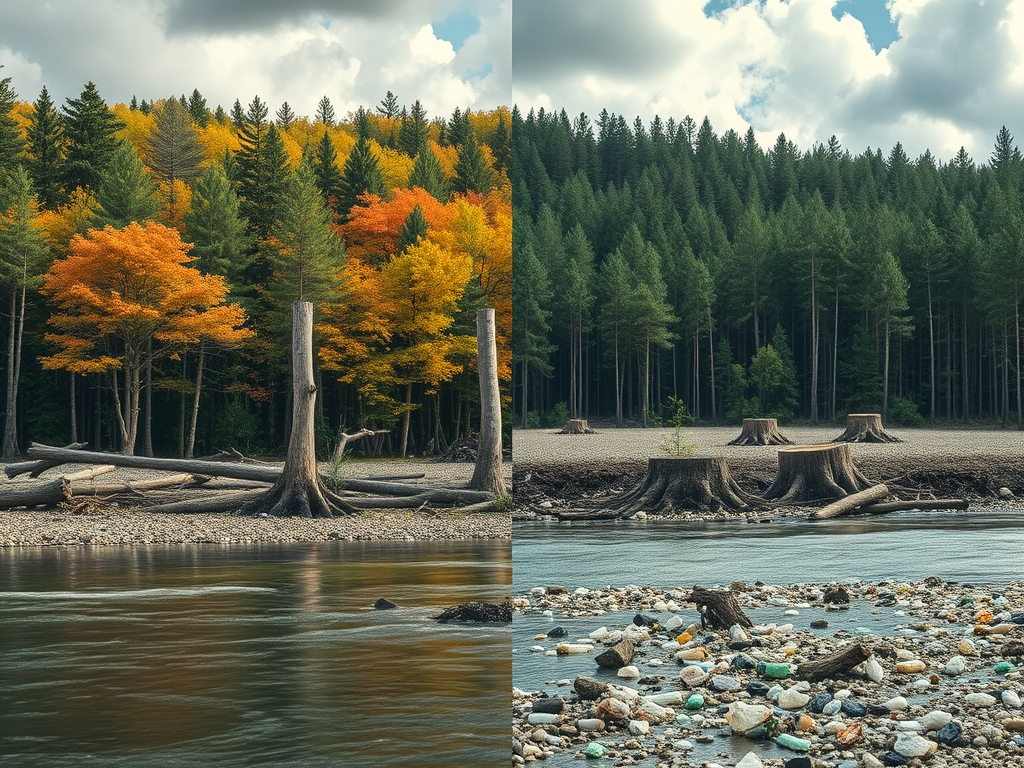
Overconsumption has reached a crisis levels due to rapid industrialisation and a relentless consumer culture.. From the unchecked production of fast fashion to the ever-growing mountains of single-use plastics, our excessive consumption habits are pushing the planet to the brink of environmental disaster.
Overconsumption is no longer a small concern, it has continued to develop into a disaster that demands immediate action. If we fail to reduce our overconsumption now, future generations will inherit a world depleted of its natural resources, polluted and suffering from irreversible climate damage.
In this Article
Deforestation and Biodiversity Loss
The increasing demand for consumer products often leads to deforestation. This is because forests are cleared not only for timber but also to create space for agriculture, mining and infrastructure projects required by growing industries. This deforestation results in:
- Habitat Destruction: Trees and forests are home to a variety of species and their removal directly leads to habitat loss, pushing many species toward extinction.
- Biodiversity Loss: Diverse ecosystems are vital for ecological balance. When species vanish, ecosystems become less resilient and more susceptible to disturbances.
- Reduced Carbon Sequestration: Trees act as natural carbon sinks by absorbing CO₂ from the atmosphere and by removing them the stored CO₂ is released. This lead to the accumulation of greenhouse gases, intensifying climate change.
Resource Depletion
Overconsumption also leads to the rapid depletion of non-renewable sources such as fossil fuels, minerals and fresh water. Furthermore, the extraction processes of these non-renewable sources often leads to:
- Water Stress: Excessive water use in agriculture and industry reduces the availability of fresh water for other purposes, affecting both human populations and natural habitats.
- Soil and Water Contamination: Mining and drilling release pollutants into the environment, which can contaminate nearby water sources and soils, making them unfit for agriculture.
- Exhaustion of Non-renewable Resources: The unsustainable extraction rates mean that resources are quickly diminished, leading to increased scarcity and environmental strain when attempting to access deeper or more remote deposits.
Pollution and Waste Accumulation
The production, distribution and disposal of consumer goods contribute significantly to pollution:
- Air Pollution: Factories emit volatile organic compounds, particulates and other harmful chemicals that leads to air degradation. This not only affects human health but also harms plants and wildlife.
- Water Pollution: Industrial runoff carries pollutants and heavy metals into rivers, lakes and seas, altering aquatic ecosystems and poisoning drinking water supplies. This leads to water degradation.
- Landfill Overflow: The modern throwaway culture leads to overflowing landfills. Many of these products, especially plastics, are non-biodegradable and persist in the environment for hundreds of years. Plastic debris often ends up in the oceans, forming large garbage patches such as the Great Pacific Garbage Patch, that endanger marine life.
Greenhouse Gas Emissions and Climate Change
The entire lifecycle of consumer products, from production to disposal emits large amounts of greenhouse gases:
- Industrial Emissions: Factories and power plants release CO₂, methane and other greenhouse gases that contribute to global warming.
- Transportation: The logistics of moving products around the world, often through fossil-fuel-powered vehicles, add significantly to the carbon footprint.
- Waste Management: Landfills produce methane, a potent greenhouse gas, as organic waste decomposes under anaerobic conditions.
The overall effect of these emissions is a warmer world, which causes more extreme weather events, rising sea levels and shifts in climatic patterns that can affect ecosystems and human cultures.
Ocean Acidification and Marine Ecosystem Damage
Overconsumption has a variety of impacts on the ocean, such as:
- CO₂ Absorption: Ocean acidification occurs as atmospheric CO₂ levels rise, causing the water’s pH to fall. This changed chemistry harms marine animals, particularly corals, molluscs and some plankton species, which rely on calcium carbonate for their shells and skeletons.
- Ecosystem Disruption: Ocean acidification can lead to the collapse of coral reefs, which serve as breeding grounds and shelter for many marine species. The loss of these critical habitats disrupts the entire marine food web.
- Chemical Runoff: Pesticides and fertilisers used in agriculture, driven by consumer demand for low-cost food, runoff into bodies of water, endangering aquatic life and causing phenomena such as algal blooms, which deplete oxygen in the water.
Loss of Ecosystem Services
Ecosystem services are the benefits that natural environments provide to humanity, including clean air, water, soil fertility as well as pollination of crops:
- Degradation of Natural Buffers: Healthy ecosystems mitigate natural disasters by absorbing floods and stabilising the climate. Increasing overconsumption leads to ecosystem destruction that compromises these natural defences.
- Economic Costs: As ecosystems deteriorate, the services they provide such as water filtration and pollination, must be replaced by expensive human-made solutions, increasing the economic burden on societies.
Soil Degradation
Industrial agriculture, which is closely linked to overconsumption of food products, often leads to soil degradation:
- Nutrient Depletion: Continuous farming without proper crop rotation or soil management practices depletes essential nutrients, reducing soil fertility.
- Erosion: The removal of vegetation exposes soil to wind and water erosion, further diminishing its ability to support plant life.
- Chemical Damage: The heavy use of chemical fertilizers and pesticides not only harms soil health but also disrupts the microbial balance essential for nutrient cycling.
Impact on the Water Cycle
Water is one of our most vital natural resources, yet overconsumption disrupts the natural water cycle:
- Excessive Use: The increased demand for water-intensive products, from agriculture to industrial manufacturing puts immense strain on freshwater supplies.
- Pollution: Runoff from industrial and agricultural sites contaminates water bodies, affecting both the quality and availability of fresh water.
- Altered Hydrological Patterns: Large-scale water extraction and landscape alteration e.g., damming rivers for hydroelectric power, can change the natural flow of water, impacting ecosystems that depend on regular water cycles.
Conclusion
Each of these environmental impacts are interconnected. For example, deforestation not only leads to biodiversity loss but also contributes to soil degradation and reduced carbon sequestration, which in turn accelerates climate change. Similarly, the pollution resulting from overconsumption affects water quality, which can disrupt both terrestrial and aquatic ecosystems.
In our next post, we’ll explore the broader economic, social and personal effects of overconsumption. You can read all about it in The Hidden Costs of Overconsumption.

Leave a Reply