
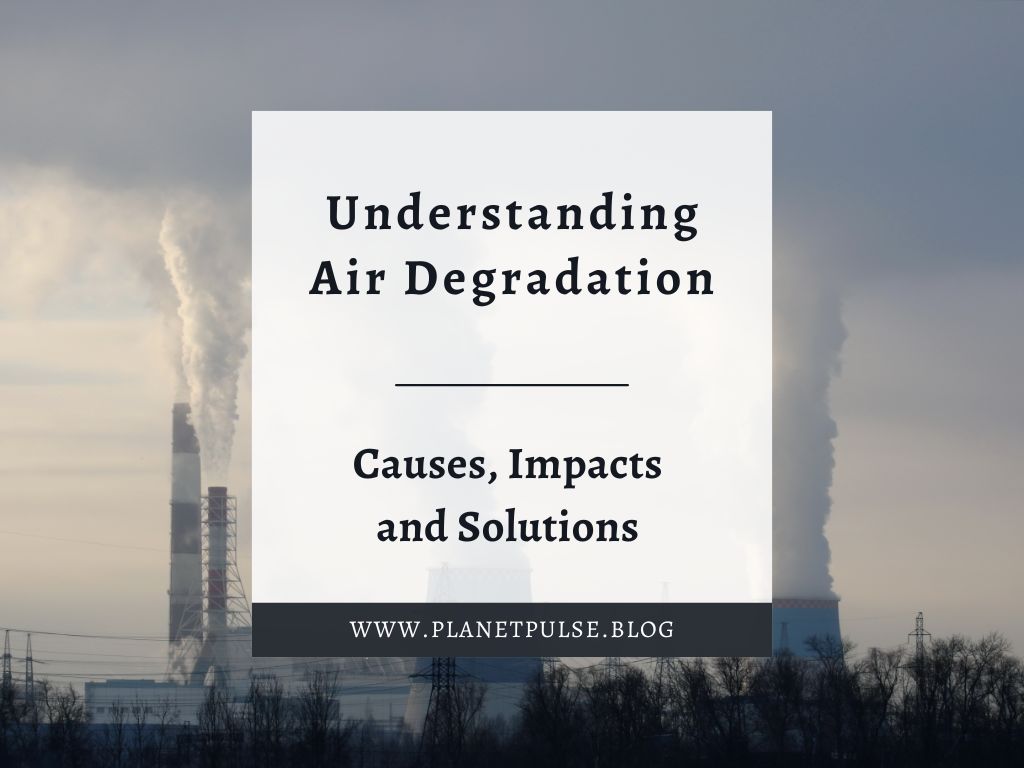
Air quality is one of the most important environmental factors shaping human health, climate stability and ecosystem resilience. However, due to increased urbanisation, industrialisation, and climate factors, air quality is deteriorating globally. Building a cleaner, healthier future requires an understanding of air deterioration and how it impacts our daily lives.
In this Article
What Is Air Degradation?
Air degradation refers to the decline in air quality caused by harmful pollutants, chemical imbalances and atmospheric changes. It covers physical, chemical and biological pollutants that lower the safety and purity of the air we breathe and includes both indoor and outdoor air pollution.
Unlike general “air pollution,” which focuses on specific pollutants, air degradation is a broader concept. It captures the overall deterioration of atmospheric conditions, including:
- Increased concentrations of toxic gases
- Excess particulate matter (PM₂.₅)
- Reduced visibility and atmospheric haze
- Chemical reactions that form secondary pollutants
- Climate‑driven changes that worsen air quality
This wider lens helps us understand not just what pollutes the air, but how the entire atmospheric system is being altered.
The Natural Composition of Clean Air
Knowing what clean air looks like is helpful in understanding how air degrades. The atmosphere is primarily a mixture of Nitrogen (N₂) being 78% and oxygen (O₂) being 21%, with 0.9% of argon and small amounts of carbon dioxide (CO₂), neon, helium, methane (CH₄) and ozone and other trace gases.
This delicate equilibrium is maintained by natural processes such as photosynthesis and ocean-atmosphere interaction. Even little variations in these ratios have the potential to upset climate systems, affect how pollutants are formed and have an impact on ecosystems and human health. The atmosphere can no longer efficiently regulate itself when pollutants build up or natural cycles are upset.
Major Causes of Air Degradation
The main cause of the degrading air quality is human activities. Particularly in densely populated cities, transport systems emit carbon monoxide, nitrogen oxides and tiny particles that remain in the atmosphere. Heavy metals, sulphur dioxide and volatile organic compounds are released by industrial facilities and travel far from their source. Methane from cattle and ammonia from fertilisers are contributed by agriculture, while burning garbage releases a variety of harmful compounds into the atmosphere.
Indoor spaces are also quite important. Pollutants released by routine tasks like cooking, heating and cleaning can build up in areas with inadequate ventilation. The air inside many homes is more contaminated than the air outdoors.
Natural events also play an important role. Air quality can be deteriorated by wildfires, dust storms, volcanic eruptions and seasonal pollen, all of which are becoming more often and strong due to climate change. Static air episodes grow more frequent as temperatures rise, trapping pollutants close to the surface and worsening smog.
Key Pollutants Driving Air Degradation
Understanding the main pollutants causing air degradation, helps identify risks and solutions. For instance:
- PM₂.₅ and PM₁₀: Tiny particles that penetrate deep into the lungs and bloodstream. It also contributes to formation of haze and acid rain, which changes the pH balance of waterways and damages foliage and buildings. Also causes irritation of breathing passages, aggravation of asthma as well as irregular heartbeat.
- Nitrogen oxides (NOₓ): From vehicles and power plants causes damage to foliage; contributes to smog formation. It also causes inflammation and irritation of breathing passages in humans.
- Sulphur dioxide (SO₂): Released from coal and industrial processes are major cause of haze, which contributes to acid rain formation. It also causes breathing difficulties, particularly for people with asthma and heart disease.
- Ground‑level ozone (O₃): Released formed when NOₓ and VOCs react in sunlight. It interferes with the ability of certain plants to respire, leading to increased risk of diseases and harsh weather. It also leads to reduced lung function as it causes irritation and inflammation of breathing passages.
- Volatile organic compounds (VOCs): From solvents, fuels and household products.
- Greenhouse gases (CO₂, CH₄): Indirectly worsen air quality by driving climate change.
These pollutants interact chemically, often forming secondary pollutants that are more harmful than the original emissions.
How Air Degradation Affects Human Health
Air degradation has significant negative effects on health. Asthma, lung infections, chronic obstructive pulmonary disease and delayed lung development in children are all made more likely by exposure to contaminated air.
Additionally, it has an impact on the cardiovascular system, increasing the risk of hypertension, heart attacks and strokes. Children, the elderly, pregnant women and those with pre-existing diseases are among the most vulnerable categories. In addition to the human cost, poor air quality costs nations billions of dollars annually by burdening healthcare systems and lowering economic output.
Environmental and Climate Impacts
Air degradation also have environmental impacts. While acid rain changes the chemistry of the soil and damages forests, high ozone levels lower crop yields and harm plants. Polluted air adds to atmospheric haze that can last for weeks and impairs visibility, which has an impact on travel and tourism.
Air degradation and climate change are mutually reinforcing. For example, wildfires release enormous amounts of carbon and particulate matter into the atmosphere, rising temperatures accelerate the development of ozone. The problem becomes harder to handle as a result of these feedback loops.
Monitoring and Measuring Air Quality
Air quality is tracked using a combination of tools:
- AQI (Air Quality Index): A colour‑coded scale from “Good” to “Hazardous”
- Ground‑based sensors: Measure PM, NO₂, O₃ and more
- Satellite monitoring: Tracks global pollution patterns
- Citizen science sensors: Low‑cost devices for community monitoring
These systems help governments and communities respond to pollution events in real time.
Solutions and Mitigation Strategies
It takes a combination of technology, policy and behavioural change to address air degradation. By enforcing pollution regulations, developing sustainable transport networks and funding renewable energy, governments play a critical role.
Additionally, businesses can lessen their dependency on fossil fuels by implementing greener technologies. People can help by choosing low-VOC goods, cutting back on their use of cars, increasing house ventilation and supporting laws that prioritise clean air. Urban tree planting, wetland restoration and the expansion of green infrastructure are examples of nature-based solutions that help cool urban areas and filter pollutants.
Conclusion
Air degradation is a challenging but manageable problem. We can advocate for cleaner cities, healthier communities and a more stable climate by understanding its causes, effects and solutions. Every action, from changing laws to making personal decisions can contributes to a future where clean air is a universal right..






Leave a Reply