
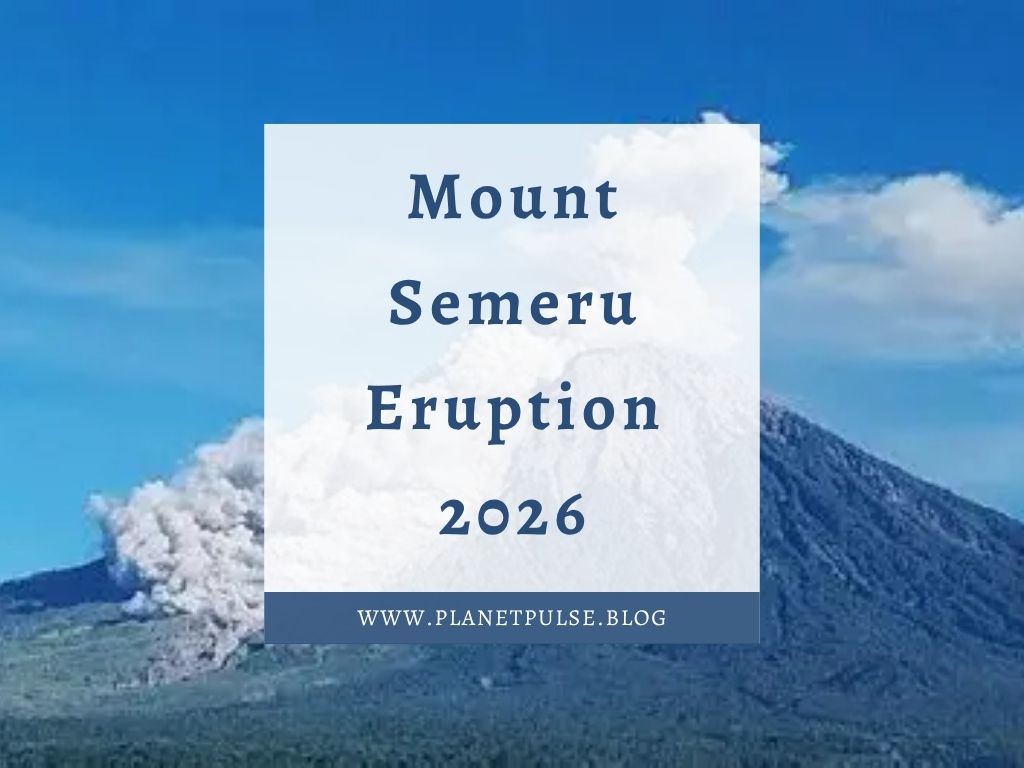
Mount Semeru, one of Indonesia’s most active volcanoes continued to erupt frequently in 2026, sending ash plumes well above the peak and leading officials to impose safety limits near the mountain. Mount Semeru, located in East Java, revealed once more why it is recognised as one of Indonesia’s most active volcanoes, with volcanic activity occurring all year.
This article explores the Mount Semeru eruption in 2026, its effects on local populations, the risks involved with volcanic activity and why this volcano remains a major concern for scientists and emergency management experts.
In this Article
- What Is Mount Semeru?
- Mount Semeru Eruption 2026
- Impacts on Nearby Communities
- Pyroclastic Flows & Other Volcanic Hazards
- Emergency Response & Safety Measures
- Environmental Effects of the Eruption
- Why Does Mount Semeru Erupt So Frequently?
- Lessons from the 2026 Mount Semeru Eruption
- Frequently Asked Questions (FAQs)
- Conclusion
What Is Mount Semeru?
Mount Semeru, also known as Mahameru, is located in East Java, Indonesia. It is Java’s highest mountain and is part of a volcanic complex south of the Tengger Caldera. The volcano has a lengthy history of eruptions and is considered one among Indonesia’s most active volcanoes.
Its geological location puts it in the Pacific Ring of Fire, a huge region where tectonic plate borders cause frequent earthquakes and volcanic eruptions. Semeru has a centuries-long history of eruptive activity, with frequent ash emissions, explosive eruptions, lava flows and pyroclastic flows.
Because millions of people live in volcanic areas throughout Indonesia, continual monitoring of volcanoes like Semeru is critical for protecting communities and mitigating disaster risks.
Mount Semeru Eruption 2026
Mount Semeru’s volcanic activity continued throughout 2026. Indonesia’s volcano monitoring agency reported daily eruptive occurrences detected by seismic monitoring networks. Ash plumes frequently soared hundreds of meters above the summit crater and floated in different directions depending on the weather.
Throughout the year, white and grey ash clouds were seen rising between 300 and 1,300 meters above the summit. These eruptions showed the volcano’s ongoing activity rather than a single isolated occurrence. Monitoring stations continued to record regular explosions and ash releases throughout the year.
In June 2026, one eruption was accompanied by an explosion and a booming sound near the observation site, demonstrating the volcano’s dynamic nature. Authorities maintained close surveillance as activity levels remained elevated
The continued eruption activity demonstrats that Semeru remains an active and evolving volcanic system capable of producing hazardous conditions with little warning.
Impacts on Nearby Communities
Even moderate-sized volcanic explosions can have a significant impact on the lives of those who live nearby. Ashfall remains one of the most common risks linked with Semeru’s operations.
Volcanic ash can disrupt transportation, limit visibility and make it harder for locals to carry out daily activities. While, fine ash particles can fall on homes, roadways, crops and water sources, posing issues for residents around the volcano.
When ash covers agriculture, it also can cause several problems, even though volcanic ash can add nutrients to soil over time, fresh deposits can temporarily harm crops and make farming more difficult.
Residents must be vigilant in the face of continued volcanic activity and follow official warnings and evacuation orders. Communities in East Java have grown accustomed to living with volcanic hazards, but regular eruptions still require careful preparedness and monitoring.
Pyroclastic Flows & Other Volcanic Hazards
One of the most dangerous volcanic hazards associated with Mount Semeru is the pyroclastic flow. These fast-moving currents of hot gas, volcanic ash and rock fragments can travel down the slopes of a volcano at high speed.
During July 2026, monitoring data recorded pyroclastic flows descending the volcano’s southeastern flank. One eruption generated a pyroclastic flow that travelled approximately 3.5 kilometres from the summit area.
In addition to pyroclastic flows, authorities warned of several other hazards, including:
- Falling volcanic material near the summit.
- Ash clouds affecting nearby areas.
- Volcanic gases released during eruptions.
- Lahars, which are volcanic mudflows that can occur when volcanic deposits mix with water.
- Hazards along river channels that may carry volcanic debris downslope.
These hazards are the main reason why exclusion zones are maintained around active volcanoes during periods of unrest.
Emergency Response & Safety Measures
Indonesian authorities maintained an Alert Level III status for Mount Semeru during multiple eruption reports in 2026. This alert level reflected the ongoing volcanic activity and the need for continued public caution.
Officials established safety zones around the volcano and advised people to avoid areas near the summit crater. Restrictions also extended along drainage systems where pyroclastic flows and lahars could travel significant distances from the volcano. Public guidance also warned residents to stay clear of high-risk areas and to follow instructions from local authorities.
Monitoring efforts relied on seismic networks, observation posts and scientific analysis to track changes in volcanic behaviour. This information helps authorities make informed decisions regarding public safety and risk management.
The response demonstrates the importance of modern volcano monitoring systems in reducing the impacts of natural disasters.
Environmental Effects of the Eruption
Volcanic eruptions can significantly alter landscapes and ecosystems. Mount Semeru’s ongoing activity contributes to the continual reshaping of the surrounding environment.
For instance, ash deposits can affect vegetation and temporarily reduce air quality in nearby regions. Rivers and drainage channels may become pathways for volcanic sediment, changing local landscapes over time.
At the same time, volcanic activity plays an important role in Earth’s natural processes. Volcanoes create new landforms, enrich soils with minerals and help scientists better understand geological activity occurring beneath the Earth’s surface.
Why Does Mount Semeru Erupt So Frequently?
Mount Semeru’s frequent eruptions are linked to Indonesia’s tectonic setting. The country sits along active plate boundaries within the Pacific Ring of Fire, one of the most volcanically active regions on Earth.
The movement of tectonic plates causes magma to form beneath volcanoes such as Semeru. As pressure builds underground, magma and volcanic gases seek pathways to the surface. Therefore, when pressure becomes strong enough, eruptions occur.
Because these geological processes operate continuously, volcanoes like Semeru can remain active for long periods. Semeru has been in a state of near-continuous eruption since 1967, which is a period of over 58 years. This makes it one of the longest-active volcanoes on Earth.
Lessons from the 2026 Mount Semeru Eruption
The Mount Semeru eruption in 2026 highlights several important lessons about living alongside active volcanoes. First, continuous monitoring remains essential. Data collected from seismic instruments and observation stations provides valuable information that can help protect communities.
Second, effective early warning systems play a critical role in disaster preparedness. The maintenance of exclusion zones and ongoing public safety advice reflects the importance of proactive risk management.
Finally, community awareness and preparedness remain key factors in reducing the impacts of natural hazards. Residents living near active volcanoes must remain informed and prepared to respond to changing conditions.
Frequently Asked Questions (FAQs)
How active was Mount Semeru in 2026?
Mount Semeru remained active throughout 2026, with daily eruptive events recorded during multiple reporting periods and regular ash emissions observed above the summit.
Where is Mount Semeru located?
Mount Semeru is located in East Java, Indonesia and is the highest volcano on the island of Java.
What are pyroclastic flows?
Pyroclastic flows are rapidly moving mixtures of hot gas, ash and volcanic debris that travel down the slopes of a volcano. They are among the most dangerous volcanic hazards.
Why is Mount Semeru monitored so closely?
Mount Semeru is one of Indonesia’s most active volcanoes and poses risks to nearby communities, making continuous monitoring essential for public safety.
Conclusion
The Mount Semeru eruption of 2026 shows the immense power of Earth’s natural systems. Throughout the year, the volcano continued to generate frequent eruptive activity, producing ash plumes, occasional pyroclastic flows and ongoing hazards that required close monitoring by authorities.
While volcanic activity remains a challenge for nearby communities, advancements in monitoring technology, early warning systems and disaster preparedness continue to improve public safety.






Leave a Reply