
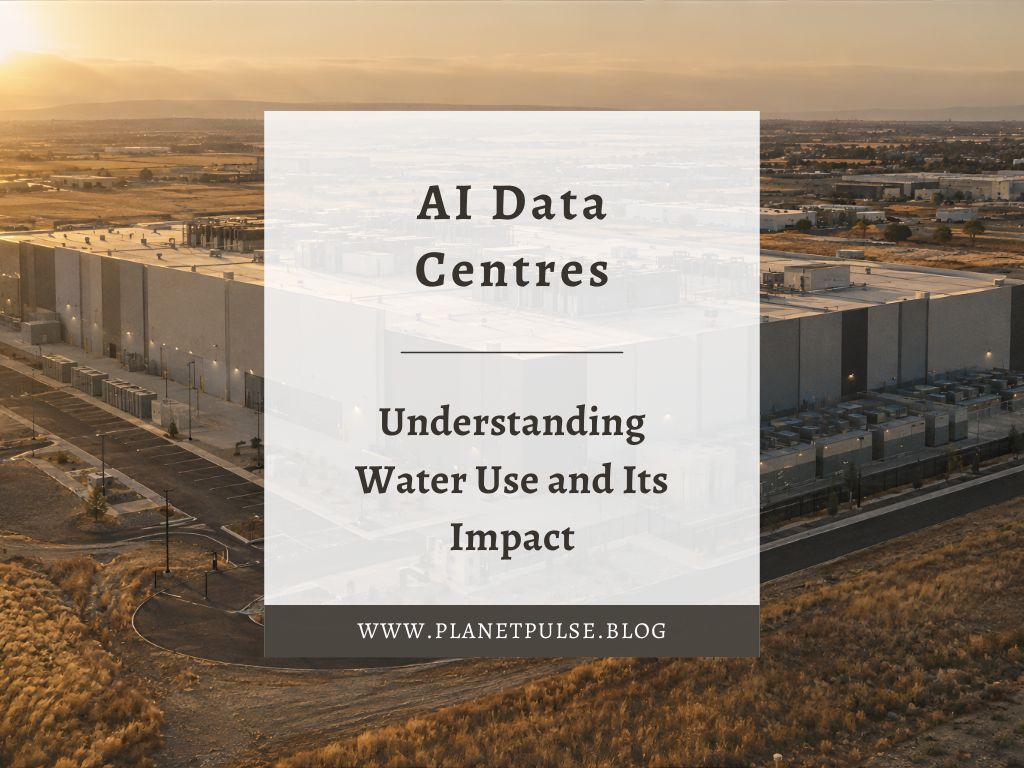
Artificial intelligence (AI) is changing the way we work, learn, shop and communicate. From AI chatbots and picture generators to recommendation algorithms and business automation tools, AI is becoming an increasingly important aspect of daily life. Behind these technologies, however, is a large network of data centres that consume massive amounts of electricity and water.
While most debates about AI centre on its energy requirements, water consumption is an equally major environmental concern. Many people are startled to realise that each AI query, model training session and cloud-based operation is dependent on computer systems that must be constantly cooled. As without proper cooling, data centres would overheat, resulting in equipment failures and service outages.
As the use AI continue to increase, it is becoming important to understand why AI data centres use so much water and why it is important to for assess its environmental footprint as well as explore more sustainable ways to support future growth.
In this Article
What Are AI Data Centres?
Data centres are specialist facilities that host servers, networking hardware, storage systems and other computing infrastructure. They store and analyse data for websites, cloud services, streaming platforms and digital apps.
AI data centres differ from regular facilities in that they are designed to handle high-performance computing workloads. Training massive AI models requires the simultaneous operation of thousands of powerful processors over weeks or months. These computers conduct sophisticated mathematical calculations billions of times per second.
Modern AI systems rely largely on graphics processing units (GPUs) and other specialist hardware. While extremely strong, these components generate a lot of heat, which create significant cooling issues for operators.
As AI models become larger and more sophisticated, the infrastructure supporting them continues to expand, increasing both energy consumption and water demand.
Why AI Systems Generate So Much Heat
Every electronic item generates heat while in operation, but AI hardware works on a far bigger scale. This is because training advanced AI models require continuous processing over hundreds or thousands of servers.
These servers do intensive computations around the clock, frequently operating at near-maximum capacity. This means that the more complicated the AI model, the higher the computational burden and the resulting heat generation.
Unlike traditional office computers, AI processors are placed into dense server racks, allowing thousands of chips to function in a relatively compact space. Without appropriate cooling systems, temperatures would quickly rise to levels that could damage equipment and impair performance.
Keeping these facilities cold is therefore required for modern AI systems to function properly.
The Role of Water in Cooling
Cooling is one of the most significant operational requirements of any data centre. Historically, many establishments relied heavily on air conditioning systems. However, AI workloads generate heat levels that are growing beyond the capacity of typical air cooling alone.
Water is extremely efficient in absorbing and transferring heat. Because of this, many big data centres employ water-based cooling systems to remove heat from servers and keep temperatures steady.
Water-based systems may frequently chill equipment more efficiently and use less electricity than air cooling. The trade-off is significantly increased water use. This method is typically used by operators who want to increase computer performance while lowering energy expenses.
Where the Water Goes
- Evaporative Cooling Systems: Where warm water absorbs heat from the servers and is circulated to cooling towers. Some of the water evaporates into the atmosphere, carrying heat away and lowering temperatures. Although effective, this process requires a constant supply of replacement water because evaporated water cannot be recovered. During hot weather, evaporation rates can increase significantly, driving higher water usage.
- Direct Liquid Cooling: Instead of cooling the surrounding air, liquids are circulated close to processors and electronic components. This approach removes heat more efficiently and can support much denser computing environments. Whilst, direct liquid cooling often improves efficiency, it still requires significant quantities of water or specialised cooling fluids within the system.
- Indirect Water Consumption: Electricity generation frequently requires large amounts of water, especially in thermal power plants that use water for cooling. Since AI data centres consume vast amounts of electricity, they are indirectly responsible for additional water usage throughout the energy supply chain. This means the true water footprint of AI is often much larger than the amount directly used within a data centre itself.
Industry Efforts to Reduce Water Use
Technology companies are actively exploring solutions to reduce water consumption while supporting growing AI demand.
- Improved Cooling Technologies: New cooling systems are being developed to use less water while maintaining high performance. Some designs combine air and liquid cooling to achieve a better balance between efficiency and conservation.
- Closed-Loop Systems: Recycle water repeatedly instead of allowing it to evaporate. These systems can significantly reduce overall water requirements.
- Recycled and Non-Potable Water: Many operators are turning to recycled wastewater or non-drinking water sources for cooling. This reduces pressure on local drinking water supplies and can improve sustainability outcomes.
- Smarter Operations: AI itself is increasingly being used to optimise data centre operations. Intelligent monitoring systems can adjust cooling levels in real time, improving efficiency and reducing unnecessary resource consumption.
The Future of AI Infrastructure
The rapid growth of AI shows no signs of slowing down as businesses, governments and consumers continue to adopt AI technologies at an alarming rate.
To support this expansion sustainably, future data centres will likely focus improving processor efficiency, reducing cooling requirements and increasing water recycling.
Manufacturers are developing more energy-efficient chips that generate less heat, while researchers continue to explore innovative cooling techniques that minimise water consumption.
Regulators and investors are also placing greater emphasis on environmental reporting, encouraging companies to become more transparent about their water usage and sustainability efforts.
Some organisations have even committed to becoming “water positive”, meaning they aim to replenish more water than they consume through conservation and restoration projects.
Conclusion
Water has emerged as a hidden environmental consequence of AI data centres. The powerful processors that power modern AI systems generate massive amounts of heat, making cooling an essential operating necessity. Because water is so good at eliminating heat, many AI data centres rely heavily on water-based cooling systems.
As AI adoption grows, so will scrutiny of the industry’s environmental impact. The challenge for technology businesses will be to discover ways to accommodate rising computing demands while conserving valuable water resources.






Leave a Reply