
Mining is essential for our society as nearly every product we use, from laptops and phones to renewable energy technology and building materials, starts off as a mineral that is taken from the Earth. However, as one of the world’s most resource-intensive businesses, mining has a significant environmental impact that affects people, our water systems, ecosystems and climate processes.
This article explores the effects of mining on land, water, air, soil, biodiversity and human health, along with emerging sustainable alternatives.
In this Article
What Is Mining?
Mining is the process of removing precious minerals, metals and other geological materials from the Earth. These resources, which include copper, iron ore, gold, lithium, coal as well as other rare earth elements, are necessary for building, manufacturing, energy generation and modern technology.
Mining involves 5 main stages, such as:
| Stage | Purpose | Key Activities |
|---|---|---|
| Exploration | Identify mineral deposits | Mapping, sampling, drilling |
| Planning & Feasibility | Assess viability | Engineering, impact studies, cost modelling |
| Construction | Build mine infrastructure | Roads, shafts, processing facilities |
| Production | Extract and process minerals | Surface/underground mining, refining |
| Rehabilitation | Restore environment | Land reshaping, replanting, monitoring |
Types of Mining and Why They Matter
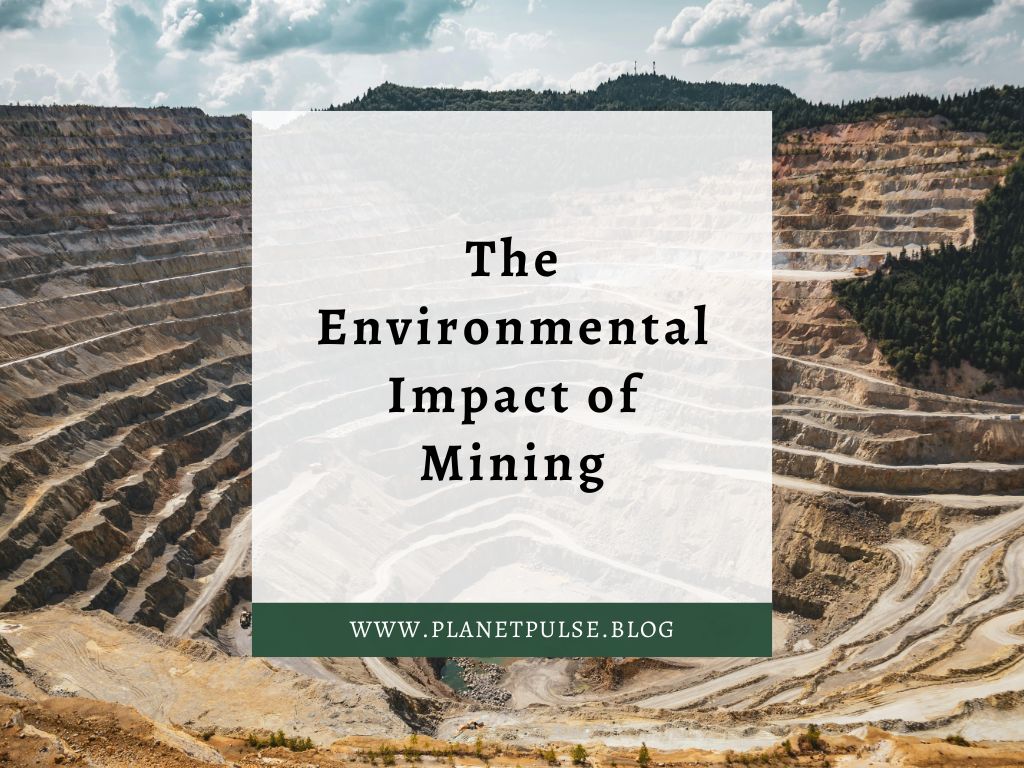
Mining involves several extraction techniques, each with a unique environmental impact. One of the most visually damaging type of mining is surface mining, which includes strip mining, open-pit mining and mountaintop removal. During surface mining large tracts of soil and plants are removed, leaving behind garbage piles and deep trenches.
Another type of mining is underground mining, which causes less disturbance to surface land. However, it can result in long-term structural instability, groundwater contamination, and subsidence.
Moreover, placer mining, which is frequently done for gold, damages aquatic habitats by upsetting riverbeds and increasing sedimentation. Apart from this, in-situ leaching injects chemicals into the Earth to dissolve minerals. This type of mining raises concerns regarding groundwater contamination.
Understanding these methods is essential because the environmental impact varies dramatically depending on the technique used.
Land Degradation and Habitat Loss
One of the main causes of land degradation in the world is mining. The removal of vegetation and topsoil destroys habitats, fragments ecosystems and disrupts wildlife migration routes. Moreover, open‑pit mines can permanently alter landscapes, leaving behind craters and tailings dams that may remain hazardous for decades.
Illegal gold mining has destroyed thousands of hectares of forest in the Amazon rainforest, endangering Indigenous territory and biodiversity hotspots. Mountaintop removal has levelled entire mountain ranges in Appalachia, burying streams and changing hydrological systems.
Water Pollution and Scarcity
Water is one of the most severely affected resources in mining regions. The industry consumes a significant amount of water for mineral processing, dust suppression, and slurry transport, often in areas already facing water scarcity.
Acid Mine Drainage (AMD) is a damaging consequence of mining. This is because sulphuric acid is produced when sulphur-rich rocks come into contact with water and air. Heavy metals like arsenic, lead and mercury are dissolved by this acidic discharge, contaminating rivers, soils and groundwater.
In addition to AMD, mining is a contributing factor to heavy metal contamination, in which hazardous substances build up in streams, endanger aquatic life and move up the food chain. Water quality is further deteriorated by sedimentation as surface mining speeds up erosion, dumping a lot of dirt and debris into rivers and lakes, lowering water clarity and disrupting ecosystems.
However, in some regions, overuse is more of a problem than contamination. For instance, the massive amounts of groundwater used for lithium extraction in Chile’s Atacama Desert exacerbate water scarcity for wildlife, Indigenous communities and delicate desert ecosystems.
Air Pollution and Greenhouse Gas Emissions
Mining contributes significantly to air pollution. Blasting, drilling, crushing, and transporting ore generate dust and particle matter, which can lead to respiratory problems. Diesel-powered machinery releases nitrogen oxide (NOₓ), sulphur oxide (SO₂) and carbon dioxide (CO₂), leading to air pollution and climate change.
The processes of smelting and refining raw ore into useful metals are also energy and carbon-intensive, which can lead to increasing greenhouse gas emissions.
Soil Contamination
Mining generates heavy metals and chemical wastes that accumulate in soils. Contaminated soils negatively impact agricultural output, harm soil organisms and pose long-term health hazards. Moreover, remediation is complex and costly, making it difficult to address in developing countries.
Waste Generation and Tailings Risks
Mining generates more waste than any other business. Tailings, the slurry of crushed rock, water and chemicals left behind from mineral processing, are kept in enormous dams that can fail catastrophically.
The 2019 Brumadinho disaster in Brazil happened after Vale’s tailings dam fell, releasing nearly 11.7 million cubic meters of toxic mining waste. The fast-moving tsunami of garbage engulfed workers’ facilities and adjacent villages, killing 270 people and generating one of the bloodiest mining disasters ever.
The sludge flowed over 120 km through the Paraopeba River, poisoning water supplies, damaging farms and causing long-term ecological devastation that local populations still face today. The tragedy also revealed serious flaws in dam safety supervision, prompting international examination of tailings management methods.
Social and Health Impacts
Environmental impacts of mining directly affect human health and livelihoods, as:
- Dust exposure increases respiratory diseases.
- Contaminated water leads to gastrointestinal illnesses and heavy‑metal poisoning.
- Loss of land and water resources undermines agriculture and fishing.
- Indigenous communities often face displacement and cultural loss.
- Environmental injustice is common in mining regions.
Sustainable Mining Practices and Solutions
Sustainability in mining is possible, but it requires innovation, strong regulation and genuine industry accountability. The key approaches include:
- Land rehabilitation: Involves repairing mined landscapes by re-vegetation, soil restoration and long-term monitoring.
- Water Recycling and Treatment: Entails treating and recycling process water to reduce freshwater consumption while also preventing contaminated runoff from entering rivers and groundwater sources.
- Cleaner Technologies: Involves using low-emission gear, renewable energy sources and efficient ore processing technologies to minimise environmental impact.
- Stricter environmental regulations: Including strong standards for waste management, emissions, tailings storage and community protection.
- Circular Economy Approaches: Increasing metal recycling, reprocessing mine waste and encouraging urban mining to lessen demand on natural resources.
Conclusion
Mining is essential, but its environmental impacts are profound. From land degradation and water pollution to climate change and community health threats, the industry has a long-term impact on ecosystems and societies. However, with innovation, regulation and a shift toward circular resource usage, mining can become more responsible and less damaging.





Leave a Reply