
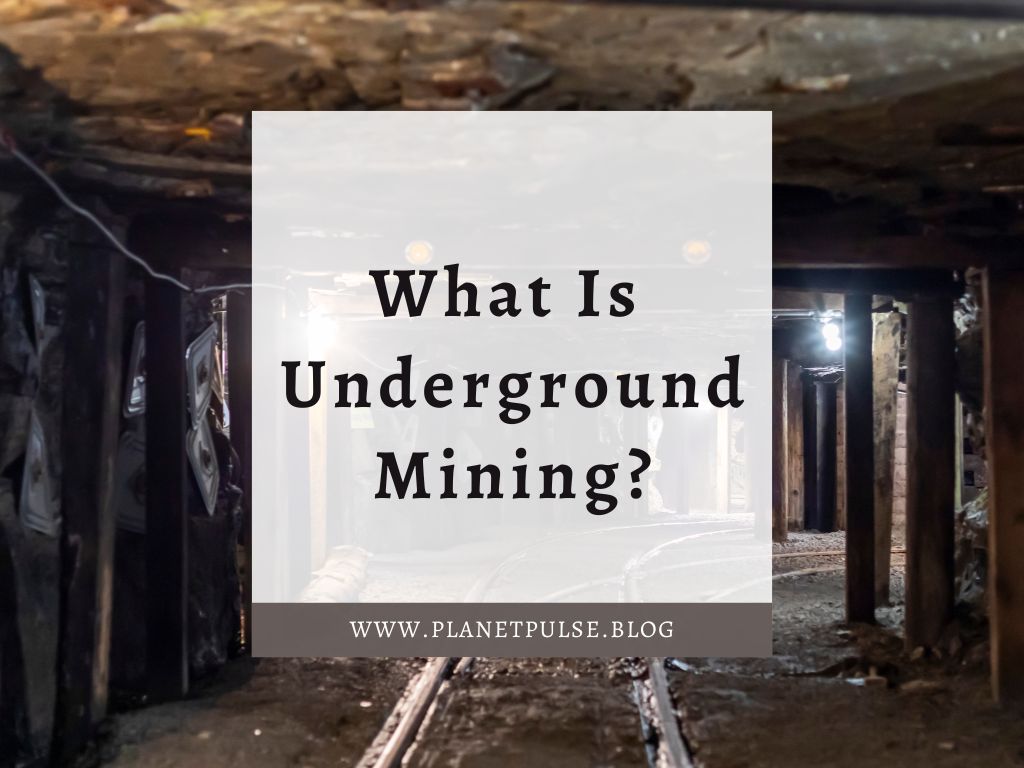
Underground mining is the oldest and most complex methods for extracting minerals from the Earth. While surface mining receives more attention due to its evident environmental impact, underground mining silently fuels much of the modern world, from copper in electronics to potash used in global food supply.
As the globe moves toward cleaner energy sources, the demand for minerals such as lithium, nickel, copper and rare earth elements continues to grow. This article provides an understanding of how underground mining works, why it matters, the different types of underground mining as well as it’s environmental consequences.
In this Article
- What Is Underground Mining and Why It Matters
- Why Choose Underground Mining Over Other Options?
- How Underground Mining Works
- Types of Underground Mining Methods
- Equipment Used in Underground Mining
- Environmental Impacts of Underground Mining
- Safety Risks and How They Are Managed
- Benefits and Challenges of Underground Mining
- The Future of Underground Mining
- Conclusion
What Is Underground Mining and Why It Matters
Underground mining is the extraction of minerals, metals and other geological resources from deep below the Earth’s surface. It involves tunnels, shafts and chambers to reach ore deposits hundreds or thousands of meters below ground, as opposed to surface mining methods such as open-pit or strip mining that removes enormous sections of soil and rock from the Earth’s surface.
Underground mining matters because:
- It provides crucial materials for modern life as everything from smartphones to solar panels are made from metals sourced from underground mines.
- It lowers surface disturbance as underground mining leaves a lower apparent footprint than open-pit mining.
- It provides access to valuable minerals located deep down. This is because many of the world’s greatest mineral deposits are too deep to extract from the surface.
- It presents significant environmental and ethical issues, from groundwater implications to worker safety, underground mining pushes us to think about how to combine resource demands with sustainability.
Why Choose Underground Mining Over Other Options?
Not every mineral deposit can be accessed from the surface. Underground mining becomes the favoured approach when ore is deep underground or removing the surrounding rock would be too expensive or environmentally destructive.
- Deposit depth: Many gold, copper and nickel deposits are located deep underground.
- Higher ore grades: Deep deposits often have higher mineral concentrations.
- Reduced surface impact: Underground mines cause less disturbance to land and vegetation.
- Urban or sensitive location: When mining occurs beneath towns, forests or protected landscapes, underground methods minimise disruption.
As the global demand for minerals continues to grow, underground mining is becoming increasingly important for supplying the materials needed for renewable energy technologies, electric vehicles and digital infrastructure.
How Underground Mining Works
Underground mining is a highly engineered process involving geology, physics, ventilation science and advanced machinery. Here’s how it typically works:
- Exploration and Geological Surveys: Geologists use drilling, seismic imaging and 3D modelling to map mineral deposits and assess whether mining is viable.
- Mine Design and Planning: Engineers plan the layout of tunnels, shafts, ventilation systems and supporting structures. Every decision is guided by safety, cost and the rate of ore recovery.
- Excavation and Ore Removal: Miners use drilling, blasting, cutting machines or continuous miners to break rock and access ore.
- Ventilation and Safety Systems: Fresh air is pumped underground to eliminate dust, gases and heat. Apart from this, sensors measure air quality, seismic activity and structure stability.
- Transport to the Surface: Ore is moved using conveyor belts, rail systems or underground haul trucks before being processed at the surface.
This process is energy‑intensive and technologically demanding, but modern automation and digital monitoring are making underground mines safer and more efficient.
Types of Underground Mining Methods
Different geological conditions require different mining techniques. Here are the most common methods of underground mining used today:


These methods vary in cost, environmental impact, and safety considerations, making method selection a critical part of mine planning.
Equipment Used in Underground Mining
Modern underground mines use advanced machinery intended for confined places and hard conditions, such as:
- Drills and blasting instruments used to break rock.
- Loaders (LHDs) to transport ore.
- Underground haul trucks for transportation.
- Roof bolters to stabilise tunnels.
- Ventilation fans to preserve the air quality.
- Remote-controlled and self-driving vehicles for hazardous environments.
Automation is increasingly transforming underground mining, lowering human exposure to hazardous circumstances while increasing efficiency.
Environmental Impacts of Underground Mining
Although underground mining has a smaller surface footprint than surface mining methods, it still carries significant environmental risks. For instance:
- Land subsidence: Occurs when underground spaces collapse or settle, causing the surface above to sink and damage buildings, roads and ecosystems.
- Groundwater Impacts: Mining can disrupt groundwater flow, contaminate water or require regular pumping to keep tunnels dry.
- Energy Consumption and Emissions: Ventilation systems, machinery and ore transport all require significant quantities of energy.
- Waste Rock and Tailings: Even underground miners produce waste, which must be safely kept on the surface.
- Habitat Disruption: Although underground mining is less obvious, it can still have an impact on soil stability, hydrology and underground ecosystems.
Safety Risks and How They Are Managed
Underground mining is inherently dangerous due to limited areas, geological forces, and the presence of gases. The key dangers include:
- Rocks falls and collapses.
- Build-up of dangerous gases such as methane (CH4), carbon monoxide (CO), and radon (Rn) accumulate in poorly ventilated areas and prolonged exposure can lead to respiratory diseases and fatalities.
- Dust inhalation and air quality concerns.
- Methane build-up and coal dust explosions are major causes of underground fires.
- Spontaneous combustion of materials in high-temperature zones.
- Equipment accidents.
However, modern mines use real‑time monitoring sensors, automated machinery, emergency refuge chambers and have strict ventilation standards as well as continuous training and safety drills. This reduces the risks associated with underground mining. However, safety remains one of the most important challenges in the industry.
Benefits and Challenges of Underground Mining
Underground mining offers several advantages and disadvantages:
Advantages:
Smaller surface footprint compared to open‑pit mining
Access to deep, high‑grade deposits
Reduced visual and ecological disturbance
Potential for more controlled waste management
High employment and technological innovation
Disadvantages:
High operational costs due to ventilation, safety, and specialised equipment
Worker safety concerns
Stricter environmental regulations
Deeper deposits requiring advanced technology
Transition to automation and digital mining
Social licence to operate in local communities
The Future of Underground Mining
The next generation of underground mines will look very different from those of the past. Key trends include:
- Robotics and autonomous vehicles reducing human exposure to hazards
- AI‑driven mine planning for safer, more efficient extraction
- Low‑carbon mining technologies such as electric haul trucks
- Real‑time environmental monitoring
- Circular economy approaches reducing the need for new extraction
As the world moves toward renewable energy and electrification, underground mining will play a central role in supplying critical minerals, making sustainability and innovation more important than ever.
Conclusion
Underground mining is a complicated, highly developed process that allows us to obtain minerals required for modern life. While it has advantages such as less surface disturbance and easier access to deep reserves, it also poses significant environmental and safety problems.
Understanding how underground mining operates and how it can evolve, allows us to make more educated decisions regarding resource usage, sustainability and the future of green technology. As demand for minerals increases, the challenge will be to strike a balance between extraction, environmental conservation and community well-being.







Leave a Reply