
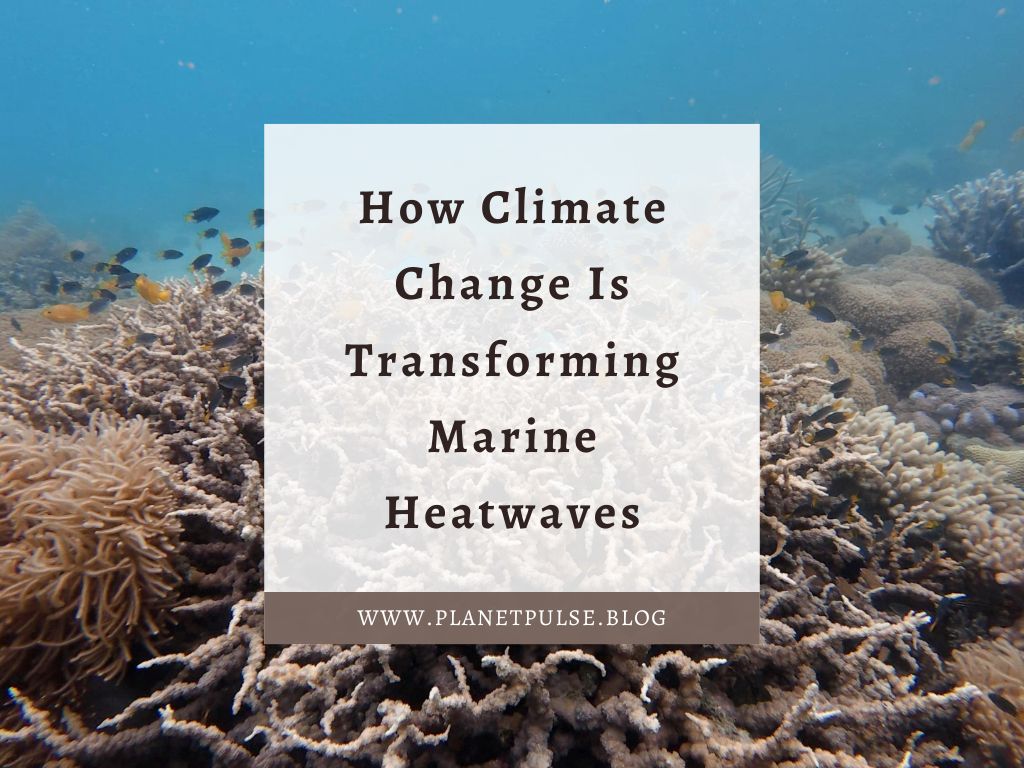
Oceans absorbs 90% of excess heat trapped by greenhouse gases. However, as global temperatures continues to rise, the ocean is warming at a significant rate and one of the signs of this warming is the emergence of marine heatwaves.
Marine heatwaves were once rare and localised, however they are now longer, stronger and more widespread. This means that having an understanding of them is essential for grasping how climate change is transforming the oceans we depend on.
In this Article
What Are Marine Heatwaves?
Marine heatwaves are prolonged periods of unusually high ocean temperatures. Scientists typically define them as ocean conditions that exceed the 90th percentile for at least five consecutive days, though many events last weeks, months or even years. They can occur at the surface, where satellites can easily detect them, or deep below, where they often remain unnoticed.
What makes marine heatwaves so disruptive is that most marine species evolved within narrow temperature ranges. A sudden spike of just 1–3°C can push corals, kelp, fish and plankton beyond their thermal limits. These events are not simply “warm spells”, but ecological shocks that have the power to completely alter entire regions.
What Causes Marine Heatwaves
Climate change is the main cause of the sudden surge in marine heatwaves. This is because as the oceans absorbs more heat, background temperature rises, making it easier for heatwaves to occur. But several other processes also causes marine heatwaves, such as:
- Persistent high‑pressure systems: Creates stable atmospheric conditions that trap warm air over ocean regions. This reduces cloud cover, which allows UV rays to reach and heat the ocean surface. This results in intense and prolonged marine heatwaves.
- Weakened ocean mixing: Under normal conditions, ocean currents and wind mixes surface water with cooler and deeper layers, which spread heat throughout the ocean. But, when this mixing weakens, heat gathers near the surface, leading to higher temperatures.
- Shifting currents: Changes in ocean circulation can transport warm water from tropical or sub-tropical areas into cooler regions. This can trigger sudden temperature increases that can disrupt local marine ecosystems.
- Climate oscillations: Large scale climate patterns such as El Niño causes widespread warming of sea surface temperature by altering atmospheric and oceanic circulation. These oscillations can trigger or worsen marine heatwaves.
These factors add to human-caused warming, resulting in marine heatwaves that are long-lasting and more intense than what natural changes alone would cause.
How Marine Heatwaves Are Changing the Ocean
Marine heatwaves have doubled in frequency since the early 1980s and their footprint now spans every major ocean basin. Events can stretch across millions of square kilometres, affecting entire coastlines and deep‑sea ecosystems.
One of the most recent examples of marine heatwaves is the Northeast Pacific “The Blob”, which was a large area of unusually warm ocean water in the Northeast Pacific that lasted for several years starting in 2013. It caused many marine animals to die, hurt fishing industries and changed weather patterns across North America.
Similar events have since been recorded in the Mediterranean, the Indian Ocean, the Southern Ocean and the North Atlantic.
Another emerging concern is subsurface marine heatwaves, which occur tens to hundreds of metres below the surface, where they can be even more intense and longer‑lasting. Because they are harder to detect, their impacts often appear suddenly. For instance, when deep‑dwelling species experience unexpected heat stress.
Ecological Consequences
One of the most harmful climate-related occurrences for marine life is marine heatwaves. Their effects have an ongoing effect on ecosystems. For example:
- Coral reefs: Which are highly sensitive to temperature changes. This means that even a slight change in temperature can cause bleaching, where corals expel the algae they rely on for energy. Severe or prolonged heatwaves lead to widespread coral mortality, reducing biodiversity and weakening coastal protection.
- Kelp forests & seagrass meadows: These foundation species create habitats for thousands of marine organisms. Heatwaves can cause kelp die‑offs, leaving coastlines barren and disrupting food webs.
- Fish, invertebrates & marine mammals: Marine heatwaves can trigger:
- Mass mortality events
- Shifts in migration routes
- Changes in metabolism and reproduction
- Population crashes in temperature‑sensitive species
- Harmful algal blooms: Warmer waters fuel algal growth, increasing the frequency and severity of harmful blooms that deplete oxygen, release toxins and damage fisheries.
- Ocean acidification and dead zones: Marine heatwaves interact with other ocean stressors:
- Warm water holds less oxygen, intensifying hypoxia and expanding ocean dead zones.
- Heat stress combined with ocean acidification accelerates coral decline and weakens shellfish, creating compounding vulnerabilities.
This interconnectedness makes marine heatwaves a central part of the broader ocean‑health narrative.
Social & Economic Impacts
The ecological impacts of marine heatwaves translate directly into human consequences. Coastal communities, fisheries and global food systems are already feeling the strain.
- Fisheries and aquaculture: Species move, decline or die during heatwaves, leading to:
- Reduced catches
- Economic losses
- Damage to aquaculture operations
- Increased uncertainty for fishers and coastal industries
- Food security: Over one billion people rely on marine protein as a primary food source. As fish stocks shift or collapse, vulnerable communities face rising food insecurity.
- Extreme weather amplification: Warmer oceans release more moisture into the atmosphere, which can intensify storms, hurricanes and heavy rainfall events.
- Cultural and community impacts: Many coastal communities have deep cultural ties to marine species. The loss of salmon, cod or shellfish affects traditions, livelihoods and local identity.
Monitoring and Predicting Marine Heatwaves
Scientists use a combination of tools to track and forecast marine heatwaves, including:
- Satellites: That monitor sea surface temperatures in near‑real time.
- Argo floats: Measure temperature and salinity throughout the water column.
- Deep‑sea observatories: Captures long‑term changes in remote regions.
- Climate models: Simulates future conditions and help predict upcoming heatwaves.
This shows that early‑warning systems are improving, giving fisheries, conservation managers and coastal communities more time to prepare for ecological disruptions.
Future Outlook
If global temperatures continues to rise, marine heatwaves will become longer, more intense and more widespread. This can result in the:
- Collapse of major coral reef systems
- Disappearance of kelp forests in warming hotspots
- Large‑scale shifts in global fish stocks
- Intensification of harmful algal blooms
- More frequent mass mortality events
These changes will reshape ocean ecosystems and the communities that depends on them.
Mitigation & Adaptation
Addressing marine heatwaves requires both global and local action. Adopting mitigation strategies such as reducing greenhouse gas emissions is the most effective way to limit further ocean warming. Stabilising global temperatures will help slow the rise of marine heatwaves.
Apart from this, communities and ecosystems can build resilience through adaptation strategies such as, protecting climate refugia, restoring kelp forests and seagrass meadows, adaptive fisheries management, diversifying coastal livelihoods, strengthening early‑warning systems as well as investing in climate‑resilient infrastructure
These strategies help buffer the impacts while long‑term climate action takes effect.
Conclusion
Marine heatwaves are no longer a rare occurrence, but are becoming a defining feature of a warming ocean. Their impacts reach from coral reefs to coastal communities, from global fisheries to weather systems. Understanding them and acting on that understanding, is essential for protecting ocean health in the future.





Leave a Reply