
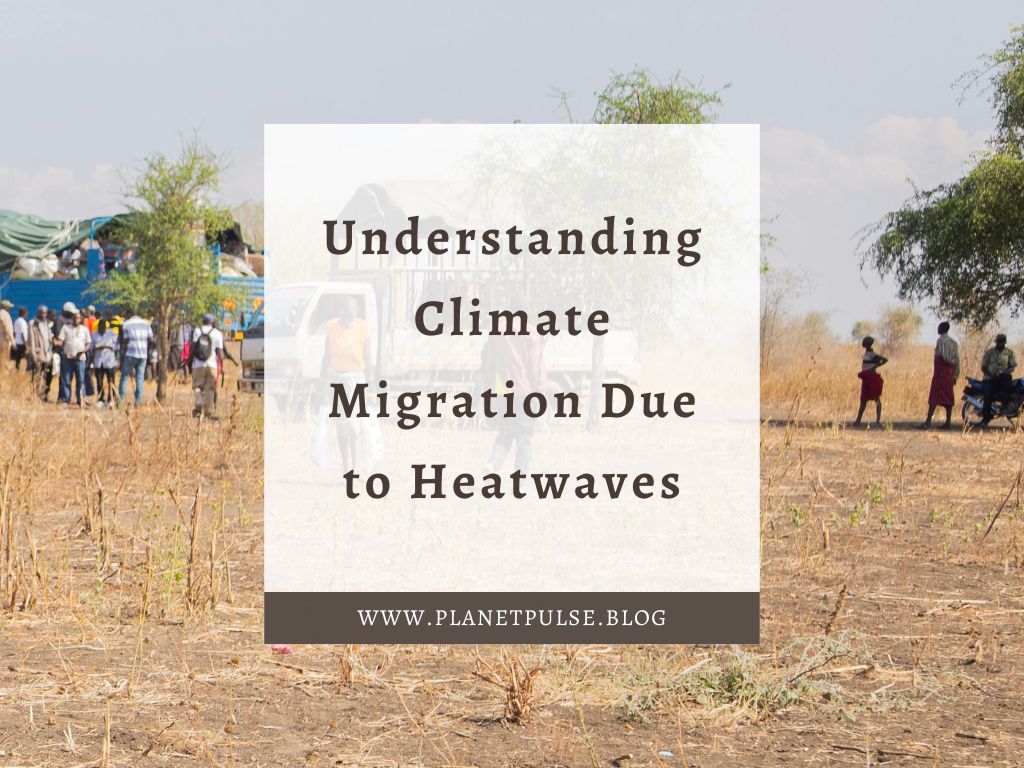
Summer’s today are defined by extreme heatwaves that pushes temperatures beyond safe limits and as global warming increases, these heatwaves are no longer rare but recurring events that reshapes how people live and work.
Heatwaves are emerging as one of the most powerful and immediate triggers of displacement. When temperatures soar past human tolerance, communities have to choose between enduring dangerous conditions or relocate in search of safety, water and stable livelihoods.
This article explores how heatwaves are driving new patterns of migration, who is the most affected and what the future may hold as global temperatures continue to rise.
In this Article
What Is Climate Migration?
Climate migration describes the movement of people caused either directly or indirectly by changes in the environment associated with climate change. It includes both progressive relocation brought on by long-term environmental stress and abrupt displacement brought on by unexpected events.
Heatwaves don’t physically alter landscapes like droughts or destroy homes like storms or floods do. Rather, they subtly undermine what makes a place habitable. For instance, when temperatures exceed safe thresholds, the environment becomes hostile to human health, agriculture, infrastructure and economic stability.
Climate migration can take several forms:
- Temporary displacement: Occur due to short-term relocation caused by sudden disasters, such as hurricanes or flood.
- Permanent relocation: When areas become uninhabitable due to long-term environmental changes, forcing people to relocate elsewhere permanently.
- Internal migration: Most movement occurs within national borders, often from rural to urban areas.
- Cross‑border migration: Heat contributes to international movement when combined with other pressures like drought, conflict or economic instability.
This shows that understanding climate migration is essential because it reveals how environmental stress interacts with social, economic and political systems. Heatwaves are becoming a central driver of this dynamic and their influence is growing each year.
How Climate Change Intensifies Heatwaves
Heatwaves are becoming hotter, longer and more frequent due to human‑driven climate change. Rising greenhouse gas emissions trap more heat in the atmosphere, pushing summer temperatures into level never seen before.
Several scientific trends explain why heatwaves are intensifying:
- Shifting heatwave patterns: Regions that historically experienced mild summers are now seeing record‑breaking temperatures, such as the UK.
- Land–ocean heat interactions: Warmer oceans amplify heat on land, creating longer and more persistent marine heatwaves.
- Atmospheric blocking: High‑pressure systems can stall over a region creating a heat dome, that can lock in extreme heat for days or even weeks.
These changes mean communities are exposed to heatwaves that exceed their historical experience and infrastructure capacity. When temperatures reach 40°C or higher, the risk to health increases, which can cause dehydration, heatstroke and more. Which means staying safe is essential.
How Heatwaves Push People to Move
Heatwaves trigger displacement through both direct and indirect pathways. Unlike storms or floods, heatwaves do not destroy homes outright but they undermine the conditions that make a place habitable.
Direct Impacts
Unsafe temperatures: Prolonged exposure to extreme heat can be fatal, especially for older adults, children and people with health conditions.
Water scarcity: Heat accelerates evaporation, reduces river flows and strains water supplies.
Infrastructure breakdown: Roads melt, railways buckle and power grids fail under peak demand.
Indirect Impacts
Crop failure: Heat stress reduces yields of staple crops like wheat, maize and rice.
Food insecurity: Lower harvests increase prices and reduce access to nutritious food.
Economic instability: Outdoor labour becomes dangerous or impossible, affecting farmers, construction workers and street vendors.
When these pressures combine, migration becomes a survival strategy. Some people move temporarily during peak heat, whilst others relocate permanently after repeated heatwaves make their region too risky to stay.
Who Is Most Affected by Heatwave‑Driven Migration?
Heatwaves do not affect all groups equally. Vulnerability is shaped by age, income, education, occupation and access to resources. Including:
- Older adults: With limited education are more likely to migrate after extreme heat events. They often rely on outdoor work or agriculture, making them more exposed to heat stress.
- Low‑income households: People with fewer financial resources face a double burden:
- They are more exposed to heat due to poor housing, limited cooling and outdoor labour.
- They have fewer means to relocate, making migration both necessary and difficult.
- Agricultural communities: Farmers and rural labourers are among the most affected. When crops fail or livestock suffer heat stress, livelihoods collapse.
- Urban residents in informal settlements: Cities trap heat through concrete, asphalt and limited green space. Informal settlements often lack cooling, shade and reliable water, making them hotspots for heat‑related displacement.
Global Hotspots Where Heatwaves Are Driving Migration
Heatwave‑driven migration is emerging across multiple regions, each facing unique pressures. For example:
East Africa
Extreme heat combined with drought has displaced large numbers of people internally.
Water scarcity, crop failure and livestock deaths push rural families toward urban centres or cooler highland regions.
South Asia
Countries like India, Pakistan and Bangladesh experience some of the world’s most intense heatwaves.
Seasonal migration is rising as workers leave rural areas during peak summer months to seek temporary work in cities or cooler regions.
Central America
Rising temperatures intensify existing challenges such as drought, food insecurity and economic instability.
Heatwaves contribute to rural‑to‑urban migration and in some cases, cross‑border movement.
Southern Europe
Heatwaves in Spain, Italy and Greece have led to temporary displacement, especially among agricultural workers and older adults.
Some communities are beginning to consider long‑term relocation as summers become increasingly dangerous.
Internal and Cross-Border Migration
Most heatwave‑related migration is internal. People move within their own country, often from rural to urban areas or from lowland regions to cooler highlands. Some of the internal migration patterns include:
- Temporary moves during peak heat
- Permanent relocation after repeated heatwaves
- Movement from agricultural zones to cities
- Shifts from informal settlements to safer neighbourhoods
Cross‑border migration occurs when heatwaves combine with other pressures like economic instability, conflict or long‑term drought. However, heat alone rarely drives international migration as it is usually part of a wider set of climate‑related stressors.
Barriers That Prevent People from Leaving
Not everyone can migrate, even when conditions become dangerous. Many communities become “trapped populations”, which are people who want to move but cannot because of several key barriers, such as:
- Financial constraints: Travel, housing and relocation costs are huge.
- Lack of transport: Rural areas may have limited mobility options, making it harder to move.
- Social ties: Family obligations or cultural connections keep people rooted.
- Health limitations: Vulnerable individuals may be physically unable to move.
- Resource degradation: Heat reduces income, making migration even harder.
This means that they are unable to afford relocation and are trapped in dangerous situations from which they cannot get out of even if they want to, making them more vulnerable.
Conclusion
As temperatures rise, communities across the world are being displaced by conditions that exceed human tolerance and undermine livelihoods. This means that climate migration driven by heatwaves is a growing reality.
This means that it demands urgent attention from policymakers, urban planners, humanitarian organisations and communities themselves. Adaptation can reduce displacement, but without rapid climate action, heatwave‑driven migration will continue to expand.





Leave a Reply