
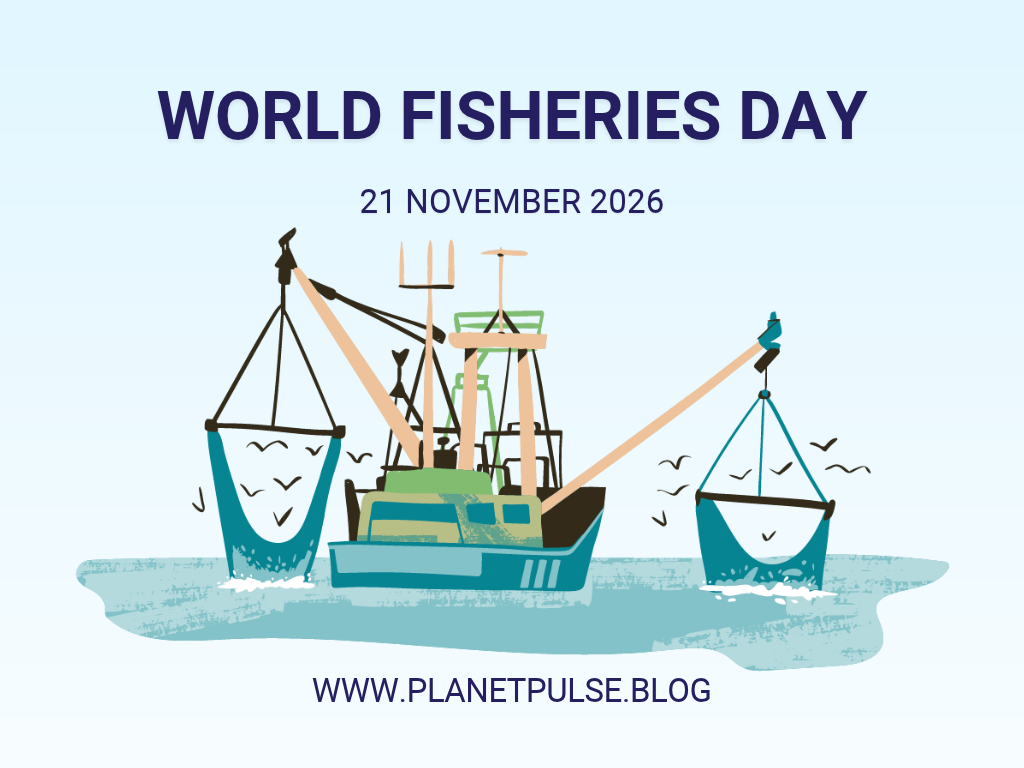
World Fisheries Day is observed every year on November 21 to acknowledge the critical role that fisheries and aquaculture play in feeding communities, supporting livelihoods and maintaining economies. The day also serves as an opportunity to raise awareness about the issues our oceans and freshwater resources face, ranging from overfishing and pollution to climate change.
In 2026, World Fisheries Day will emphasise not just the significance of preserving fish populations, but also the people who rely on them. This year’s observance, focuses on fair employment, labour rights and opportunities for women and youth as well as serves as a reminder that truly sustainable fisheries must benefit both the environment and the people who work in the industry.
In this Article
What Is World Fisheries Day?
World Fisheries Day, held annually on November 21, encourages sustainable fisheries management while celebrating the contributions of fishermen, fish farms and fishing communities around the world.
The day brings together government officials, environmental organisations, industry representatives, researchers as well as locals to discuss the future of fisheries and aquatic resources. It also highlights the importance of balancing seafood production with environmental conservation so that future generations can continue to benefit from healthy marine and freshwater environments.
Moreover, as worldwide demand for seafood rises, World Fisheries Day promotes responsible fishing techniques, stronger environmental safeguards and increased support for the millions of people who work in fisheries and aquaculture.
Why Are Fish Important to the World
Fisheries play an important part in global food security as fish is an important source of protein, vitamins, minerals and critical fatty acids for billions of people worldwide.
Beyond nutrition, fisheries make a substantial contribution to economic development. For example, coastal and rural towns frequently rely on fishing for employment and money production. From fishermen and processors to exporters and merchants, entire supply networks revolve around aquatic resources.
In many locations, the fishing sector also helps to sustain cultural traditions and local economies. As for many communities, fishing is a way of life that has been passed down through generations.
Aquaculture, or the raising of fish and other aquatic organisms, has boosted the sector’s prominence. As wild fish stocks face increasing pressure, responsible aquaculture is becoming an increasingly important source of seafood production.
World Fisheries Day 2026 Theme
The official theme for World Fisheries Day 2026 is”Empowering People for Change: Advancing Decent Work in Fisheries and Aquaculture, Particularly for Youth and Women.”
According to the Food and Agriculture Organization (FAO) and the International Labour Organization (ILO), the theme focuses on improving working conditions, promoting decent work as well as creating more opportunities for women and young people throughout the fisheries and aquaculture sector.
The theme is important because, even though, fisheries contribute significantly to food security and livelihoods, many workers continue to face challenges such as unsafe working conditions, limited social protection and unequal access to opportunities. For instance, women and young people often encounter additional barriers related to employment, skill development and participation in decision-making processes.
The 2026 theme highlights the idea that sustainable fisheries depend on empowered workers. This is because when individuals have access to safer workplaces, fair wages, training opportunities and equal treatment, the entire sector becomes stronger and more resilient.
By bringing attention to labour rights and inclusion, World Fisheries Day 2026 encourages governments, businesses and communities to invest in people alongside environmental sustainability.
Challenges Facing Global Fisheries
Despite their importance, global fisheries are faced with various challenges. One of the most serious concerns is overfishing. In certain areas, fish are being caught quicker than they can recover naturally. This threatens marine biodiversity and long-term fish supplies.
Apart from this, illegal, unreported and uncontrolled fishing is also a big issue as such practices undercut fisheries management efforts and can harm ecosystems, generating unfair competition for law-abiding fishermen.
Climate change is another significant challenge as rising ocean temperatures, shifting migration patterns and rising ocean acidification are all harming fish populations and aquatic environments. Many communities that rely on fishing are already feeling the effects.
Marine pollution also harms ecosystem health as plastic waste, chemical contamination and habitat damage have the potential to harm fish populations and the marine environment as a whole.
Moreover, many small-scale fishers struggle with economic uncertainty, fluctuating market prices and limited access to resources and financial support.
The Growing Role of Aquaculture
Aquaculture has become one of the fastest-growing food production sectors in the world. By farming fish, shellfish and aquatic plants, aquaculture helps meet increasing global demand for seafood.
Therefore, responsible aquaculture can reduce pressure on wild fish populations while providing a reliable source of food and employment. It can also contribute to rural development and economic growth in many regions.
However, aquaculture must be managed carefully as poorly planned operations can create environmental concerns, including water pollution, disease outbreaks and habitat degradation.
Sustainable aquaculture practices focus on efficient resource use, environmental protection, animal welfare and responsible feed sourcing. When managed effectively, aquaculture can play a key role in building a more sustainable seafood system.
Women & Youth in Fisheries
The 2026 World Fisheries Day theme places special emphasis on women and young people. Women contribute significantly to fisheries and aquaculture, often working in processing, marketing, distribution and community-based activities. However, their contributions are frequently under-recognised, and they may have less access to resources, training, financing, and leadership positions.
Similarly, young people represent the future of the fisheries sector. However, many face difficulties entering the industry due to limited opportunities, lack of training or economic barriers.
Therefore, investing in education, skills development, entrepreneurship and leadership opportunities can help attract a new generation of fisheries professionals. Encouraging greater participation by women and youth can also strengthen innovation and resilience throughout the sector.
Creating inclusive workplaces benefits everyone as diverse perspectives often lead to better decision-making and more sustainable outcomes.
How World Fisheries Day Is Celebrated
World Fisheries Day is marked through various events and activities worldwide. Governments, educational institutions, environmental groups and industry organisations often host conferences, workshops, exhibitions and awareness campaigns. These events encourage discussions about sustainable fisheries management, marine conservation and community development.
Schools and universities may organise educational programmes to teach students about aquatic ecosystems and responsible seafood consumption. Many organisations also use the day to recognise the contributions of fishers and fish workers while highlighting innovative projects that support sustainability and social responsibility.
The FAO and ILO are jointly organising a special World Fisheries Day 2026 event focused on advancing decent work in fisheries and aquaculture, particularly for women and youth.
What Can Individuals Do
Everyone can play a role in protecting fisheries and aquatic ecosystems. By choosing seafood from sustainable sources you can support responsible fishing practices. Consumers can do this by looking for recognised sustainability certifications as they can assist them in making informed choices.
Reducing food waste is another effective step as wasting seafood means wasting all the resources used to catch, transport, process and sell it. Also, supporting local fishing communities can help strengthen regional economies and encourage sustainable practices.
Individuals can also learn more about marine conservation and share information with others. Raising awareness about fisheries issues can contribute to positive change at both local and global levels.
Simple everyday actions, when multiplied across millions of people, can have a meaningful impact.
The Future of Fisheries
The future of fisheries depends on balancing environmental protection, economic development and social responsibility. Innovations in fisheries management, monitoring technologies, sustainable aquaculture systems and marine conservation are creating new opportunities to safeguard aquatic resources.
At the same time, stronger policies and international cooperation will be essential for addressing global challenges such as overfishing, pollution and climate change.
Sustainability is about people as much as it is about ecosystems. Empowering workers, promoting decent employment and creating opportunities for women and young people can help build a fisheries sector that is fairer, stronger and more sustainable for generations to come.
Conclusion
World Fisheries Day 2026 is a timely reminder of the importance of healthy fisheries and thriving fishing communities. Under the theme “Empowering People for Change: Advancing Decent Work in Fisheries and Aquaculture, Particularly for Youth and Women,” the observance shines a spotlight on the need for fair opportunities, safe working conditions and inclusive growth across the sector.
As the world faces increasing environmental and social challenges, sustainable fisheries will require collective action from governments, businesses, communities and consumers. By supporting responsible seafood choices and recognising the people behind the industry, we can help ensure a healthier future for our oceans, waterways and the millions who depend on them.




Leave a Reply