
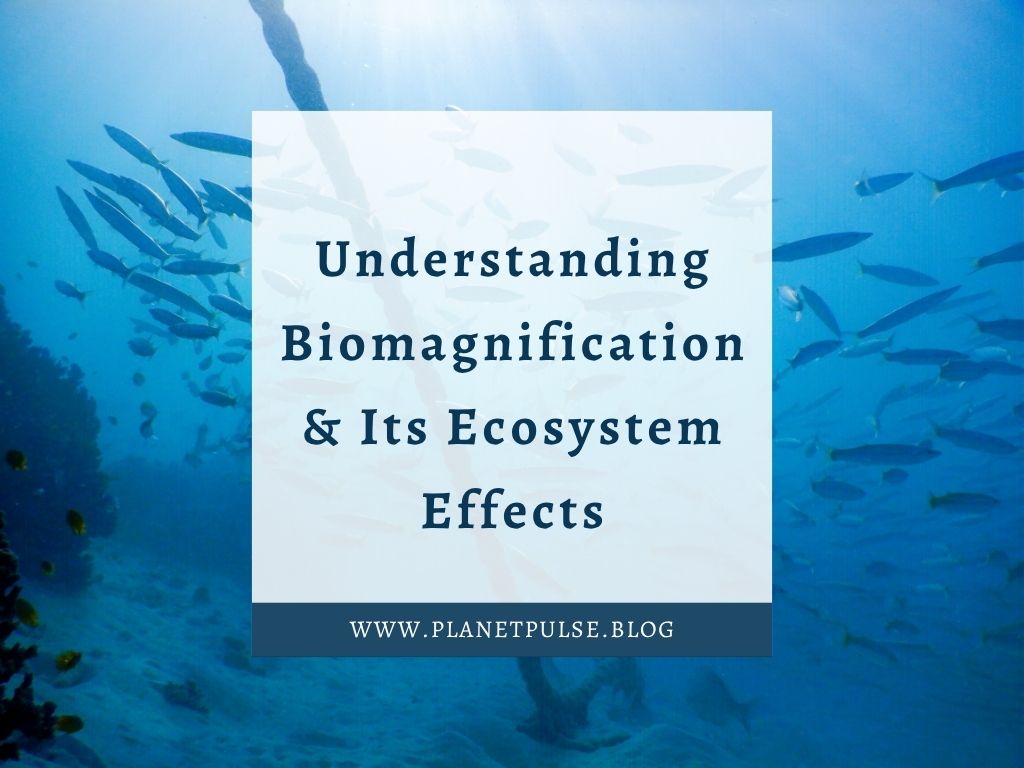
Biomagnification is a process that shapes the health of the ecosystem without people ever noticing it. However, it has a significant impact such as mercury in tune to DDT in birds of prey. Biomagnification shows how pollutants move through food chains and become more concentrated at each stage.
This article focuses on what biomagnification is, the difference between biomagnification and bioaccumulation, how biomagnification works as well as its causes and impacts on the ecosystem and human health.
In this Article
- What Is Biomagnification & Bioaccumulation?
- How Biomagnification Works in a Food Chain
- The Chemical Causes of Biomagnification
- Common Biomagnification Pollutants
- Examples of Biomagnification
- Impacts on Food Chains & Ecosystems
- Human Health Impacts of Biomagnification
- Prevention & Solutions
- Conclusion
What Is Biomagnification & Bioaccumulation?
Biomagnification is about what happens between organisms. This means that as predators eats prey, the pollutants stored in the prey’s tissues transfer to the predators and as the concentration of pollutants increase at each tropic level, because the predators eat many prey in their lifetime. This is the reason why top predators such as sharks, eagles and even humans often carry the highest levels of certain toxins.
On the other hand, bioaccumulation refers to the gradual build-up of pollutants inside a single organism over time. For example, if a fish absorbs mercury from water faster than it can excrete it, the concentration of mercury increases it its tissues,
In short, bioaccumulation happens within an organism, whilst biomagnification happens across the food chain.
How Biomagnification Works in a Food Chain
Biomagnification can begin with microscopic algae floating in the water in an aquatic food chain. This means that if the water contains a pollutant such as mercury, the algae absorbs it. At this stage the concentration of biomagnification is low, but it’s still there.
During the next stage, small fish eats a large number of algae that contains a small amount of mercury. However, over time the fish accumulates more mercury and when larger fish prey on the smaller fish, all the mercury is also consumed in their bodies. By the time, top predators like tuna, seal or humans eats the larger fish, the concentration of mercury is significantly increased.
This step‑by‑step increase is the essence of biomagnification. It is not the amount of pollutant in the environment that matters most, but how it moves through living systems.
The Chemical Causes of Biomagnification
Not all pollutants biomagnify. The ones that do share specific chemical properties that allow them to persist and accumulate. For instance:
- Persistent Organic Pollutants (POPs): Chemicals that do not break down easily in soil, water or living organisms. Their long environmental half‑lives mean they remain in ecosystems for decades.
- Fat Solubility. Pollutants that dissolve in fats rather than water tend to lodge in fatty tissues, where organisms can’t excrete them easily, such as Mercury, PCBs and DDT.
These pollutants often originate from industrial processes, agriculture, mining, waste incineration or chemical manufacturing. Once released, they spread through air and water, eventually entering food chains.
Common Biomagnification Pollutants
There are several biomagnification pollutants that results in significant harm to animals and risk to human health, including:
- Mercury: Released from coal burning, mining and industrial waste. In water, it transforms into methylmercury, a highly toxic form that accumulates in fish and marine mammals.
- PCBs (Polychlorinated Biphenyls): Were once widely used in electrical equipment. Although banned in many countries, they remain in sediments and continue to enter aquatic food webs.
- DDT (dichlorodiphenyltrichloroethane): Is a pesticide famous for its role in agriculture, became a global symbol of environmental harm after it caused eggshell thinning in birds of prey. Even decades after restrictions, DDT residues persist in some ecosystems.
- Microplastics: While the plastic particles themselves may not always biomagnify, the chemicals attached to them, such as flame retardants or plasticisers, can accumulate in predators.
Examples of Biomagnification
One of the most tragic examples of biomagnification is the Minamata mercury poisoning in Japan. Minamata disease is caused by consuming seafood contaminated with methylmercury, which was dumped into a Japanese bay from 1950s to the 1960s. Local communities that relied on seafood suffered severe neurological damage such as headache, tremors, memory loss, muscle weakness and cognitive dysfunction. The event became a global warning about industrial pollution.
Another famous case involves DDT and birds of prey. In the mid‑20th century, DDT accumulated in top predators such as eagles, ospreys and peregrine falcons. The chemical interfered with calcium metabolism, causing eggshells to become so thin that they broke during incubation. This led to populations decline until DDT was banned and recovery efforts began.
A more recent example of biomagnification is PCBs in marine mammals. Orcas, seals and dolphins often carry some of the highest PCB concentrations of any animals on Earth. These pollutants weaken immune systems and reduce reproductive success, threatening entire populations.
Even microplastics have entered the biomagnification conversation. This is because predatory fish and seabirds ingest plastic‑laden prey, accumulating both the particles and the chemicals they carry.
Impacts on Food Chains & Ecosystems
Biomagnification disrupts ecosystems in many ways. This is because top predators are particularly vulnerable because they sit at the end of the pollutant pathway. When these species decline, the balance of the entire ecosystem can shift.
Reproductive failure is also one of the most common impacts of biomagnification as pollutants like DDT and PCBs interfere with hormones, egg development and offspring survival. Apart from this, behavioural changes, such as impaired hunting or navigation, also occur, especially with mercury exposure.
As predator populations weaken, prey species may increase unchecked, altering food web dynamics. Over time, this can lead to biodiversity loss and reduced ecosystem resilience.
Human Health Impacts of Biomagnification
Biomagnification also has a significant impact on human health as many people consume seafood that sits high on the food chain such as tuna, swordfish and shellfish. These species contain high concentration of mercury and other pollutants that can negatively impact human health.
Moreover, long-term exposure to these pollutants can affect human nervous system, especially in developing foetuses and young children. This is why many health organisations provide guidelines on seafood consumption for pregnant women.
Apart from this, communities that heavily relies on fishing due to cultural, economic or other reasons face the greatest risk, which makes biomagnification not just an environmental issues but a social and public health challenge.
Prevention & Solutions
Addressing biomagnification requires reducing pollutants at their source. International agreements such as the Stockholm Convention aims to eliminate or restrict persistent organic pollutants worldwide. Many countries have phased out PCBs, DDT and similar chemicals, though legacy contamination remains.
Furthermore, industries are adopting cleaner technologies and environmental monitoring programmes track pollutant levels in water, soil and wildlife. Apart from this, consumers also play a role by choosing products made with safer chemical alternatives.
Seafood monitoring and advisories help reduce human exposure, while conservation efforts support the recovery of affected species. Although biomagnification cannot be reversed quickly, long‑term action can significantly reduce its impacts.
Conclusion
Biomagnification reveals how deeply interconnected ecosystems are. A pollutant released into the environment does not stay in one place, it travels through food chains, becoming more concentrated and more dangerous at each step. From wildlife declines to human health risks, its consequences are wide‑ranging. This shows that understanding biomagnification is essential.

 Planet Pulse
Leave a comment