
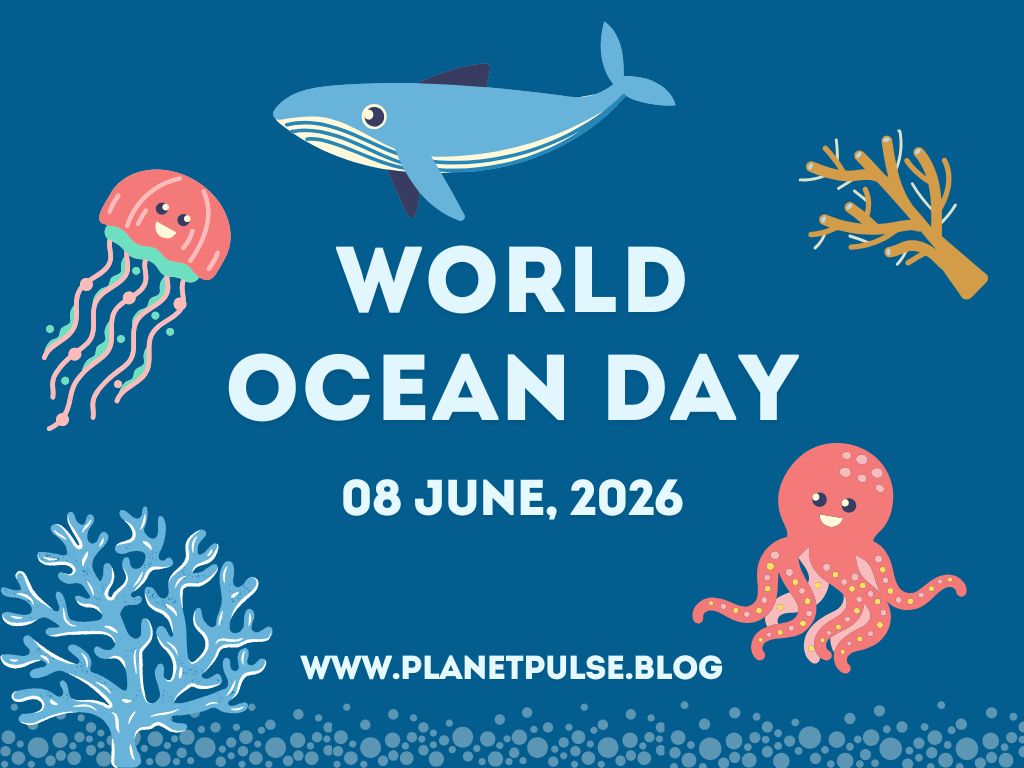
Every year on June 8, the world takes a moment to celebrate the ocean, the vast blue system that sustains millions of people, influences our climate and supports life on Earth. World Oceans Day serves as a worldwide reminder that the condition of our oceans directly affects the state of our planet.
The United Nations has selected the topic “Reimagine” for 2026, urging us to reconsider how we utilise, safeguard and cherish the ocean. “Strong Marine Protected Areas for Our Blue Planet” is a global action topic that emphasises the critical need to protect marine ecosystems as climate pressures increase.
What Is World Oceans Day?
The United Nations formally recognised World Oceans Day in 2008 after it was first proposed at the 1992 Earth Summit. Its goal is straightforward but effective, which is to encourage action to safeguard the ocean and increase awareness of its significance.
Today, communities, governments, educational institutions and conservation organisations use this day to highlight ocean problems, exchange solutions and honour the beauty and significance of marine life.
Theme for 2026: “Reimagine”
We are encouraged to reconsider our relationship with the water by the 2026 theme “Reimagine: Beyond the world we know, a new relationship with our ocean“. The theme promotes a change toward stewardship, creativity and long-term sustainability rather than viewing it as an endless resource.
In addition, the World Ocean Day global network is concentrating on “Strong Marine Protected Areas for Our Blue Planet.” This is in line with the worldwide 3030 objective, which calls for preserving 30% of the ocean by 2030 in order to boost climate resilience and restore biodiversity. Together, these themes show how important it is to safeguard the ocean.
Why the Ocean Matters
The Earth’s life-supporting system is the ocean as:
- More than half of the oxygen we breathe is produced by it.
- It controls weather patterns and world temperatures.
- Supports a wide range of species, including deep-sea ecosystems and coral reefs.
- Ensures more than a billion people have access to food.
- Drives economies through transportation, tourism and fishing.
Major Threats Facing the Ocean
The ocean is under increasing pressure despite its significance. Among the most significant risks are:
- Many fish populations have reached dangerously low levels due to overfishing.
- Millions of tonnes of plastic waste end up in the ocean every year.
- Warming waters cause storms to get stronger and disturb maritime habitats.
- Pollution and heat stress are the main causes of coral reef deterioration.
- Destroying habitats through bottom trawling and coastal development.
These problems are related to one another and are getting worse.
Marine Protected Areas: The 2026 Focus
Marine Protected Areas (MPAs) are areas set aside for restricted or closely regulated human activity. Effective MPAs are helpful:
- Re-establish fish populationsPreserve endangered species.
- Preserve blue-carbon ecosystems such as seagrass and mangroves.
- Boost resilience to climate change.
- Encourage sustainable means of subsistence.
- The demand for more robust MPAs in 2026 is a reflection of the global trend toward significant ocean protection.
In addition to protecting the environment, successful MPAs often boost local businesses and communities.
How the World Celebrates World Oceans Day
World Oceans Day is observed globally by:
- Cleanups of rivers and beaches
- Classroom activities and school assemblies
- Storytelling events, photography competitions and art exhibitions
- Projects involving citizen science
- Announcements of policies and conservation initiatives
Even those who live far from the coast can connect with the water through these events.
How You Can Get Involved
Here are several easy ways that communities, educators, and students can change things:
- Cut back on single-use plastics
- Post information about the ocean on social media.
- Make presentations, infographics or posters about ocean conservation.
- Encourage neighbourhood river restoration initiatives or beach clean-ups
- Launch a campaign in schools about sustainable seafood or MPAs.
- Select eco-friendly goods and practices.
Everyone has a part to play, as World Oceans Day serves as a reminder.
Looking Ahead
The decisions we make now will determine the ocean’s future. There is genuine momentum for change thanks to international accords like the BBNJ Treaty and rising support for the 30×30 aim. This movement, which aims to reimagine a healthier, more resilient ocean for future generations, is led by young people, educators and communities.
Conclusion
World Oceans Day serves as an powerful reminder that the ocean is a part of us and not something distinct from us. By preserving it, we safeguard our future, our economies, our food systems, and our environment. On June 8th, let’s rethink what a healthy ocean looks like and take any necessary action to make it a reality.




Leave a Reply