
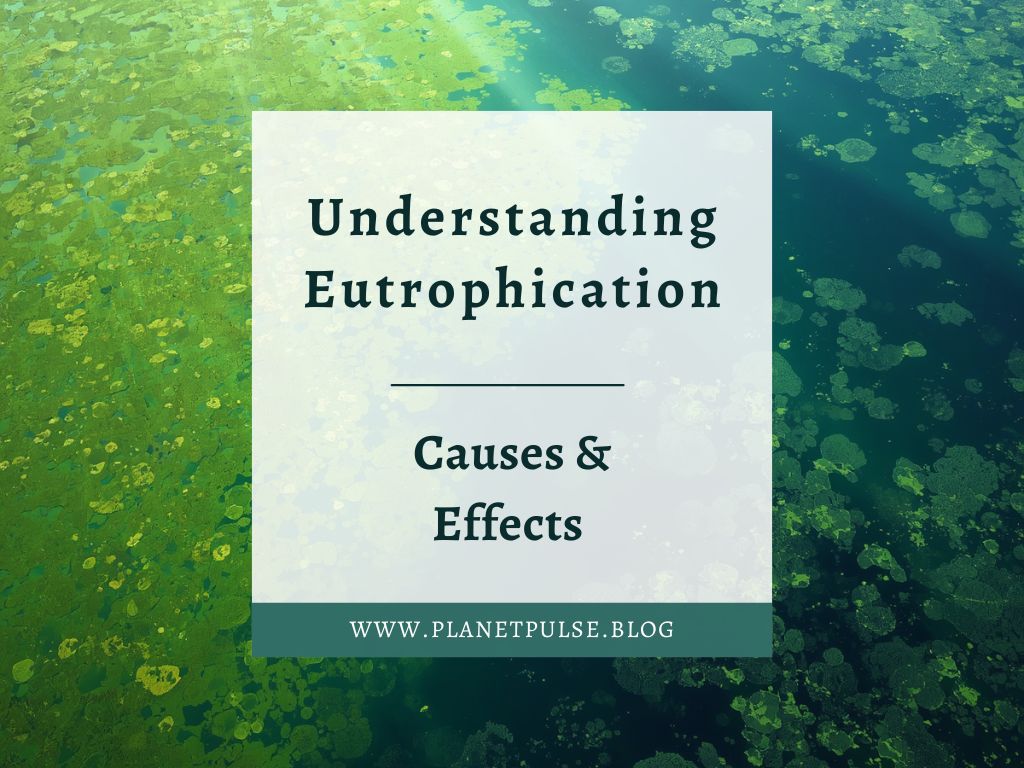
Eutrophication is one of the most common and costly types of water pollution that affects lakes, rivers, reservoirs and coastal ecosystems globally. It causes algae blooms, produces “dead zones” devoid of oxygen, interferes with fishing as well as raises the price of drinking water-treatment. This article explains what eutrophication is, why it happens and how we can prevent it.
In this Article
What Is Eutrophication?
Eutrophication occurs when a water body gets too enriched with nutrients, primarily nitrogen and phosphorus, resulting in excessive development of algae and aquatic plants. This nutrient enrichment can occur naturally over centuries as lakes age and gather organic waste, but human activities have increased the process, resulting in cultural eutrophication.
Eutrophication is the progressive increase in nutrient concentrations that improves biological production, typically resulting in murky water, algae blooms and low oxygen levels that affect aquatic life.
In simple terms:
Too many nutrients → too much algae → too little oxygen → ecosystem decline.
Eutrophication Types
There are two types of eutrophication:
1. Natural Eutrophication
Is a slow, long-term process that can take up to 100 years.
It begins in oligotrophic waters, where low nutrients gradually increase over time.
As nutrients and organic matter accumulate, productivity rises until the water body reaches a stable eutrophic state.
Floods, landslides and other natural disasters can accelerate the process by washing organic material into water bodies.
Environmental factors such as temperature, CO₂ levels and light availability influence the rate of eutrophication.
The overall duration depends on the water body’s characteristics, surrounding land and local climate.
2. Cultural Eutrophication
Is the human‑driven acceleration of nutrient build-up in aquatic ecosystems.
The main cause is excessive nitrogen and phosphorus entering water bodies.
It rapidly speeds up natural eutrophication, causing severe environmental impacts in a short time.
Key contributors include over-fertilisation, agricultural and industrial expansion and sewage discharge.
In shallow lakes and ponds, wind‑driven mixing stirs nutrients from sediments, increasing nutrient availability.
It affects both freshwater and marine ecosystems, with shallow waters being especially vulnerable.
Excessive nutrient levels trigger harmful algal blooms, reducing water quality for drinking, aquatic life and industrial use.
How Eutrophication Works
Eutrophication occurs in a predictable chain reaction:
- Nutrient build-up: This occurs when excess nitrogen and phosphorus enter the water.
- Productivity increase: As algae and phytoplankton multiply quickly.
- Algal bloom development: Entails thick mats of algae that obstruct sunlight.
- Plant die-off: Occurs when submerged plants do not receive enough light.
- Decomposition: Dead algae sink and decay, depleting oxygen.
- Hypoxia: Oxygen levels fall, resulting in “dead zones.”
Causes of Eutrophication
Eutrophication is caused by multiple nutrient sources, most of which are linked to human activity. For instance:
- Agricultural runoff: When it rains, nitrogen and phosphorus-rich fertilisers wash into rivers and lakes. Runoff from animal waste makes a considerable contribution.
- Sewage and wastewater: Untreated or poorly treated sewage adds a lot of nutrients to aquatic basins. This contributes significantly to cultural eutrophication in both developing and developed countries.
- Industries: Including food processing, paper mills and chemical manufacture produce nutrient-rich waste streams.
- Urban Stormwater: Runoff from roads, lawns and urban surfaces transports fertilisers, detergents, oils and other contaminants into bodies of water.
- Atmospheric Deposition: Nitrogen oxides from vehicles and power plants sink into aquatic bodies during rainfall, increasing nutritional burdens.
- Aquaculture: Involves the release of uneaten feed and fish excrement, which increases nutrient concentrations.
Environmental & Ecological Effects of Eutrophication
Eutrophication has far‑reaching consequences for ecosystems, water quality and human wellbeing, such as:
- Algal Blooms: Excess nutrients promote explosive algal growth. Some blooms are safe, but many are harmful algal blooms (HABs), which create toxins that are hazardous to humans, pets and wildlife. Water blooms can restrict light penetration and oxygen absorption, causing harm to aquatic life.
- Hypoxia and Dead Zones: When algae die and degrade, oxygen levels decrease. When oxygen levels fall below 1 mg/L, hypoxia occurs, typically resulting in massive fish fatalities.
- Biodiversity Loss: Eutrophic waters have fewer fish and bird species. Sensitive species are the first to vanish, while tolerant species dominate.
- Water Quality Deterioration: Eutrophication decreases water clarity, increases turbidity and produces bad odours. This has implications for recreation, tourism and the local economy.
Human Health Impacts
Apart from the environmental impacts, eutrophication poses several health risks. This is because toxic algal blooms can pollute drinking water with microcystins and other poisons. Also, aerosolised toxins from waves or wind can irritate the respiratory system. Moreover, pets and animals are particularly vulnerable to cyanotoxins in ponds and lakes.
This shows that monitoring and early warning systems are crucial for protecting public health in light of these threats.
How Climate Change Intensifies Eutrophication
Climate change acts as a multiplier, worsening eutrophication in several ways. This includes:
- Warmer water temperatures promote algal development and extend bloom seasons.
- More intense rainfall events wash more fertiliser and contaminants into streams.
- Drought restricts water flow, concentrating nutrients and generating favourable circumstances for blooms.
Although not all sources explicitly relate climate change to eutrophication, the mechanisms described above are well understood in environmental research and correspond to observed patterns.
Solutions and Prevention Strategies
Eutrophication must be addressed in a co-ordinated manner spanning agriculture, industry, urban planning and environmental management. Effective policies include limiting nitrogen and phosphorus emissions, implementing fertiliser limits and upgrading wastewater treatment plants with modern nutrient-removal technologies.
Apart from this, real-time monitoring systems using sensors, drones and satellite data help spot algal blooms early. Precision fertiliser application, riparian buffer zones and soil-building measures like cover crops can limit nutrient runoff at the source.
Moreover, green infrastructure, such as rain gardens, permeable pavements and green roofs as well as enhanced stormwater systems and strict industrial pre-treatment standards, can help to reduce nutrient pollution in cities and industries.
Restoration strategies also play a vital role as aeration systems increase oxygen levels in lakes, biomanipulation restores filter-feeding species to minimise algae and wetland restoration produces natural nutrient sinks to trap sediments and absorb pollutants.
Together, these approaches provide a comprehensive framework for avoiding and reversing eutrophication.
Conclusion
Eutrophication is a preventable environmental disaster caused by an excess of nutrients in our rivers. Its effects are severe yet reversible, including algae blooms, dead zones, biodiversity loss and economic harm.
We can preserve freshwater and marine ecosystems for future generations by improving nutrient management, upgrading wastewater treatment, restoring wetlands and implementing sustainable agriculture methods.


Leave a Reply