
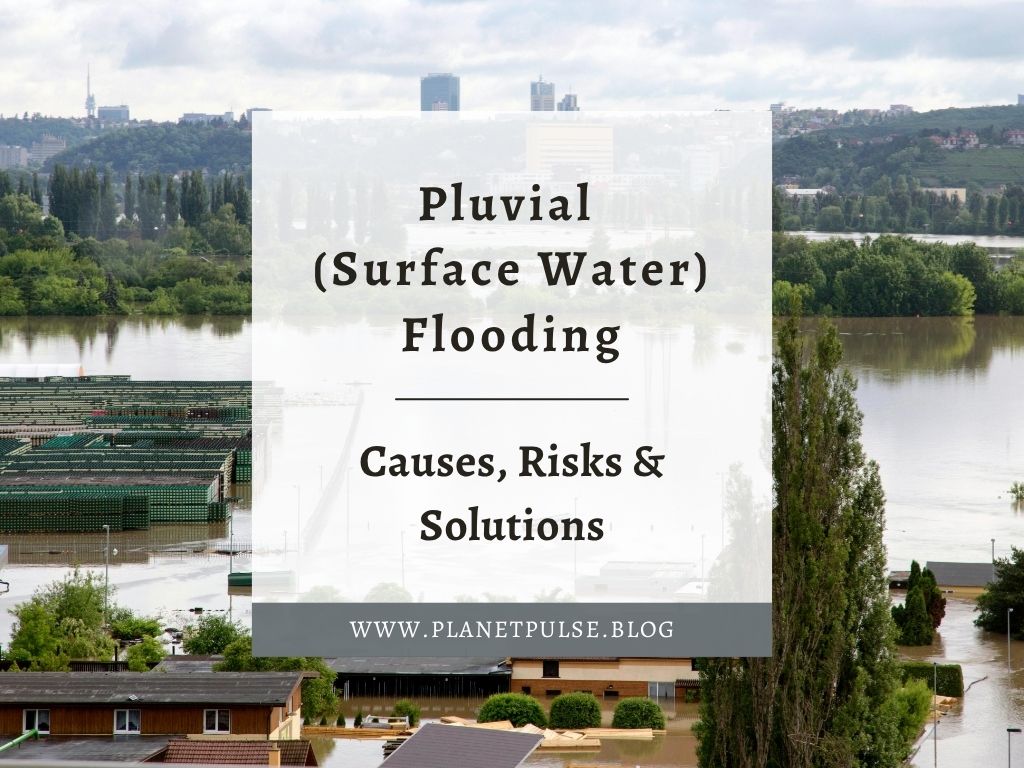
One of the most overlooked natural disasters affecting towns and cities nowadays is pluvial flooding. In contrast to coastal floods caused by storm surges or river floods that accumulate over hours, pluvial floods can occur abruptly and are simply caused by heavy rainfall that falls more quickly than the land or drainage system can absorb. They can strike practically anywhere, even in areas that people believe to be “safe,” as they don’t need a nearby river or shoreline. Pluvial flooding is becoming a far more frequent and disruptive issue as urban areas continue to grow and rainfall patterns are altered by climate change.
Building climate-resilient communities requires an understanding of how pluvial floods occur, why they are becoming more often and what can be done to prevent them.
In this Article
What Is Pluvial (Surface Water) Flooding?
Pluvial flooding occurs when excessive rainfall exceeds the capacity of drainage systems, soil infiltration and surface runoff paths. Rainwater pools on pavements, streets, gardens and low-lying locations when it falls more quickly than it can be drained away. This kind of flooding is quite localised and can differ significantly between streets based on land cover, drainage design and geography.
The speed of pluvial flooding is what makes it so challenging as there is little time for warnings or preparedness when a sudden downpour turns into a flood within minutes. Pluvial floods can occur in unexpected locations, such as car parks, underpasses, basements and even recently constructed housing estates. In contrast to fluvial flooding, which follows conventional river routes. By keeping water from penetrating the ground, impermeable surfaces like concrete, asphalt and compacted soil exacerbate the issue. As a result, urban areas are particularly vulnerable.
Why Pluvial Floods Are Becoming More Common?
Pluvial flooding is increasing due to various different factors, all of which combine to produce a perfect storm for surface water risk.
The most important factor is climate change. Warmer air holds more moisture, which leads to more intense, short‑duration rainfall events. Large amounts of water can be dropped quickly by these cloudbursts, overloading drainage systems that weren’t built for such extremes. The UK has already seen a number of high-profile surface water floods in recent years, such as the 2021 London floods, which caused extensive disruption around the nation’s capital due to heavy rainfall.
An additional layer of strain is added by urbanisation. This is because natural green areas are replaced by impermeable surfaces that quickly lose water as towns and cities expand. Infiltration is prevented by roads, pavements, rooftops and parking lots, which increases runoff volume and speed. Modern rainfall patterns and growing populations are too much for older drainage systems, many of which were constructed decades ago.
Land use changes also have a negative impact as natural infiltration and storage are diminished as wetlands, grasslands and porous soils disappear. Even minor modifications, like compacting soil during building or paving over front gardens, might enough disrupt local drainage patterns to raise the danger of flooding.
Together, these factors mean pluvial flooding is no longer a rare event but a recurring challenge for urban resilience.
How Surface Water Floods Are Mapped and Predicted
Predicting pluvial flooding is far more complex than forecasting river floods because surface water flows are influenced by a variety of factors, including ground slope, drainage capacity, rainfall intensity and even minor changes in garden design or curb height. Because of this, modelling is an extremely sophisticated procedure.
In order to simulate how water will flow across the landscape, modern pluvial flood mapping combines rainfall data, digital elevation models and drainage network information. High‑resolution LiDAR data helps identify depressions, slopes and flow paths that determine where water will accumulate. These models are used by councils and planners to identify high-risk locations, guide development choices and create infrastructure that is resilient to flooding.
However, even the best models have limitations. For instance, these models are not always able to take into consideration temporary obstacles, clogged drains or extreme rainfall. However, emerging technologies are starting to have an impact here as rainfall occurrences can be simulated in real time using digital twins, which are virtual representations of urban settings. Sensor-equipped smart drainage systems are able to dynamically modify flow and keep an eye on water levels. These developments provide intriguing instruments for enhancing early warning systems and lessening the effects of unexpected floods.
The Impacts of Pluvial Flooding
Pluvial floods may seem shallow, but they can have serious consequences as even a few centimetres of flowing water can overwhelm emergency services, destroy homes and interfere with transportation systems. Also, when drainage systems overflow, surface water frequently becomes contaminated with sewage, endangering the health of locals and clean-up crews.
Because to the density of infrastructure, urban areas are especially vulnerable. Underground stations may flood, roads may become inaccessible and communication or electricity networks may be interfered with. Households may be uprooted for weeks while repairs are being made and businesses must deal with expensive disruptions.
Moreover, low-income neighbourhoods are disproportionately affected because they frequently have fewer green spaces and outdated drainage systems. Apart from this, renters and others living in temporary housing would not have as much money to make a full recovery. This means that planning for flood resilience must address these disparities as climate change exacerbates rainfall extremes.
Strategies for Prevention and Mitigation
It takes a combination of engineering, natural solutions and community-level activity to reduce the risk of pluvial floods. An important part is played by urban planning. Sustainable Drainage Systems (SuDS) are increasingly used to slow, store and filter rainwater before it reaches the drainage network. Water can soak through permeable pavements instead of running off. During periods of high rainfall, swales, retention ponds and detention basins provide temporary storage. Rain gardens and green roofs lessen drain pressure by absorbing water at the source.
Nature-based solutions complement engineered systems. For example, restoring wetlands, conserving natural infiltration zones and enhancing urban green space all contribute to reduced runoff. Trees perform an unexpectedly major function in intercepting rainwater and enhancing soil penetration. These techniques not only minimise flood danger, but also promote biodiversity, improve air quality, and make cities more livable.
Small efforts, both at home and in the community, can have a significant impact. Property-level flood protection, including flood doors, higher electrical connections and enhanced drainage, can prevent damage. Rainwater harvesting devices capture water that would otherwise be lost to runoff. Community preparation programs guarantee that residents understand how to respond promptly when heavy rain is expected.
Conclusion
Pluvial flooding is a growing problem, particularly in quickly urbanising and climate-stressed countries. Its abrupt onset, unknown paths and widespread consequences make it an issue that cannot be overlooked. As rainfall patterns vary and cities grow, developing resilience to surface water floods will necessitate better design, greener infrastructure and increased community knowledge.
Understanding pluvial floods and investing in prevention techniques, such as SuDS and nature-based solutions, can help communities mitigate the damage caused by these recurrent phenomena.





 Planet Pulse
Leave a comment