
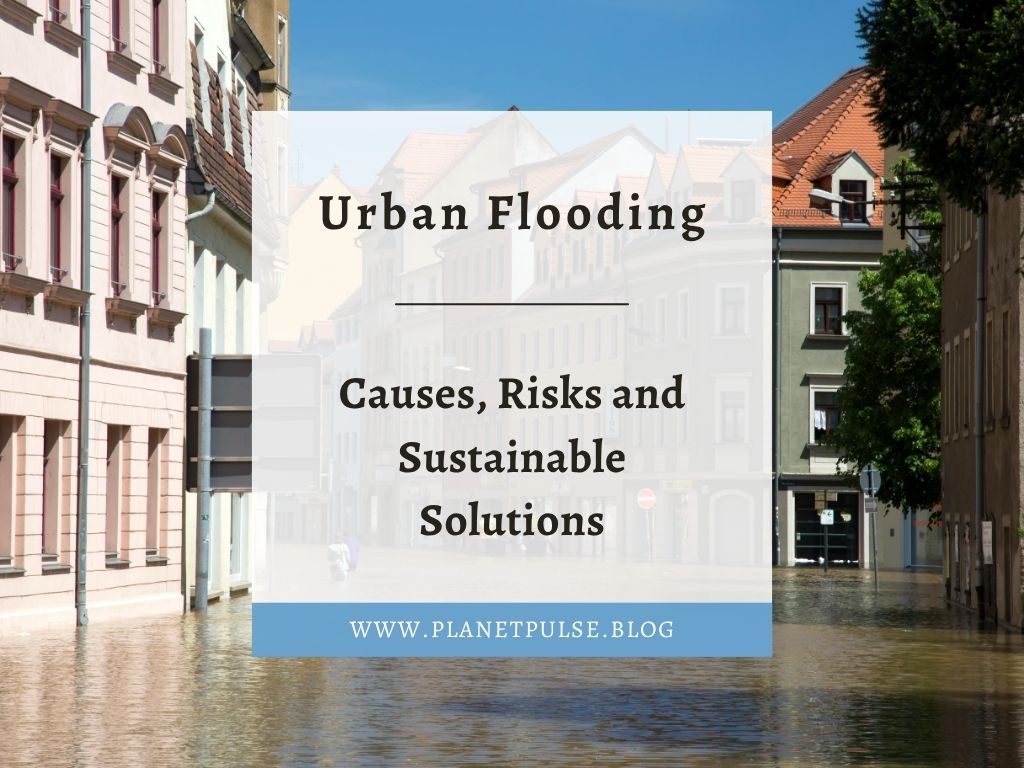
Urban flooding is one of the fastest‑growing environmental challenges facing modern cities. As rainfall intensifies and urban areas grow, drainage systems, infrastructure and communities are put under greater strain. This article investigates the reasons, threats and long-term solutions that can help cities adapt and thrive in a changing environment.
In this Article
- What is Urban Flooding?
- Why Urban Areas Are Increasingly Vulnerable
- Impermeable Surfaces and Drainage Overload
- The Role of Sustainable Drainage Systems (SuDS)
- Green Infrastructure as a Flood Solution
- Urban Planning for Flood Resilience
- Social and Economic Risks of Urban Flooding
- Climate Change and the Future of Urban Flooding
- Building Community and Household Resilience
- Conclusion
What is Urban Flooding?
Urban flooding occurs when rainfall exceeds the built environment, causing water to gather on streets, pavements and homes. Urban flooding, unlike river or coastal floods, occurs distant from natural water bodies and is mostly caused by human-made factors such as impermeable surfaces, inadequate drainage and poor land-use planning.
The key features of urban flooding are:
- Rapid water accumulation following heavy rainfall.
- Overloaded drainage systems.
- Flooding in locations not generally seen as “at risk”
- Dense populations have significant economic and social implications.
Urban flooding is typically unexpected, disruptive and costly, making it a top priority for communities around the world to address.
Why Urban Areas Are Increasingly Vulnerable
Urbanisation significantly alters the natural water cycle. As cities expand, green spaces and soil are replaced by concrete, asphalt and buildings. These surfaces prevent water from soaking into the ground, causing it to move quickly across the landscape.
Several factors increases the vulnerability of urban areas, including:
- Rapid development reduces the natural infiltration zones.
- Modern rainfall patterns pose a challenge for ageing drainage infrastructure.
- Climate change has increased the frequency of strong downpours.
- High population density concentrates the risk in small regions.
As a result, even moderate rainfall can cause localised floods, transportation disruptions and property damage.
Impermeable Surfaces and Drainage Overload
Urban flooding is primarily caused by impermeable surfaces. Roads, pavements, car parks and rooftops lose water quickly, resulting in runoff that flows into underground pipes. When rainfall surpasses the pipes’ capacity, water has nowhere to go.
Impermeable surfaces cause flooding because of several reasons, such as:
- Reduced infiltration because water cannot soak into the soil, runoff volumes increase significantly.
- Smooth surfaces enhance water velocity, which can overwhelm drains in minutes.
- Runoff introduces oils, metals and debris into streams, degrading water quality.
Many drainage systems in UK were built decades ago for a different climate. Cities like London, Birmingham and Manchester have experienced flash‑style surface flooding during intense rainfall because:
- Pipes are too narrow for modern rainfall extremes.
- Blocked drains reduce capacity.
- Urban expansion has outpaced drainage upgrades.
Climate change compounds this problem by increasing the intensity of short, heavy rainfall events that overwhelms drainage networks.
The Role of Sustainable Drainage Systems (SuDS)
Sustainable Drainage Systems (SuDS) are one of the most effective tools for reducing urban flood risk. They mimic natural hydrological processes by slowing, storing and filtering water before it enters drainage networks. SuDS aims to:
- Reduce runoff volume
- Slow the movement of water
- Improve water quality
- Enhance biodiversity and urban cooling
The Key SuDS components include:
- Permeable pavements: Allows water to seep through the surface into the underlying layers.
- Swales and infiltration trenches: Shallow, vegetated channels that delay and absorb runoff.
- Detention basins and retention ponds: Are used to store water either temporarily or permanently.
- Rain gardens and bioretention systems: Plant-filled depressions that collect and filter water.
Moreover, SuDS offer multiple co‑benefits. for instance:
- Cooler microclimates during heatwaves
- Improved biodiversity in urban areas
- Cleaner water entering rivers and streams
- More attractive public spaces
For councils and developers, SuDS provide a cost‑effective, long‑term solution that integrates water management with urban design.
Green Infrastructure as a Flood Solution
Green infrastructure refers to natural or semi-natural features that manage water and provide environmental and social advantages. It complements SuDS by improving the city’s ability to absorb and store rainwater. Some examples of Green Infrastructure are:
- Green roofs absorb rainwater and reduce runoff.
- Urban wetlands are natural water storage sites that slow and filter water.
- Street trees intercept rainwater and improve soil infiltration.
- Pocket parks are small green spots that break up impervious environments.
Green infrastructure reduces flooding because vegetation slows the movement of water, increases infiltration and provides temporary storage. This reduces pressure on drainage systems and lowers the risk of surface flooding.
Additional benefits of green infrastructure includes:
- Improved air quality
- Carbon sequestration
- Enhanced wellbeing and mental health
- Cooler temperatures in heat‑prone neighbourhoods
Cities like Copenhagen, Rotterdam and Singapore have demonstrated how green infrastructure can transform flood‑prone areas into resilient, liveable spaces.
Urban Planning for Flood Resilience
Long‑term resilience requires integrating flood risk into every stage of urban planning, from zoning to street design. Key planning strategies include:
- Avoiding high‑risk zones: Restricting development in flood‑prone areas.
- Designing water‑sensitive streets: Incorporating swales, permeable surfaces and tree pits.
- Retrofitting older neighbourhoods: Adding SuDS and green features to existing streets.
- Cross‑sector collaboration: Councils, developers, engineers and communities working together.
Inspired by nature, sponge city design aims to absorb, store and release water gradually. This approach reduces flood risk while improving urban quality of life.
Social and Economic Risks of Urban Flooding
Urban flooding has far‑reaching consequences that extend beyond physical damage. Key risks involve:
- Housing damage: Costly repairs and displacement of residents.
- Transport disruption: Flooded roads and railways halt movement.
- Economic losses: Businesses face closures, stock damage and lost revenue.
- Public health threats: Contaminated floodwater spreads disease.
Low‑income communities often face the greatest risks due to poor housing quality, limited insurance coverage and fewer resources for recovery.
Climate Change and the Future of Urban Flooding
Climate change is reshaping rainfall patterns worldwide. Warmer air holds more moisture, leading to heavier downpours. At the same time, sea‑level rise increases flood risk in coastal cities. Some of the future challenges include:
- More frequent intense rainfall events
- Higher stormwater volumes
- Increased pressure on drainage systems
- Greater need for adaptation in planning and infrastructure
Cities must act now to build resilience into their design, policies and community planning.
Building Community and Household Resilience
While large‑scale infrastructure is essential, community‑level action also plays a vital role. Here are some ways communities can build resilience:
- Local flood action groups that coordinate preparedness.
- Property‑level protection such as flood barriers and raised utilities.
- Drainage maintenance by residents to keep gutters and grates clear.
- Awareness campaigns to educate households on flood risks.
- Early‑warning systems to alert residents during heavy rainfall.
Empowering communities strengthens overall resilience and reduces long‑term impacts.
Conclusion
Urban flooding is becoming a more serious issue driven by impermeable surfaces, drainage overload and climate change. However, cities have formidable tools at their disposal. Implementing sustainable drainage systems, green infrastructure and resilient urban planning can transform flood-prone areas into adaptable and thriving settings.
Combining engineering, nature-based solutions and community engagement may minimise flood risk, improve quality of life and create a more sustainable future.





Leave a Reply