
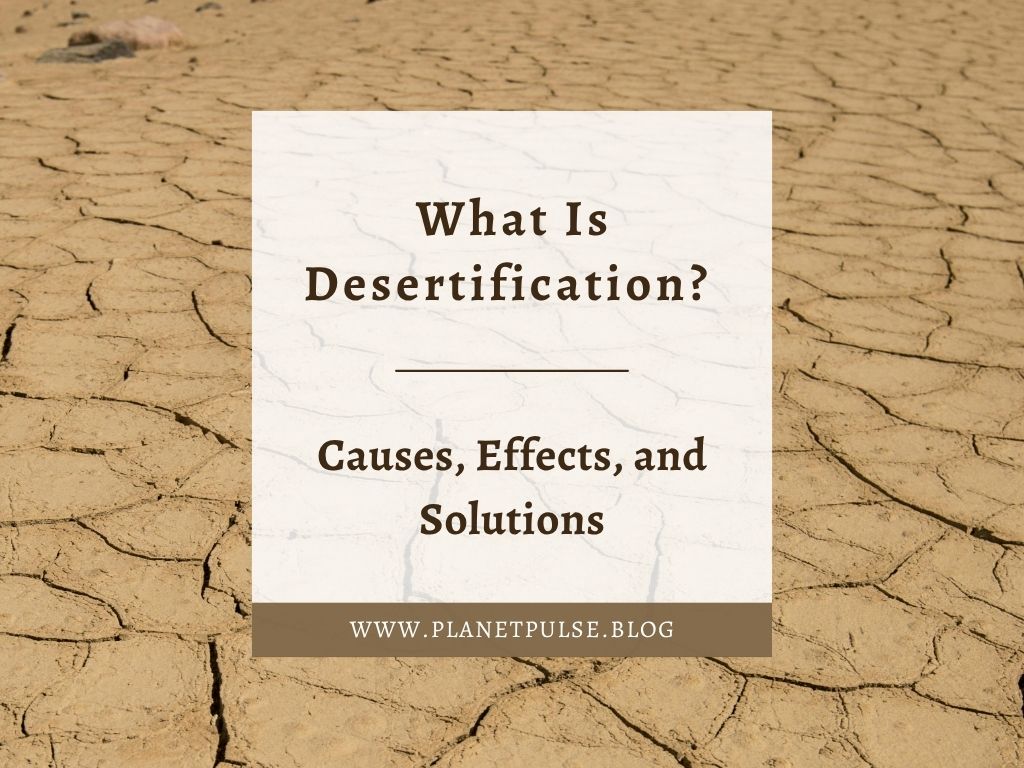
Desertification is one of the most urgent environmental issues today. This is because more areas are becoming drier, less productive, and more susceptible to ecological collapse as the global temperatures continues to rise and land pressure increases. Understanding what desertification is and how we can prevent it, is essential for protecting ecosystems, food systems, and the communities that depend on them.
In this Article
What is Desertification?
Desertification describes how fertile soil in arid areas deteriorates to the point where it can no longer sustain plant and animal life. The process that lowers the biological productivity of land is caused by humans rather than the natural expansion of deserts.
Drylands receive limited rainfall, are particularly vulnerable to desertification because when soil becomes exhausted, vegetation disappears, and water becomes scarce, the land gradually shifts toward desert‑like conditions. This process can unfold slowly over decades or accelerate rapidly during periods of drought or intense land use.
Causes of Desertification
Desertification is rarely caused by only one factor. Instead, it results from the interaction of natural climate forces and human activity.
Climate variability plays an important role. This is because long-term droughts damages vegetation, rising temperatures increase evaporation, and extreme weather events devastate delicate ecosystems. These natural pressures produce conditions that make land more vulnerable to degradation.
However, human action is often a tipping point. Unsustainable farming methods, including over-cultivation, monocropping, and inadequate soil management, deplete the land’s nutrients. Overgrazing by animals destroys vegetation quicker than it can regenerate, leaving soil vulnerable to erosion.
Deforestation destroys the root systems that hold soil together and help conserve rainwater. Poor irrigation practices can cause salinisation or waterlogging, whereas increasing urbanisation and mining disrupt soil structure and reduce vegetation cover.
Socioeconomic pressures also contribute. In many regions, poverty, population growth, and limited access to sustainable farming methods force communities to overuse the land simply to survive.
Effects of Desertification
The effects of desertification extend well beyond the devastated terrain. The loss of vegetation and soil fertility has a negative impact on biodiversity and entire ecosystems. Water becomes more scarce as rivers dry up and groundwater levels drop. Wind can sweep away exposed soil, resulting in dust storms that degrade air quality and harm human health.
Desertification poses a social and economic danger to food security by lowering crop yields and livestock output. Rural populations frequently lose their main sources of income, resulting in greater poverty and, in some circumstances, forced migration. As land becomes untenable, families may be displaced, adding to overall societal instability.
On a global scale, degraded land releases stored carbon into the atmosphere, reinforcing climate change. This creates a feedback loop as climate change accelerates desertification, and desertification accelerates climate change.
Case studies
The Sahel region of Africa is a well-known example of extreme desertification. Drought, overgrazing, and population pressure have turned fertile land into degraded drylands. In response, the Great Green Wall effort intends to reforest millions of hectares and implement sustainable land management practices.
China’s Loess Plateau tells a more optimistic story. Terracing, planting, and community-led restoration activities have changed the area that was once extensively deteriorated. The project is now recognised as a global example for correcting land deterioration.
Solutions to Desertification
Desertification is a significant concern, yet it is not irreversible. Many places have successfully regenerated degraded land by combining sustainable practices, community engagement, and supportive regulations.
Sustainable land management is one of the most effective strategies. Regenerative agriculture, agroforestry, crop rotation, and soil conservation strategies all contribute to improving soil health and restoring vegetation. Managing grazing pressure helps grasslands recover and remain productive.
Additionally, reforestation and ecological restoration are important. Planting native plants and bushes stabilises the soil, increases water retention, and promotes biodiversity. The Great Green Wall, a large-scale restoration program, shows how coordinated efforts may transform entire regions.
Improved water management is critical in drylands. Rainwater collection, drip irrigation, and groundwater recharge are all techniques that help people use water more efficiently while also reducing pressure on fragile ecosystems.
Policy and governance establish a framework for long-term change. Strong land-use restrictions, incentives for sustainable farming, and international cooperation through organisations like the UNCCD assist and sustain restoration projects.
Community‑based solutions are equally important. Education, training, and the integration of traditional ecological knowledge empower local people to manage their land sustainably. Women and youth often play leading roles in restoration projects, bringing valuable skills and perspectives.
How Individuals Can Help
While desertification is a global issue, individuals can still make meaningful contributions. Choosing sustainably sourced products reduces pressure on land and water resources. Conserving water at home supports broader efforts to manage water scarcity. Supporting reforestation projects, advocating for climate‑resilient policies, or participating in local tree‑planting initiatives all contribute to healthier landscapes.
Future Outlook
As climate change intensifies, the risk of desertification is expected to grow. However, new technologies offer promising tools for prevention and restoration. Satellite monitoring and AI‑based land analysis help identify early signs of degradation, while drought‑resistant crops and innovative farming techniques offer new ways to protect food systems.
With global cooperation, scientific innovation, and community‑driven action, it is possible to restore degraded land and build resilient ecosystems that can withstand future climate pressures.
Conclusion
Desertification is a difficult issue that impacts millions of people and jeopardises global food security. However, this is a hurdle that we can overcome. By combining sustainable land management, strong legislation, innovative technologies, and community leadership, we can save sensitive landscapes and build a more resilient, sustainable future.




 Planet Pulse
Leave a comment