
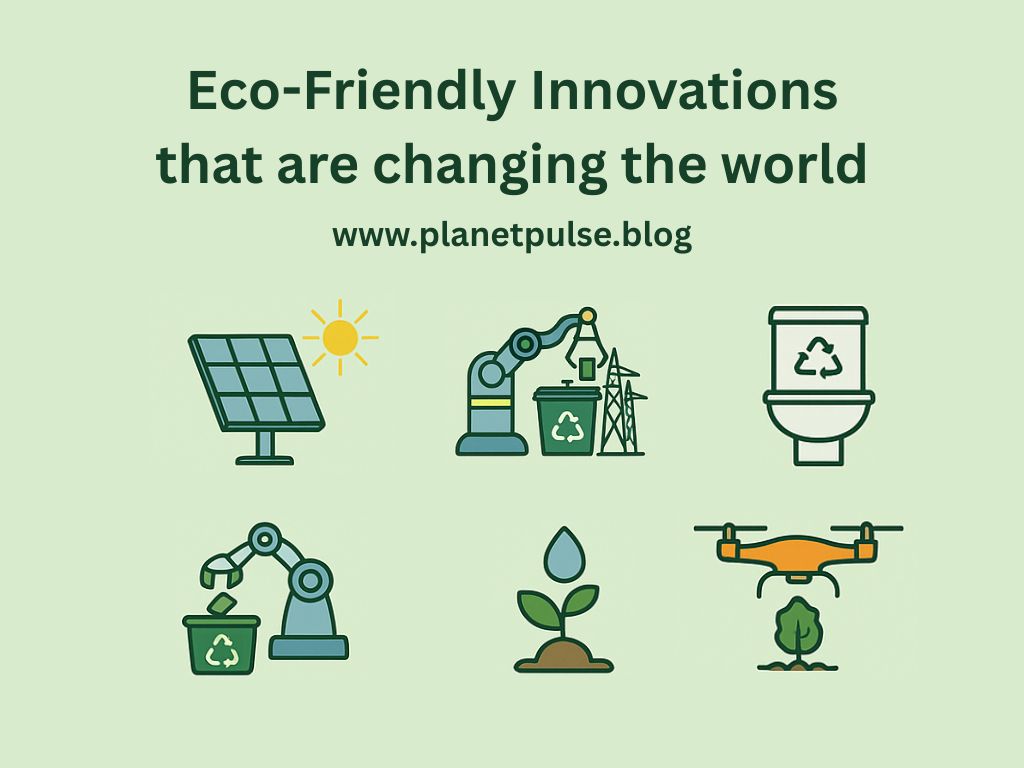
As the world faces escalating climate challenges, the need for sustainable solutions has never been more urgent. From shrinking ice caps to rising sea levels and extreme weather, the effects of environmental degradation are becoming impossible to ignore. But amid these challenges, innovation is rising to meet the moment.
Eco-friendly innovations are not just futuristic concepts anymore, they are real, practical technologies making a tangible difference today. Whether it’s transforming the way we power our homes, manage waste, or protect natural ecosystems, these green technologies are helping to reshape the planet’s future for the better.
In this article, we explore how these ground-breaking sustainable innovations are changing the world, one invention at a time.
In this Article
Key Areas of Eco-Innovation
Modern sustainability efforts fall into three major innovation sectors:
- Energy: Renewable sources, smart grids, and storage advancements.
- Waste Management: Recycling tech, circular economy practices.
- Conservation: Smart irrigation, wildlife tracking, sustainable agriculture.
| Innovation | Sector | Environmental Benefit | Real-World Use Case |
|---|---|---|---|
| Solar Photovoltaics | Energy | Reduces reliance on fossil fuels | Morocco’s Noor Ouarzazate Solar Complex |
| Smart Grids & Battery Storage | Energy | Balances demand and improves efficiency | Australia’s Hornsdale Power Reserve |
| AI-Powered Recycling | Waste Management | Improves sorting, increases recycling rates | AMP Robotics’ smart sorters |
| Composting Toilets | Waste Management | Saves water, reduces sewage pollution | Eco-resorts in Costa Rica |
| Precision Irrigation | Conservation | Reduces water waste in agriculture | Netafim systems in India and Israel |
| Rewilding Drones | Conservation | Helps reforest and restore ecosystems | BioCarbon Engineering in Myanmar |
1. Energy Innovations
Solar and Wind Power
Solar photovoltaic (PV) panels and wind turbines are now more affordable and efficient than ever. These renewables reduce greenhouse gas emissions and dependence on fossil fuels.

Countries like Germany, India, and Australia are leading with massive solar farms, while offshore wind farms grow rapidly in Europe and the U.S.
The Noor Ouarzazate Solar Complex is one of the largest concentrated solar power (CSP) plants in the world. Spanning over 6,178 hectares, it provides power to more than a million people while reducing CO₂ emissions by hundreds of thousands of tons per year.
Smart Grids and Energy Storage
The rise of smart grids and energy storage technologies (like lithium-ion batteries) ensures stable electricity even when the sun isn’t shining or the wind isn’t blowing. These technologies help balance supply and demand, reducing blackouts and wastage.
Built by Tesla in South Australia, the Hornsdale battery system has become a model for grid stabilization. It reduced energy costs, prevented blackouts, and supported the transition to wind and solar power across the region.
2. Waste Management
AI-Powered Recycling
Sorting recyclable materials manually is inefficient. AI-driven machines now identify, sort, and separate recyclables with precision, increasing recovery rates and reducing contamination in recycling streams.
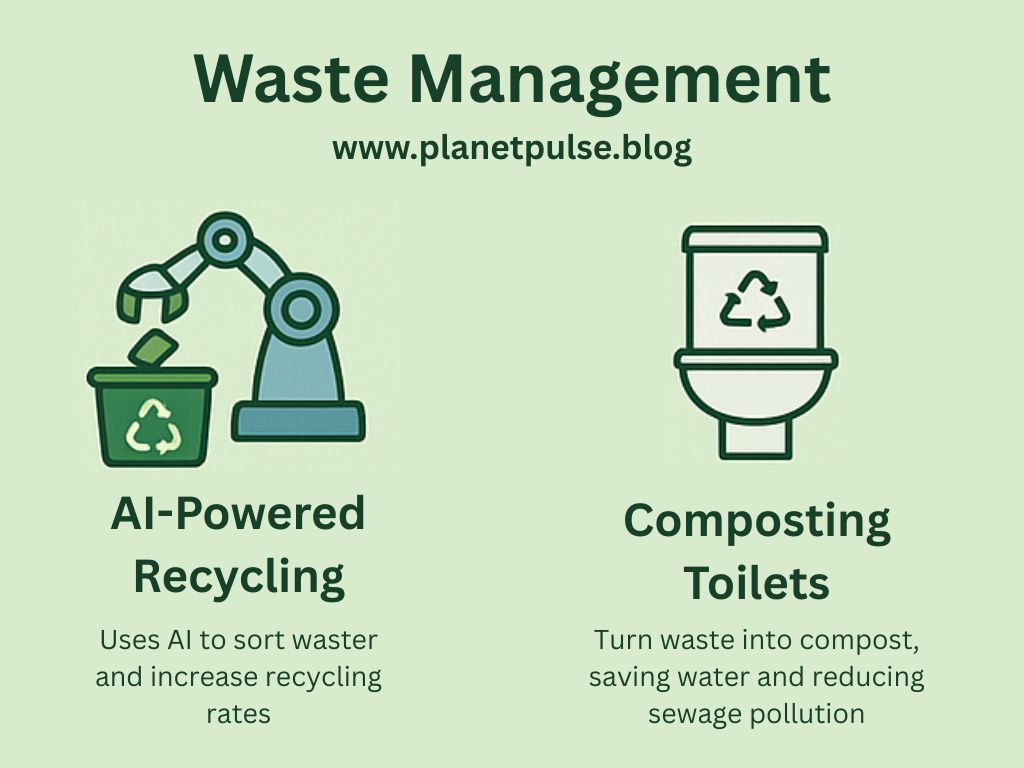
Based in Colorado, AMP Robotics uses AI to power robotic arms that can recognise and sort items from mixed recycling streams at high speed and accuracy. Their systems have dramatically increased recovery rates and reduced contamination.
Circular Economy and Composting Toilets
Innovations in product design aim to eliminate waste entirely. Composting toilets, for example, reduce the need for water-intensive sewage systems and turn waste into usable compost, especially helpful in remote or arid regions.
Many eco-lodges and off-grid homes in Costa Rica use composting toilets to conserve water and reduce environmental impact. These systems are especially effective in remote areas where sewage systems are not feasible.
Conservation Technologies
Smart Irrigation
Agriculture accounts for 70% of global freshwater use. Smart irrigation systems use sensors and data analytics to water crops only when necessary, drastically cutting down on water use without compromising yield.
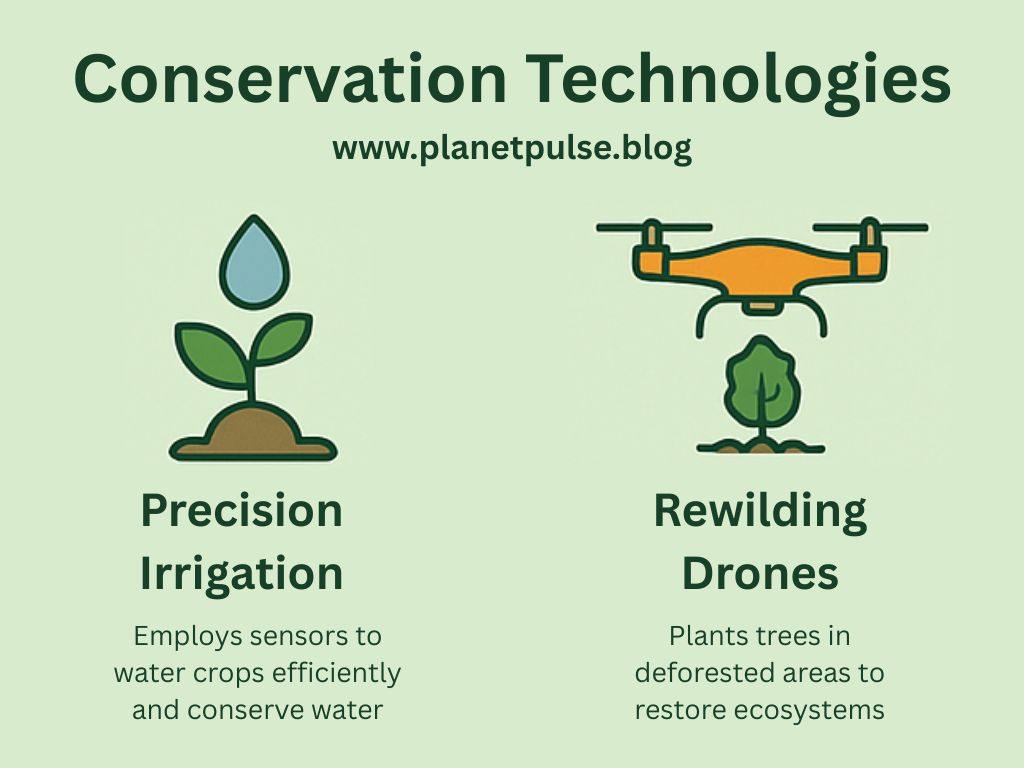
Netafim, an Israeli company, provides smart irrigation systems across arid regions. In India, their systems have increased agricultural productivity by up to 30% while reducing water usage by 30–50%, benefiting thousands of small farmers.
Drones for Conservation
Rewilding drones are being deployed to plant trees in deforested areas, restoring biodiversity and carbon capture. For example, 75,000 native tree seeds were sowed using drones to triple rainforest cover in Cornwall and Devon. In Kenya and Brazil, such technologies are reviving degraded ecosystems at an unprecedented scale.
BioCarbon Engineering used drones to plant up to 100,000 mangrove trees a day in Myanmar to restore an ecosystem that has been disappearing for decades. These forests are critical for biodiversity, coastal protection, and carbon capture.
Frequently Asked Questions
How scalable are these green technologies?
Many of these innovations are highly scalable and already being used in cities, rural areas, and across industries. With the right investment and policy support, adoption can grow globally.
Can developing countries benefit from these technologies?
Yes. In fact, many green technologies, like solar microgrids or drip irrigation are particularly useful in low-resource settings where infrastructure is limited.
What is the role of individuals in promoting these innovations?
Individuals can adopt home-level solutions (like solar panels, composting, and water-saving devices), support sustainable brands, and advocate for green policy in their communities.
What industries are most impacted by these innovations?
Agriculture, energy, construction, and waste management are among the most impacted, with significant shifts in how resources are used and conserved.
Conclusion
Eco-friendly technologies are rapidly changing the way we interact with our environment. Through real-world innovations in energy, waste, and conservation, we’re beginning to address some of the planet’s biggest challenges, one breakthrough at a time.
Whether it’s a farmer using precision irrigation in India or a city storing solar power for night time use in Australia, these technologies offer a vision of a cleaner, more efficient, and more sustainable future.





 Planet Pulse
Leave a comment