

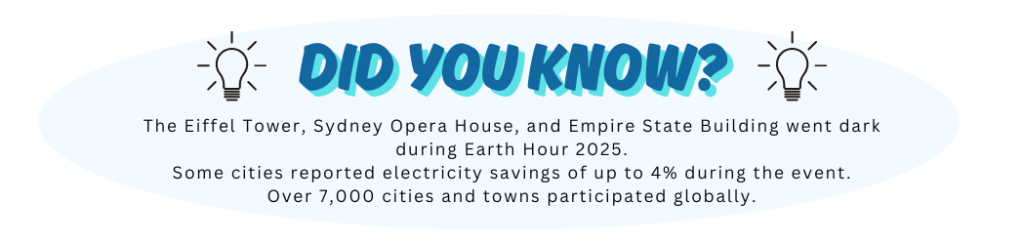
On March 22, 2025, millions of people around the world switched off their lights for one hour to stand in solidarity for the planet. Earth Hour 2025 was more than just a symbolic gesture; it was a global movement demonstrating the power of collective action in tackling climate change and promoting sustainability. Now that the event has passed, it’s time to reflect on the impact it had and how we can continue its momentum throughout the year.
In this Article
What is Earth Hour?
Earth Hour is a global movement initiated by the World Wide Fund for Nature (WWF) in 2007. It started as a simple lights-off event in Sydney, Australia, and has since grown into a worldwide phenomenon observed in over 190 countries.
Goals of Earth Hour
- Raise awareness about climate change and biodiversity loss: The event highlights the urgent need to address global warming, deforestation, and the loss of natural habitats, inspiring people to take action.
- Inspire sustainable practices at individual and community levels: Earth Hour encourages people to adopt energy-efficient habits, reduce waste, and support eco-friendly businesses.
- Encourage policy changes that prioritize environmental conservation: The movement has influenced governments to implement environmental laws, reduce carbon emissions, and invest in renewable energy sources.
- Support projects focusing on renewable energy, reforestation, and wildlife protection: Donations and campaigns linked to Earth Hour contribute to critical environmental initiatives worldwide.
The Impact of Earth Hour 2025
With global temperatures rising, deforestation accelerating, and pollution threatening ecosystems, Earth Hour continues to serve as a crucial reminder of our responsibility to the planet.
Environmental Benefits of Earth Hour:
| Benefit | Impact |
|---|---|
| Energy Conservation | Reduced electricity demand, lowering carbon emissions and decreasing reliance on fossil fuels. |
| Increased Awareness | Encouraged discussions about climate action, sustainability, and responsible energy consumption. |
| Policy Influence | Demonstrated public support for environmental policies, motivating governments to take action. |
| Community Engagement | Brought people together to promote sustainability, creating a ripple effect of positive environmental changes. |
The Power of Collective Action
The combined effort of millions participating in Earth Hour 2025 reinforced the importance of small actions leading to significant change. The event has historically inspired:
- The creation of marine reserves in Argentina and Madagascar: These protected areas help safeguard marine biodiversity and combat overfishing.
- Legislative efforts to curb plastic pollution: Several countries have introduced bans on single-use plastics, inspired by movements like Earth Hour.
- Renewable energy adoption in several cities: Governments and businesses worldwide have committed to transitioning to cleaner, sustainable energy sources.
How You Can Keep the Momentum Going
Earth Hour may be over, but its message lasts all year. Here’s how you can continue making a difference:
Individuals:
- Adopt energy-efficient habits: Use LED lighting, unplug devices when not in use, and reduce unnecessary energy consumption.
- Reduce waste: Choose reusable products, compost food scraps, and recycle whenever possible.
- Support sustainable brands: Purchase from businesses that prioritize environmental responsibility.
- Engage in climate activism: Advocate for stronger environmental policies and educate others about sustainability.
To learn more about how you can reduce your energy consumption, Buy our Energy Conservation Checklist.
Businesses:
- Implement long-term green policies: Switch to renewable energy sources, minimize waste, and optimize supply chains for sustainability.
- Encourage corporate responsibility: Support conservation projects and provide employees with sustainability training.
- Reduce carbon footprints: Invest in carbon offset programs and eco-friendly transportation options.
Communities & Schools:
- Organise local environmental initiatives: Tree-planting drives, clean-up campaigns, and recycling programs create lasting positive impacts.
- Educate on sustainability: Schools and local organizations can integrate environmental education into their curricula and programs.
- Partner with local authorities: Advocate for improved green spaces, waste management, and sustainable urban planning.
Frequently Asked Questions (FAQs)
Does turning off the lights for an hour really make a difference?
Yes! While the direct energy savings are minimal, Earth Hour is about raising awareness and influencing long-term sustainable actions.
Can I still participate even though the event has passed?
Definitely! You can practice energy conservation daily and spread awareness about sustainability throughout the year.
Is Earth Hour only about turning off lights?
No, it’s about advocating for environmental change. Many use the event to commit to greener habits and promote sustainable policies.
How can I spread the message of Earth Hour beyond March 30?
You can share educational content on social media, support environmental organizations, and participate in sustainability-focused events year-round.
Conclusion
Earth Hour 2025 may be over, but the fight for a sustainable future continues. Whether through reducing energy consumption, advocating for environmental policies, or educating others about climate change, every action counts. Let’s carry the spirit of Earth Hour throughout the year and work towards a healthier planet together.
Ready to take ongoing action?
Support the movement by adopting sustainable habits, engaging in environmental advocacy, and spreading awareness. Visit WWF’s official Earth Hour page to explore more ways to make a difference.
Together, we can create lasting change—one action at a time! 🌍✨




 Planet Pulse
Leave a comment