
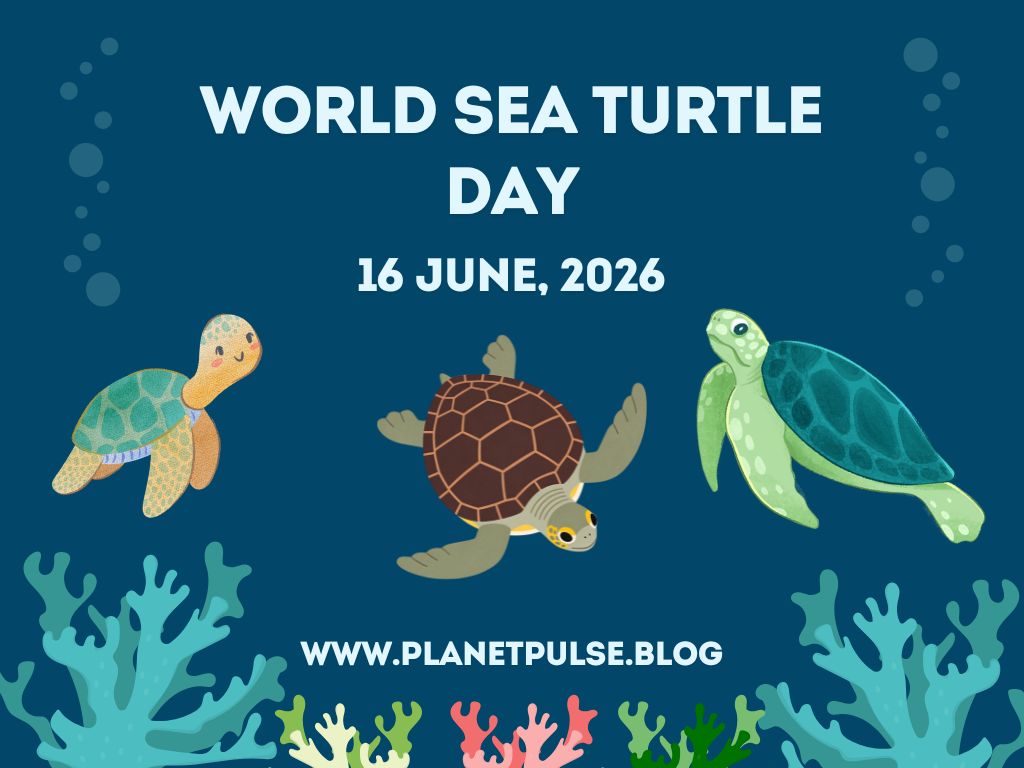
World Sea Turtle Day is a day dedicated to one of the ocean’s most ancient and resilient creature, celebrated every year on June 16. The day is a reminder of how incredible sea turtles are, how they have become endangered and why protecting them is essential to the health of our ocean.
World Sea Turtle Day is the centrepiece of Sea Turtle Week, a global effort that brings together conservation organisations, scientists, educators and ocean enthusiasts to raise awareness about these extraordinary marine species.
In this Article
What Is World Sea Turtle Day?
World Sea Turtle Day is an annual event that is dedicated to the seven species of sea turtles and the conservation challenges they face. The day encourages people to learn more about the biology of sea turtles, support conservation organisations and take meaningful action to protect marine ecosystems, whether they live near the coast or not.
Why World Sea Turtle Day Is Celebrated
World Sea Turtle Day would not be complete without thanking Dr. Archie Carr, the Sea Turtle Conservancy’s founder and “father of sea turtle biology.” World Sea Turtle Day is held on June 16th, the same day of Dr. Carr’s birthday.
His study and efforts raised awareness about the dangerous conditions that continue to affect sea turtles today as well as raised awareness about the challenges. He also contributed towards the formation of a global community dedicated to improving the lives and futures of sea turtles.
The Seven Species of Sea Turtles
The seven species of sea turtles are the green, hawksbill, leatherback, loggerhead, olive ridley, Kemp’s ridley and flatback turtles. Each species plays a vital role in marine ecosystems, from maintaining healthy seagrass meadows and coral reefs to regulating prey populations. They vary in size, diet and habitat. Despite their differences, all seven species face common threats such as habitat loss, pollution and climate change, making their conservation crucial for ocean health.
Six of these are listed as vulnerable, endangered or critically endangered by the IUCN Red List.
Why Sea Turtles Matter
Sea turtles are keystone species that contribute to the balance of ocean ecosystems. For instance:
- Green Sea Turtles: Graze on seagrass, preventing overgrowth and stimulating new, more nutritious blade growth, which enhances productivity, facilitates nutrient cycling and improves light penetration to keep the meadows healthy.
- Hawksbill Sea Turtles: Maintains coral reef health and biodiversity by feeding on sponges that compete with corals, preventing sponge overgrowth and preserving reef structure. One hawksbill turtle can consume over half a ton of sponges annually.
- Leatherback & Loggerhead Sea Turtles: Regulate prey populations by consuming jellyfish and gelatinous invertebrates, helping prevent jellyfish blooms that could harm fish eggs and larvae, thus maintaining food web balance.
- Nesting Female Sea Turtles: Transfer nutrients like nitrogen and phosphorus from the ocean to sandy beaches when laying eggs, fertilizing dune vegetation, stabilizing sand, preventing coastal erosion and enriching the coastal landscape.
These ecological roles promote fisheries, preserve coasts and maintain biodiversity. This means that when sea turtle populations decline, the entire marine environment suffers.
Moreover, sea turtles have been around for more than 110 million years, surviving mass extinctions and significant climatic changes. However, numerous populations have collapsed in a single human lifetime.
Threats Facing Sea Turtles Today
Despite their resilience, sea turtles face a growing list of human‑driven threats, such as:
- Plastic Pollution: Around eight million tonnes of plastic enter the oceans each year and sea turtles often mistake plastic bags for jellyfish. It is estimated that one in every two turtles has ingested plastic.
- Coastal Development: Urbanisation and tourism have destroyed or disturbed nesting beaches, making it harder for female sea turtles to lay eggs.
- Bycatch & Entanglement: Fishing gear pose deadly threats to sea turtles, as they often become trapped in nets or lines and drown.
- Climate Change: Rising temperatures alters sea turtles hatchling sex ratios, eroding beaches through storms and destroying nests during extreme weather events like the intense 2024 hurricane season.
- Illegal Trade & Boat Strikes: High-speed boats frequently injure sea turtles, while illegal trade of their meat and shells persists in some regions, posing ongoing threats to their populations.
These pressures combined have pushed sea turtles populations to the brink.
Global Conservation Efforts
Despite challenges, conservation initiatives are having an impact. For example:
- Satellite tracking has transformed our knowledge of turtle migration and behaviour.
- Long-term monitoring at Tortuguero has tagged over 35,000 adult female green turtles, providing decades of data to inform conservation initiatives.
- Community-led activities in Florida’s Suncoast region have seen Kemp’s ridley nests more than double in 2024 compared to 2023.
- Rehabilitation centers, such as the Navarre Beach Sea Turtle Conservation Center, care for wounded turtles before releasing them back into the wild.
Some species are exhibiting indications of recovery. For example, the number of leatherback nests increased from 27 in 1989 to 641 in 2014, proving that long-term conservation works.
How World Sea Turtle Day Is Celebrated
World Sea Turtle Day is marked by a wide range of activities, including:
- Beach clean‑ups to remove plastic and fishing debris.
- Educational workshops in schools, aquariums and community centres.
- Night‑time beach patrols to monitor nesting females.
- Social media campaigns using hashtags like #WorldSeaTurtleDay and #SeaTurtleWeek, which help spread awareness globally.
Sea Turtle Facts
Sea turtles have been nesting on beaches for millions of years, showing extraordinary resilience.
They can migrate across entire oceans and return to the same beach where they hatched.
Leatherbacks can dive over 1,000 metres deep.
They cannot retract their limbs like land turtles.
Conclusion
Sea turtles have survived for over 100 million years, yet human activity now threatens their future. By understanding their importance, recognising the challenges they face and taking meaningful steps this World Sea Turtle Day to protect them, we can help ensure that these ancient ocean guardians continue to thrive.


 Planet Pulse
Leave a comment