
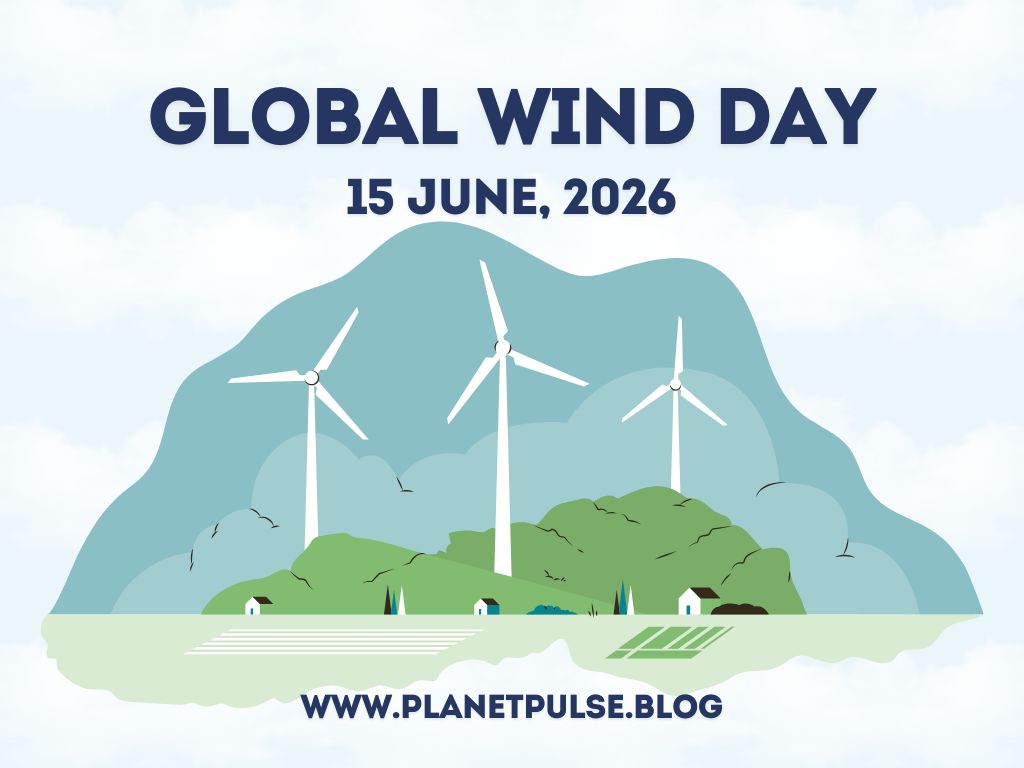
Global Wind Day is an international awareness day that is celebrated every year on 15 June. The day is dedicated to the power and potential of wind energy. It started as a European initiative that has grown into a global movement that highlights how wind energy supports climate action, strengthen energy security and creates a cleaner future.
Global Wind Day also highlights the significance of renewable energy as the global temperatures continues to rise and there is an increasing pressure to cut down on greenhouse gas emissions.
In this Article
What Is Global Wind Day?
Global Wind Day is an annual celebration of wind, its power and the opportunities it provides to alter energy systems, decarbonise countries as well as create jobs. The day is co-ordinated by WindEurope, the Global Wind Energy Council (GWEC) and national renewable energy associations to introduce the public to wind energy through events, open days and educational activities. The day honours both the technology and the thousands of individuals who work within the industry.
The Purpose of Global Wind Day
The goal of the Global Wind Day is to raise awareness on how the wind energy contributes towards sustainability. It also focuses on the economic, social and environmental benefits of wind energy, which includes reducing greenhouse gas emissions due to the decreasing reliance on fossil fuels to generate energy as well as creating green jobs.
Moreover, the day also encourages conversations about innovation, policy and the role of community in the shift towards renewable energy.
Wind Energy & Climate Action
Wind energy is a renewable energy source that is becoming increasingly important as countries strive toward net-zero ambitions. This is because unlike fossil fuels, wind energy does not emits any carbon dioxide, does not require imported fuels and most importantly, it does not deplete natural resources.
In addition, wind energy stabilises energy costs, decreases reliance on volatile global markets, and promotes long-term climate objectives.
How Wind Energy Works
Wind turbine transform the kinetic energy of moving air to electricity. As wind blows across the blades, a generator inside the turbine generates clean power, that is then delivered into the grid.
Furthermore, modern turbines are extremely efficient than traditional wind turbines. This means that even at low wind speed, energy can be generated. There are two types such as onshore turbines, that are situated on land and offshore turbines, that are placed at sea where winds are stronger and more steady. Both play an important role in providing renewable electricity to homes and businesses.
Global Growth of Wind Energy
Wind energy has experienced incredible global growth. In 2023, the world’s installed wind capacity topped 1 terawatt, a significant milestone for the renewable energy sector. Also, offshore wind is quickly growing, particularly in Europe and Asia, where large-scale projects uses high coastal winds. These offshore turbines, which are typically taller than skyscrapers, generate massive amounts of electricity while leaving little environmental impact than non-renewable energy sources.
The UK’s Leadership in Wind Power
The UK is recognised as a global leader in offshore wind. Projects such as Hornsea One, Hornsea Two and the upcoming Dogger Bank wind farm have put the country at the forefront of renewable energy development.
Wind power now accounts for a considerable portion of UK electricity, contributing to the country’s goal of reaching net-zero emissions. Beyond environmental benefits, the business provides thousands of jobs, revitalises coastal communities and attracts billions of dollars in investment.
Benefits of Wind Energy
Wind energy has several benefits. Some of the environmental benefits of wind energy are that wind energy produces no air pollution, it requires little water and has one of the lowest lifecycle emissions of any energy source. Economically, it generates long-term jobs in manufacturing, engineering, maintenance and research.
Moreover, community wind projects enable local groups to generate their own clean energy while reinvesting revenues in community activities. Also, as technology continues to develop, wind energy’s cost continues to decline, making it one of the most economical sources of electricity in the world.
Challenges & Misconceptions
Despite its benefits, wind energy still has several disadvantages. For example, wind turbines are visually unappealing to looks at and there also doubts about their efficiency and dependability. Also, the fact that wind does not blow all the time is frequently misunderstood, despite the fact that contemporary grids manage supply through forecasting, storage and hybrid systems.
Moreover, wind turbines also have a significant impact of wildlife as wind turbine blades can be extremely dangerous to birds, especially turbines built near migratory flight pattern areas, but better turbine design and continuous study of wildlife migration rotes have considerably decreased these hazards.
Apart from this, wind turbines also generate noise and when they are built closer to homes, may be a disturbance to people. Another challenge it faces are policy delays and planning roadblocks that hinders the widespread implementation of wind turbines.
How Individuals & Communities Can Get Involved
Global Wind Day encourages individuals to use renewable energy in meaningful ways. Many countries organise open days at wind farms, allowing tourists to observe turbines up close. Also, schools host renewable energy seminars and community groups organise speeches, exhibitions and local energy initiatives.
Individuals can support wind energy at home by switching to green energy tariffs, learning about renewable technologies or sharing educational content to increase awareness.
Conclusion
Global Wind Day reminds us of what is possible when innovation, policy and public involvement intersect. Wind energy is clean, abundant and getting cheaper. It creates jobs, improves energy security and helps to safeguard the environment for future generations. Individuals and communities may contribute to a more sustainable future by learning about, sharing and supporting renewable energy.


 Planet Pulse
Leave a comment