
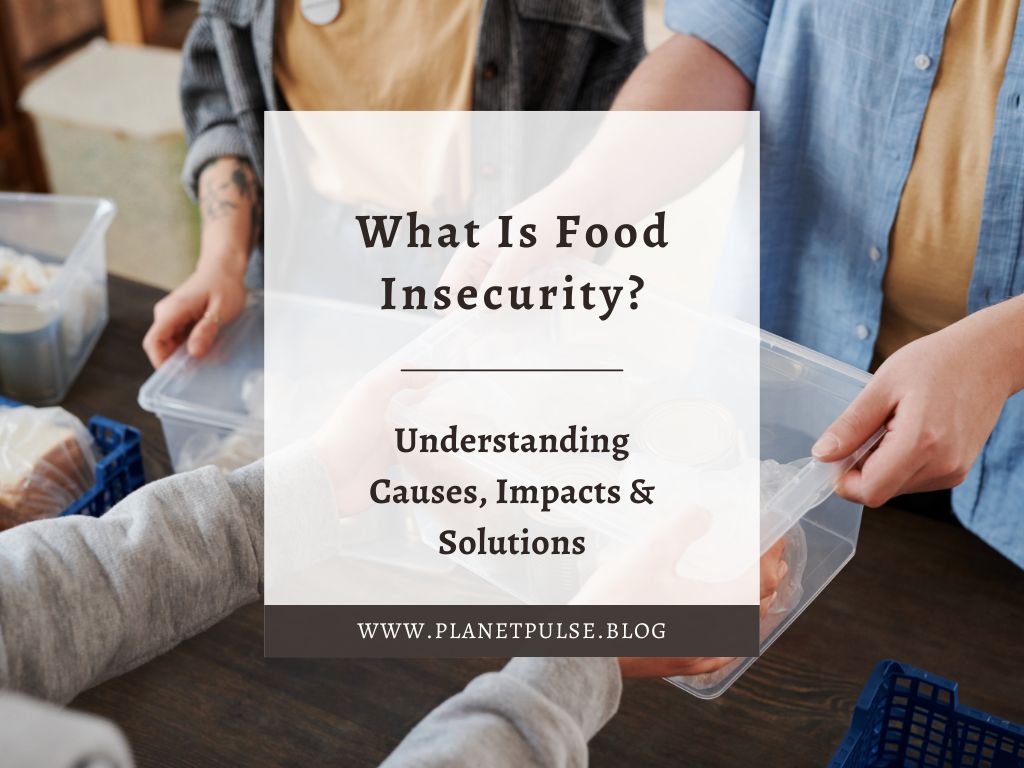
Food insecurity is one of the most significant social and environmental challenges of our time. This is because it affects millions of households worldwide, including communities across the UK, where rising living costs, climate pressures and increasing inequalities are making it harder for people to access nutritious and affordable food.
This means that understanding food insecurity is essential as it sits at the intersection of economics, climate change, social justice and public policy. This article explores what food insecurity means, why it happens, who is affected the most and solutions for long‑term resilience.
In this Article
Defining Food Insecurity
Food insecurity refers to the lack of consistent access to enough safe, nutritious and culturally appropriate food for an active and healthy life. It is not a single moment of struggle but a pattern of instability. A household may experience food insecurity even if they occasionally have enough food. This is because of the uncertainty and inconsistency of said food.
Unlike hunger, which describes a physical sensation, food insecurity is a socio-economic condition. It includes worrying about running out of food, reducing meal sizes, skipping meals, relying on low‑cost processed foods or being unable to afford balanced nutrition.
How Is Food Insecurity Measured
Food insecurity is measured with tools, such as the Food Insecurity Experience Scale (FIES) help researchers assess the severity and frequency of food insecurity. Apart from that, national surveys, school meal data and food bank statistics also provide insight.
These measurements allow policymakers to track trends, identify vulnerable groups and design effective interventions in order to combat food insecurity.
Levels of Food Insecurity
Food insecurity is frequently defined using the Integrated Food Security Phase Classification (IPC), which is a worldwide accepted system used by governments, humanitarian agencies and experts to determine the severity of acute food shortage.
The IPC scale is an evidence-based tool for understanding how households and communities deal with food shortages, coping pressures and nutritional decline. It consists of five phases, each signifying a more severe level of food insecurity.
- Minimal: Households can meet essential food and non‑food needs without resorting to unsustainable or uncommon coping strategies. Food access is stable, and diets remain adequate. At the area level, this phase indicates that over 80% of the population is meeting basic needs.
- Stressed: Households have enough food consumption but struggle to cover important non-food costs. To cope, they may start using stress-level techniques like reducing their spendings, leaning on social networks or changing their food habits. Diet quality may deteriorate even if quantity remains constant.
- Crisis: Households may experience acute malnutrition due to food consumption gaps or rely on crisis-level coping techniques to meet their basic needs. This era marks a critical threshold where food insecurity threatens long-term stability and resilience.
- Emergency: Households face significant food intake gaps, severe acute malnutrition and increased mortality. Others may temporarily close these gaps, but only by emergency measures like selling essential assets or jeopardising future livelihoods. This phase indicates an acute humanitarian need.
- Famine: Even after using all coping tactics, households are severely lacking in food and other necessities. Starvation, destitution and severe acute malnutrition are all present.
The IPC scale is widely used because it captures both food consumption and livelihood impacts, recognising that food insecurity is not only about what people eat today but also about the strategies they must use to survive tomorrow.
It also highlights how quickly conditions can deteriorate when households are forced to sell assets, skip meals or rely on emergency assistance.
Main Causes of Food Insecurity
Food insecurity is caused by a several different factors. For instance:
- Poverty: When household income is unstable or insufficient, food becomes one of the first areas where compromises are made. Apart from this, the rise in food prices, energy bills and housing costs intensify this pressure, leaving families with a difficult choice.
- Climate Change: Extreme weather events such as droughts, floods and heatwaves disrupt food production, reduce crop yields and increase the cost of staple foods. These impacts are felt both globally and locally, affecting supply chains and food availability in the UK.
- Conflict & Political Instability: Disrupts agricultural systems, displace communities and limit access to markets. Even when conflict occurs abroad, it can influence food prices and supply chains in the UK due to global trade dependencies.
- Social Inequality: Disabled individuals, refugees, single parents and people living in deprived areas often face structural barriers that limit access to affordable and nutritious food. These barriers may include lack of transport, limited local food options or reduced access to social support.
This shows that food insecurity is caused by a combination of economic, environmental and social pressures.
Who Is The Most Affected?
Food insecurity affects people across different backgrounds, but some groups are disproportionately impacted. For example:
- Low‑income households are the most vulnerable, especially those experiencing unemployment, insecure work or sudden financial shocks.
- Single parents often face higher living costs and reduced income, making it harder to maintain stable access to food.
- Disabled individuals may struggle with additional costs, limited mobility or barriers to employment.
- Refugees and asylum seekers frequently face legal restrictions, limited financial support and unfamiliar food environments.
- Children are particularly vulnerable as food insecurity affects their physical development, concentration, academic performance and emotional wellbeing. Schools often see the effects first, through increased hunger, reduced engagement and reliance on free school meals.
- Older adults may experience food insecurity due to fixed incomes, health conditions or social isolation.
- In communities facing environmental stress such as areas affected by flooding or heatwaves, the risk of food insecurity is even higher.
The Impacts of Food Insecurity
The consequences of food insecurity extend far beyond hunger as it can affect people:
- Physically: It increases the risk of malnutrition, obesity, diabetes, heart disease and weakened immunity. This is because, when people rely on cheap, calorie‑dense foods, their nutritional intake suffers, leading to long‑term health problems.
- Mentally: Food insecurity is linked to stress, anxiety, depression and reduced self‑esteem. The constant worry about food can affect sleep, decision‑making and overall wellbeing. For children, the psychological impacts can shape lifelong outcomes.
- Socially: Food insecurity reduces participation in community life, limits educational opportunities and increases reliance on emergency support.
- Economically: It contributes to higher healthcare costs, reduced productivity and long‑term poverty cycles.
Solutions & Interventions
Addressing food insecurity requires a combination of policy action, community support and sustainable food systems. Government interventions such as income support, affordable housing and school meal programmes can reduce financial pressure on households. This allows people to get out of this cycle and supports their wellbeing.
Additionally, community initiatives that includes food banks, community kitchens and local growing projects provides immediate relief and long‑term empowerment to food insecure people.
Apart from this, sustainable agriculture, climate adaptation and resilient supply chains are also essential for ensuring stable food access. Moreover, education also plays a key role in helping individuals make informed food choices and build practical skills.
Conclusion
Food insecurity is a complex issue shaped by economic, environmental and social factors which affects health, wellbeing and community resilience. Therefore, being able to understand its causes and impacts are essential for building a fair, sustainable future.
By addressing the main causes of food insecurity, supporting vulnerable groups and strengthening local food systems, we can move towards a world where everyone has reliable access to nutritious and affordable food.



Leave a Reply