
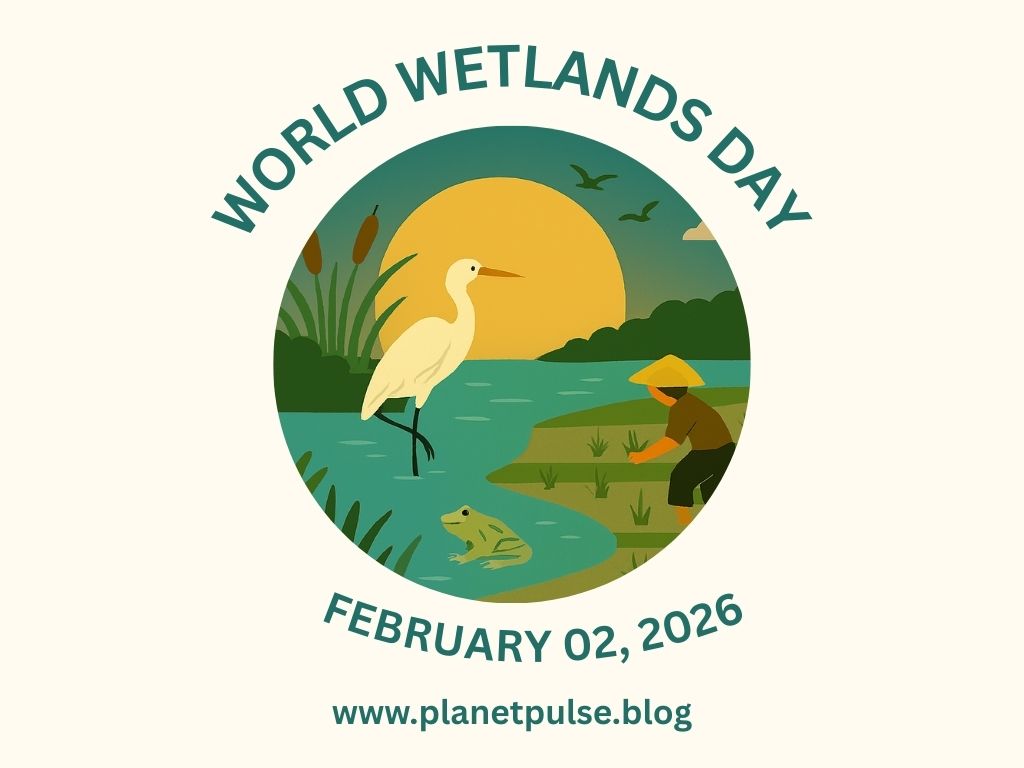
World Wetlands Day is observed globally on Monday, February 2, 2026. The theme for this year is “Wetlands and Traditional Knowledge: Celebrating Cultural Heritage,” which emphasises the close cultural ties that communities have to wetlands as well as the knowledge that has been passed down through the centuries regarding the management of these ecosystems.
Wetlands, however, are also our strongest natural barrier against climate change, going beyond cultural value. They protect populations from flooding, control water cycles, store enormous amounts of carbon, and preserve biodiversity. Despite this, wetlands are disappearing at a startling rate. This article examines the importance of wetlands, how they shield us from climate change, and what immediate action is required to preserve them.
In this Article
Wetlands and Climate Change
Wetlands are powerful carbon storage systems, yet they are frequently disregarded in favour of forests or seas. Wetlands store 30% of the world’s soil carbon, despite taking up only 6% of the planet’s land area. They are therefore extremely crucial in the fight against climate change.
Peatlands, a type of wetland, are especially significant even though they cover just 3% of land, they store twice as much carbon as all the world’s forests combined. Whilst mangroves and salt marshes trap carbon in their soils and vegetation, locking it away for centuries.
Wetlands are important because they prevent carbon dioxide from entering the atmosphere, which slow global warming. Destroying them, however, has the opposite effect as drained peatlands and cleared mangroves release massive amounts of greenhouse gases, accelerating climate change.
Flood Control and Climate Resilience
Wetlands collect excess rainfall and release it gradually, acting as natural sponges. Because extreme weather events are occurring more frequently due to climate change, this role is crucial. This is because:
- Wetlands can safeguard populations downstream by reducing flood peaks by as much as 60%.
- They replenish groundwater sources, guaranteeing the availability of water during droughts.
For instance, by dampening storm surges, the Mississippi River floodplain wetlands in the United States have prevented flood damage worth billions of dollars. Similarly, mangroves in coastal areas also safeguard shorelines from erosion and storm damage by reducing wave energy by as much as 60%.
Biodiversity in Wetlands
Wetlands are home to 40% of all species globally. They provide critical habitats for migratory birds, amphibians, fish nurseries, and various flora.
- Birds: Wetlands serve as rest stops for millions of migratory birds on their lengthy flights.
- Fish: Wetlands are home to various economically significant fish species that support livelihoods and food security.
- Amphibians: Salamanders, frogs, and other amphibians flourish in wetlands and support the equilibrium of the ecosystem.
Wetlands are crucial for long-term sustainability because diverse ecosystems are more resilient to climate shocks.
Global Statistics Snapshot
| Wetland’s Function | Impact/Statistic |
|---|---|
| Carbon storage | 30% of soil carbon stored in wetlands |
| Biodiversity | 40% of species depend on wetlands |
| Flood Control | Reduce flood peaks by up to 60% |
| Water purification | Remove pollutants, improving water quality |
| Human reliance | 1 billion people depend on wetlands for livelihoods |
Cultural and Traditional Knowledge: The 2026 Theme
The focus of this year’s theme is wetlands’ cultural legacy. Communities have depended on wetlands for identity, food, and water for centuries. Conventional methods frequently coincide with contemporary conservation objectives.
- Asia’s rice paddies are wetlands that support billions of people and have been modified by generations of farmers.
- Indigenous people have maintained livelihoods and biodiversity by taking care of mangroves and marshes.
- The spiritual and cultural value of wetlands is reflected in folklore and rituals associated with them.
We can develop more successful conservation methods by fusing traditional knowledge with contemporary research. Acknowledging cultural heritage also encourages communal ownership of the preservation of wetlands.
Threats to Wetlands
Wetlands are at risk despite their significance. They are vanishing three times faster than forests due to:
- Urbanisation: Wetlands drained for housing and infrastructure.
- Agriculture: Conversion to farmland, particularly for animals and rice.
- Pollution: Fertilisers, pesticides, and industrial waste deteriorate the health of wetlands.
- Climate change: Droughts dry up inland wetlands while rising sea levels endanger coastal wetlands.
Wetland destruction poses a direct threat to human survival in addition to being a tragedy for the ecosystem. There are fewer species, less flood protection, and less carbon storage for every acre destroyed.
Call to Action: Protecting Wetlands in 2026 and Beyond
To safeguard wetlands, urgent action is needed:
- Policy: Governments must enforce wetland protection laws and integrate wetlands into climate strategies.
- Restoration: Re-wetting drained peatlands, replanting mangroves, and restoring floodplains.
- Community engagement: Empowering local communities to lead conservation efforts.
- Global cooperation: Strengthening international agreements like the Ramsar Convention.
Individuals can also contribute, by:
- Supporting wetland conservation organisations.
- Reducing pollution by choosing eco-friendly products.
- Advocating for sustainable urban planning.
Conclusion
It is evident that wetlands are life-supporting systems rather than just ecosystems as we commemorate World Wetlands Day in 2026. They preserve biodiversity, store carbon, defend us from floods, and represent cultural legacy.
The theme “Wetlands and Traditional Knowledge: Celebrating Cultural Heritage” serves as a reminder that preserving wetlands involves more than just science. It also entails respecting the knowledge of the communities that have coexisted with them for many generations.
Wetlands are essential in the battle against climate change. They serve as our finest line of defence. By defending them, we are defending our future, our cultures, and ourselves.




 Planet Pulse
Leave a comment