
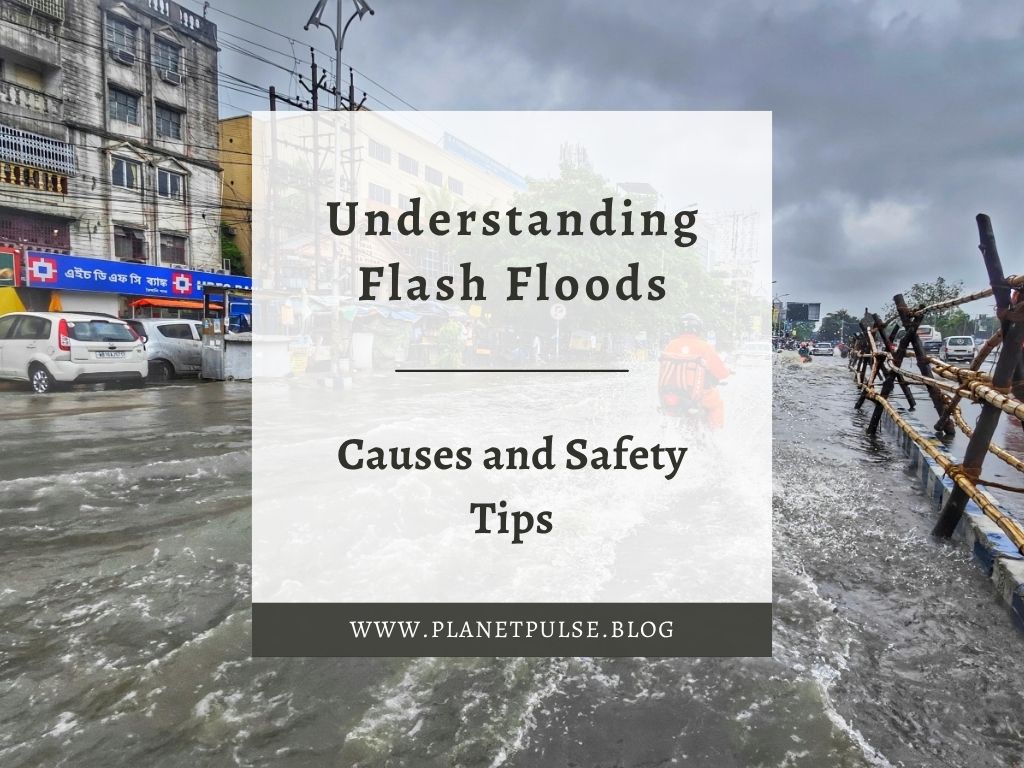
Flash floods are powerful, abrupt and frequently fatal. In a matter of minutes, they can turn dry ground into ferocious torrents, giving us little time to respond. Communities around the world need to understand what causes flash floods and how to keep safe, especially as extreme weather events grow more common.
In this Article
What is a Flash Flood?
A flash flood is an instance of rapid flooding that occurs within minutes to many hours after a sudden release of water, strong rainfall or dam failure. Flash floods surge rapidly and with extreme force, in contrast to fluvial (river) floods that rise slowly. Even when it’s not raining nearby, they can occur in cities, deserts, mountains or valleys. People may be caught off guard as water rushes downhill due to rainfall upstream.
Flash floods are very dangerous due to three important factors:
- Speed: Water levels rise rapidly, often within minutes.
- Force: Fast-moving water can sweep away cars, trees and buildings.
- Unpredictability: They strike with little or no warning.
What Makes Flash Floods Different
The intensity and quick start of flash floods set them apart from other types of flooding. Flash floods, which are caused by topography, soil conditions and urban surfaces, occur abruptly, whereas river or coastal floods develop gradually.
Some factors that influences how fast water levels rise and how widespread the flood becomes includes:
- Terrain and Topography: Water is directed downward by steep slopes and small valleys, which increases its force and speed.
- Soil Conditions: Runoff is increased by dry or saturated soil’s slow water absorption.
- Urban Surfaces: Water builds up and overflows drains because concrete and asphalt inhibit absorption.
- Short and Intense Storms: Thunderstorms have the ability to dump a lot of rain quickly, which can overwhelm drainage systems.
These factors combine to make flash floods short-lived but devastating, often causing more casualties than other types of floods.
Meteorological Triggers
Flash floods are driven by specific weather patterns and atmospheric conditions. For instance:
- Intense Rainfall: Heavy rainfall from thunderstorms or tropical storms.
- Stationary Storm Cells: When storms linger over one area, rainfall accumulates rapidly.
- Tropical Storms and Hurricanes: Moisture-heavy systems can cause sudden inland flooding.
- Atmospheric Rivers: Narrow bands of moisture that causes extreme rainfall.
- Rain-on-Snow Events: Warm rain melts snowpack, doubling water flow.
Climate change is intensifying these triggers, increasing the frequency of high-intensity rainfall events worldwide.
Areas with High-Risk of Flash Floods
Flash floods can occur anywhere, but certain landscapes are more vulnerable:
- Urban Areas: Impermeable surfaces cause rapid runoff.
- Mountainous Regions: Water funnels through steep valleys.
- Arid Zones: Dry, compacted soil resists absorption.
- River Canyons and Wadis: Natural channels concentrate water flow.
- Coastal Areas: Storm surges and heavy rain combine to create sudden flooding.
Warning Signs of a Flash Flood
Although flash floods frequently occur suddenly, there are warning signs to be aware of:
- Abrupt, intense downpours or gloomy, sluggish clouds.
- Water levels in drains or streams rising quickly.
- Unexpectedly appearing muddy or debris-filled water.
- Sounds of rumbling from valleys upstream.
- Official weather warnings or alerts.
Remember that upstream rainfall can spread quickly, thus flash floods can happen even when it’s not raining where you are.
Safety Tips: Before, During, and After
Here are some safety tips before, during and after flash floods:
Before
Check if you live or work in a flood-risk zone.
Sign up for local weather alerts.
Prepare an emergency kit.
Avoid camping or parking in dry riverbeds or low-lying areas.
During
Move to higher ground immediately.
Never walk or drive through floodwater.
Avoid bridges over fast-moving water.
Stay informed via radio or official alerts.
After
Stay away from damaged roads and unstable ground.
Avoid contact with contaminated water.
Report hazards to local authorities.
Conclusion
Although flash floods are fast, intense and unpredictable. It is possible to save lives by identifying the causes of flash floods, their warning signs and planning ahead. As climate change increases extreme rainfall events, awareness and preparedness are vital for building resilient communities.




 Planet Pulse
Leave a comment