
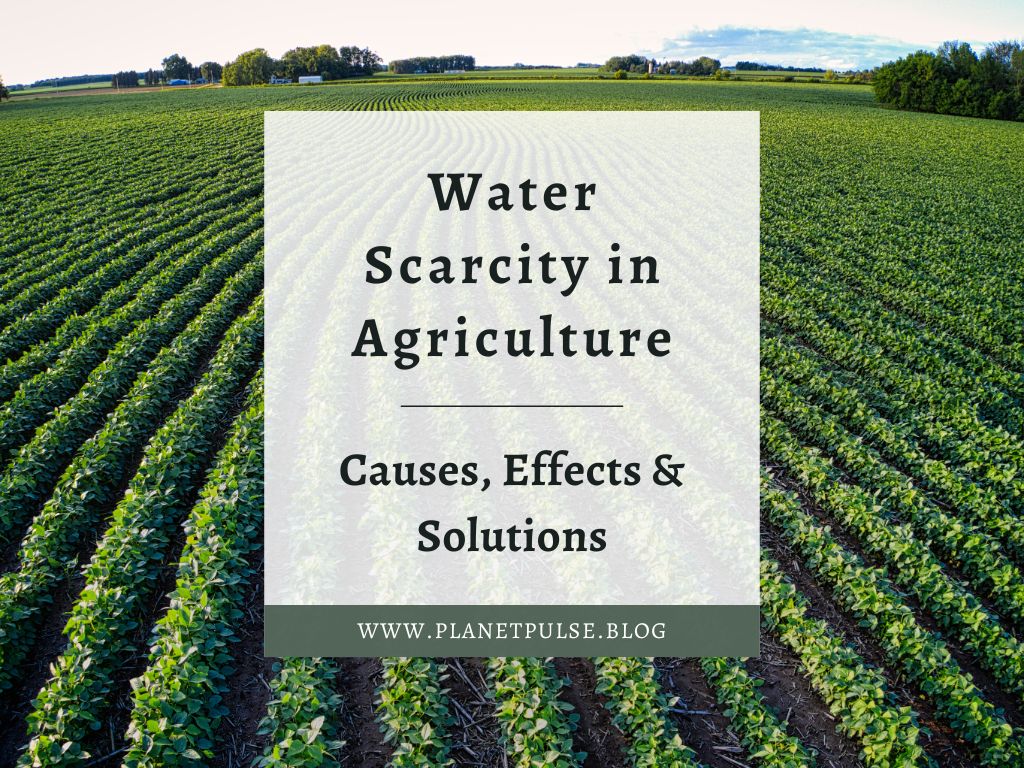
Summer is the most difficult season for agriculture due to water scarcity. Rising temperatures, longer dry periods and increased irrigation demands all makes it difficult for farmers already dealing with unpredictable weather. As climate change increases, summer water stress is becoming one of the most significant problems to world food production.
Understanding why seasonal pressure is so severe and how sustainable farming techniques might help is critical for agricultural resilience.
In this Article
Understanding Agricultural Water Scarcity
Water scarcity in agricultural arises when farmers do not have enough consistent water to meet crop and livestock requirements. This shortage can be physical, meaning that water sources such as rivers, reservoirs and aquifers have been exhausted or economic, which means that water exists but farmers lack the necessary infrastructure, technology or financial resources to obtain it.
In many areas, both types overlap, which results in persistent water stress that intensifies during peak growing seasons.
Why Summer Intensifies Water Scarcity
Summer worsens every existing water concern in agriculture. Even farms with previously stable water sources may face abrupt water shortages as temperatures rise and rainfall decreases.
Increased evapotranspiration rates are one of the most significant causes of water scarcity as heat causes water to evaporate faster from soil surfaces, irrigation channels and plant leaves. This means that crops lose moisture faster than farmers can replenish it, particularly during heatwaves. This forces farmers to irrigate more frequently, putting further strain on already limited water resources.
Summer also sees a substantial decline in surface water availability. This is because during the summer, rivers shrink, reservoirs reach seasonal lows and canals transport less water to fields. Summer shortages are worsened in snowmelt-dependent locations because snowpack levels have decreased as winters have warmed.
As surface water levels fall, farmers resort to groundwater. Wells last longer, pumps work harder and aquifers drain quicker. In certain regions, groundwater levels decrease so dramatically during the summer that wells run dry or become too expensive to operate. Over-extraction leads to long-term depletion that cannot be easily rectified.
Furthermore, domestic water consumption rises in the summer due to grass irrigation, cooling systems and increased household use. When cities use more water from common rivers or reservoirs, agricultural allotment are reduced, leaving farmers with even less.
Climate Change & Water Scarcity
Climate change is altering summer in ways that intensifies agricultural water scarcity. Heatwaves are growing increasingly common, powerful and long-lasting. Rainfall patterns are changing, with many areas suffering delayed monsoons, shorter rainy seasons or unexpected bursts of intense rain that do not adequately restore soil moisture.
One of the most destructive trends is the growth of compound occurrences, which occur when heatwaves coincide with droughts. These events induce significant water stress because crops experience both moisture loss and temperature stress at the same time. Even drought-tolerant crops struggle in such conditions.
Impacts of Agriculture Water Scarcity
Summer water scarcity affects all aspects of the agricultural system. Crops get stressed when there is inadequate water to enable photosynthesis, nutritional uptake and growth. The leaves wilt, the fruit develops slowly and the yields diminish. In severe circumstances, whole fields fail.
Long periods of drought also have a negative impact on soil health. Dry soils lose structure, making them more susceptible to erosion and compaction. Organic stuff degrades more slowly and microbial activity reduces. When soil loses its ability to absorb moisture, the effects of water scarcity worsen in the next season.
Livestock are also affected as animals require more water in hot weather and feed availability decreases when crops and pasturelands dry out. Heat stress lowers milk supply, weight increase and general animal health.
These agricultural effects ripple throughout food systems as lower crop yields result in higher food prices, supply instability and increased vulnerability for communities who are already food insecure. This shows that summer water scarcity is not just a farming issue, but a worldwide food security concern.
How Conventional Farming Worsens Water Scarcity
Summer water scarcity is unintentionally made worse by many conventional farming methods. This is due to the fact that, large amounts of irrigation are necessary for water-intensive crops like rice, cotton and almonds, particularly in the warmer months. This means that, water is lost in large quantities before it reaches crops in inefficient irrigation systems, such as flood irrigation or leaky canals.
Resilience is also diminished by monoculture farming. The system as a whole is susceptible to heat stress when a single crop is planted over broad areas. Frequent tilling and other poor soil management practices expose the soil and prevent it from retaining moisture. Farmers are forced to use more water to make up for soil damage as a result of these practices, further straining already scarce resources.
Regenerative Agriculture
Regenerative agriculture provides practical, evidence-based solutions that directly lessen the effects of water scarcity. Regenerative techniques help farms retain more water and endure intense heat by enhancing soil health, boosting biodiversity and re-establishing natural processes.
One of the most effective methods is to increase the amount of organic matter in the soil as organic matter functions as a sponge that allows soil to hold a lot more water. This helps crops withstand dry spells and lessens the need for irrigation.
Cover crops play a crucial role by shading soil, reducing evaporation and improving soil structure. They also support microbial life that enhances nutrient cycling and moisture retention.
By incorporating trees into farms, agroforestry produces microclimates that lower water loss and cool the soil. Additionally, trees increase infiltration, which allows more precipitation to enter the soil rather than run off.
Crop diversification strengthens resilience by ensuring that not all crops respond to heat in the same way. Some crops may thrive in hot conditions, balancing losses from more sensitive varieties.
Moreover, reduced tillage preserves moisture and soil structure, while unaltered soil holds more water and fosters stronger root systems.
Sustainable Water Management
To lessen summer stress, farmers can implement useful water-management techniques in addition to regenerative approaches. By delivering water straight to plant roots, drip irrigation lowers evaporation and boosts productivity. On-farm storage ponds and rainwater harvesting systems assist farmers in collecting water during rainy seasons for usage in dry months.
Mulching is an easy yet efficient way to keep soil cool and minimise evaporation. Additionally, farmers can also adjust to hotter summers by switching to drought-resistant crop kinds.
Smart irrigation scheduling by using weather data, soil sensors or moisture meters, ensures water is applied only when needed. These technologies help farmers avoid over‑irrigation and conserve limited supplies.
Policy & Community-Level Solutions
Farmers cannot tackle the problem of water scarcity on their own. Through training programs that encourage regenerative practices, investments in rural water infrastructure and incentives for effective irrigation, governments play a crucial role in promoting sustainable water usage.
Cooperative water storage systems and water-sharing agreements are examples of community-level solutions that aid in more equitable water distribution during periods of high demand. Programs for education and capacity-building guarantee that farmers have the skills and resources necessary to adjust to shifting circumstances.
Conclusion
Summer water scarcity is turning into a major global agricultural concern. Farmers have to deal with more challenging growing circumstances as temperatures rise and rainfall becomes more erratic.
However, there are solutions such as building resilient food systems that can prosper even in hotter summers can be facilitated by regenerative agriculture, effective water management and robust policy support.






Leave a Reply