
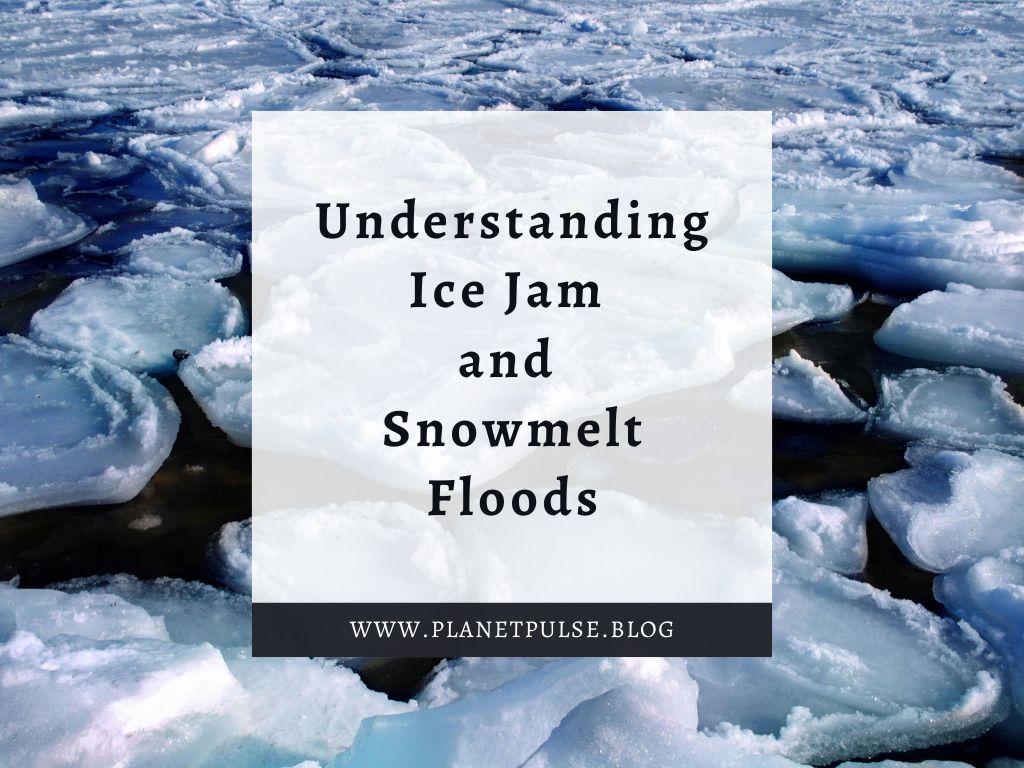
Ice jams and snowmelt floods are unpredictable flooding events that occur mostly in colder climates during seasonal transitions. These floods can occur unexpectedly, overwhelm river systems and cause extensive damage to communities, infrastructure and ecosystems. As climate change affects winter patterns and increases spring warming, knowing the different types of floods becomes increasingly critical for risk management and resilience planning.
This article looks at how ice jams form, why snowmelt floods happen, what factors determine their intensity and how communities may prepare for it.
In this Article
What Are Ice Jam Floods?
Ice jam floods happen when big blocks of river ice gather and obstruct the natural flow of water. When a river becomes impeded, water accumulates behind the ice, resulting in rapid upstream flooding. If the blockage suddenly breaks, a surge of water can rush downstream, causing a second wave of flooding.
Ice jams forms during freeze-thaw cycles, when rising temperatures weaken river ice and cause it to fracture. These fragments can accumulate anywhere where flow is naturally restricted such as in tight channels, river bends, bridges and culverts.
There are two main types of ice jams:
- Dynamic ice jams: Occurs when moving ice collides with a fixed obstruction. This variety frequently changes locations when the ice drifts.
- Stationary ice jams: Occurs when ice builds in a fixed region, usually when the river’s slope changes or near bridges.
However, both types of ice jams can lead to flooding and affect communities in the local areas negatively.
What Are Snowmelt Floods?
Snowmelt floods occur when the accumulated winter snowpack melts quickly, releasing significant amounts of water in a short period of time. Rising temperatures, solar radiation and rain-on-snow events all contribute to rapid melting.
When meltwater overflows the capacity of rivers, soils and drainage systems, flooding occurs. Snowmelt floods are widespread in hilly terrain, northern climates and countries with long and cold winters.
These floods can be especially devastating because snowpack holds water for months before unleashing it all at once during warm spells.
Causes of Ice Jams and Snowmelt Floods?
Ice jams and snowmelt floods are caused by both natural and human influenced factors:
Natural Factors
Several natural processes influence the likelihood and severity of ice jam and snowmelt floods, such as:
- Rapid temperature increases: Which can melt ice quickly, causing sudden break‑up and movement.
- Spring rainfall: Adds additional water to rivers, increasing flow and increasing snowmelt.
- Thick winter ice: More likely to break into large, obstructive chunks.
- River channel shape: Is a major cause of ice jams and snowmelt as narrow sections, bends and shallow areas can lead to water overflowing from riverbanks, leading to floods.
- Snowpack depth and water equivalent: Determine how much water is released during snowmelt.
These natural factors often interact, creating complex and fast‑changing flood conditions that can devastate communities and businesses.
Human Influenced Factors
Human activities intensify both ice jams and snowmelt flood risks. For instance, urbanisation increases runoff, which reduces the land’s capacity to absorb meltwater. Infrastructure such as bridges and culverts can unintentionally create choke areas for ice accumulation, increaseing flood risks.
Apart from this, land-use changes, such as deforestation and agricultural growth, affect how water flows across landscapes. This means that the risk of flooding is significantly higher in deforested areas.
Climate change is also altering winter conditions. Warmer winters result in more freeze-thaw cycles, unstable ice development and earlier and faster snowmelt. Moreover, rain-on-snow occurrences are becoming more common, raising the risk of unexpected, large-volume meltwater flows.
Impacts of Ice Jam & Snowmelt Floods
Ice jams and snowmelt floods can have a substantial environmental, social and economic impact.
For instance, upstream flooding caused by an ice blockage can flood houses, farms and infrastructure with little warning. When a blockage breaks, the abrupt flow of water can cause damage to bridges, roads and riverside infrastructure downstream. This means that communities along narrow river valleys or along constricted waterways are more vulnerable.
Snowmelt floods can saturate soils, harm crops and overwhelm drainage systems. This means that prolonged floods can damage transportation networks, isolate rural communities and lead to costly repairs.
These floods can shift river channels, disrupt fish habitats and change wetland ecosystems. Although some natural flooding is beneficial, severe storms can create lasting damage.
How These Floods Are Monitored
Monitoring ice jam and melting conditions is critical for early detection and preparation. For example, river ice is tracked using satellite imaging, drones and on-site inspections to identify probable jam spots.
Also, measuring snowpack depth and snow-water equivalent helps anticipate the amount of water released after melt. In addition, temperature forecasts and melt-rate algorithms help authorities anticipate rapid thaws.
Northern countries, including as Canada, the US and Scandinavia, use specialised early warning systems that integrate hydrological data, weather forecasts and real-time river monitoring to advise people of potential threats.
Prevention and Mitigation Strategies
Several types of prevention and mitigation strategies can be used to reduce the risk of ice jams and snowmelt flooding, including:
Structural Measures
Engineered solutions can assist prevent ice jams and regulate snowmelt flows. Ice-control structures, such as booms and breakers, prevent significant ice accumulation. Channel changes can alleviate choke areas, whereas reinforced bridges and culverts are built to withstand ice pressure and large flows.
Non-structural Measures
Non-structural measures, such as controlled ice breaking, whether mechanical or thermal, can prevent jams from occurring. Floodplain zoning protects high-risk areas from vulnerable development. Also, emergency response plans allow communities to act rapidly when situations change.
Nature‑Based Solutions
Nature-based solutions like restoring natural floodplains allows meltwater to spread out safely. Reforestation stabilises snowpack, reduces runoff and increases soil absorption. These tactics promote long-term resilience and improve ecosystems.
Climate Change and Future Risk
Climate change is affecting the circumstances that cause ice jams and snowmelt floods. Warmer winters produce thinner, less stable ice that fractures more quickly. Apart from this, the frequency of freeze-thaw cycles is increasing, leading to more break-ups. Also, early spring warming stimulates snowmelt, whereas rain-on-snow occurrences cause unexpected bursts of water in river systems.
These changes mean that regions that have traditionally relied on regular winter and spring patterns may confront more erratic and extreme flood events in the future. Adaptation methods will be critical in controlling these developing threats.
Conclsion
Ice jams and snowmelt floods are significant natural events influenced by seasonal shifts, river dynamics and climate change. Understanding how these floods form, the factors that impact their severity and the available management options is critical for preserving populations and ecosystems.





Leave a Reply