
In this Article
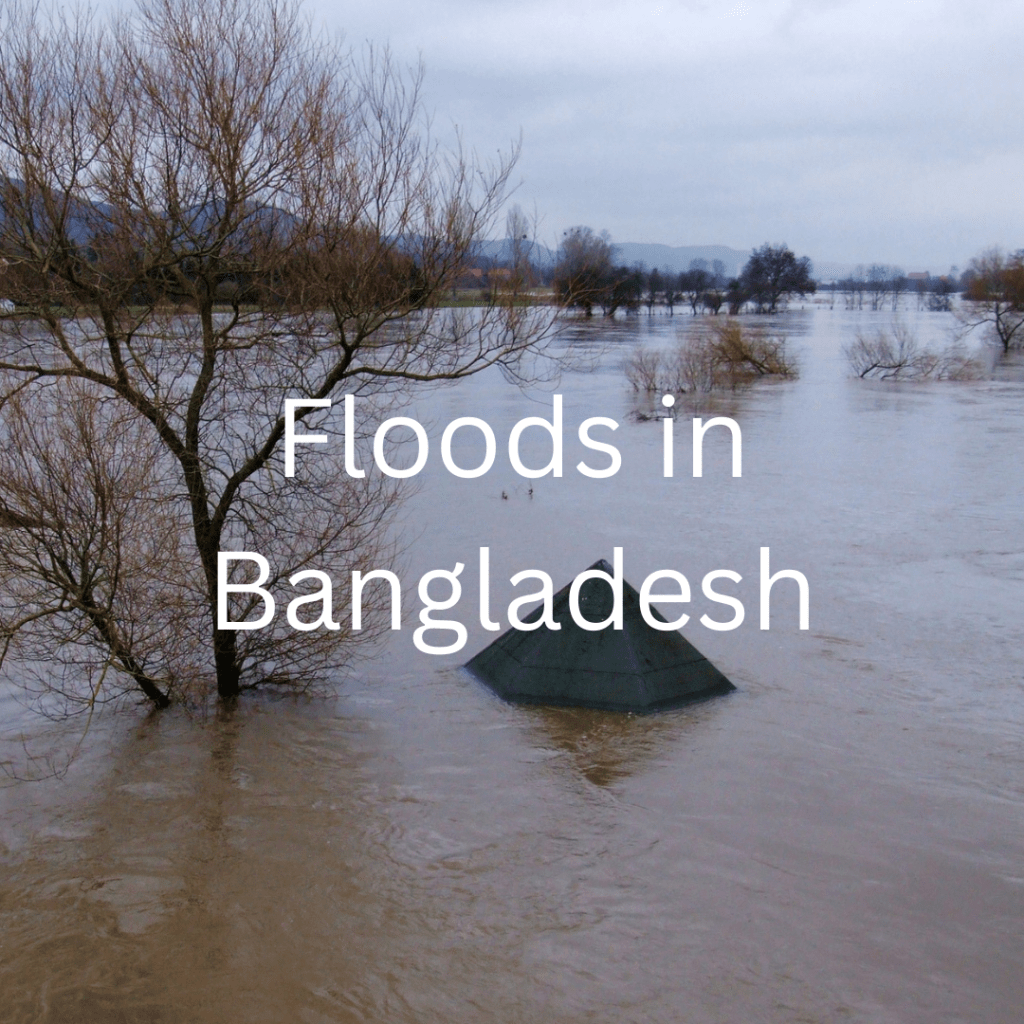
Nestled in the heart of South Asia, Bangladesh is a nation constantly on the frontlines of climate change and natural disasters. Its geographical location, characterized by the convergence of the Ganges, Brahmaputra, and Meghna rivers, leaves it prone to floods, storm surges, and cyclones.
This vulnerability is further exacerbated by cross-boundary rivers that stretch into China, Bhutan, and Nepal, making Bangladesh a recipient of runoff waters from neighbouring regions. As a result, Bangladesh experiences annual floods, with approximately two-thirds of the country submerged due to monsoonal rains and Himalayan snowmelt (Sciance & Nooner, 2017). This relentless cycle of flooding poses a significant threat to the nation’s people and economy.
The Complex Challenge of Flooding
Over the past few decades, Bangladesh has grappled with floods of varying magnitudes, impacting over 50% of its land area (Mirza et al., 2003). The reasons behind this vulnerability are multifaceted, encompassing climate patterns, topography, hydrology, and more. This complex interplay of factors demands proactive flood management strategies to safeguard the country’s future.
Flood Management in Bangladesh
Bangladesh’s fight against flooding is not without its unique challenges. Poverty looms large, with nearly half of the population living below the international poverty line (Pal et al., 2011). A high birth rate, dense population, and rapid urbanization further heighten the vulnerability of the population to natural disasters. To protect against these threats and ensure sustainable economic growth, Bangladesh must adapt to climate change (Yu et al., 2010).
One of the key factors contributing to the increased frequency and scale of flood disasters is the country’s unique geographic features, including an extensive hydraulic system and massive flood control interventions within a floodplain environment (Rahman & Salehin, 2013).
The tropical and humid climate, influenced by the Indian monsoon, brings an average annual rainfall of 2,200-2,500 mm, with approximately 80% of this precipitation occurring during the monsoon season. Meanwhile, the dry season witnesses an average temperature of around 30°C (Hossain, 2003). These climatic conditions are central to understanding the heightened flood risks in Bangladesh.
Addressing the Challenge
In response to these challenges, Bangladesh has adopted various flood management strategies to reduce flood risk. Early warning systems, for instance, play a crucial role in minimizing the impact of floods. These systems provide advance flood forecasts for up to five days for vulnerable locations, reaching more than 600 recipients, including government offices, ministries, research organizations, and NGOs, making this strategy more cost-effective (Rahaman et al., 2017).
In the aftermath of the devastating floods during the 1990s, Bangladesh initiated the Flood Action Plan (FAP), which consists of 26 steps and aims to mitigate the extent of hazards and damages caused by floods. Measures include deploying rescue boats, establishing food storage systems, and seeking international aid when necessary (“Bangladesh: Flooding and Impacts,” 2021).
Additionally, the construction of embankments along the two largest rivers in the country was a significant infrastructure investment, costing approximately $6 billion (Hossain, 2003). These embankments were intended to mitigate flood damage over the long term.
Challenges on the Horizon
While these strategies have been effective to some extent, they are primarily reactive, offering relief after disasters strike. For instance, flood shelters have been constructed throughout the country to provide refuge during calamities, but they do not address the underlying vulnerability to flooding.
Furthermore, the aging embankments, which were once considered a long-term solution, are now at risk of collapse due to inadequate maintenance and insufficient funding. This poses a renewed threat to the population. Additionally, the population’s vulnerability continues to rise as temperatures increase, leading to a higher risk of flooding.
Conclusion
Bangladesh’s ongoing battle against flooding is a testament to the country’s resilience in the face of adversity. While it has implemented various flood management strategies, it is imperative that proactive, sustainable, and long-term solutions are developed to mitigate vulnerability effectively.
The nation’s unique geographical and climatic conditions necessitate innovative approaches to safeguard both its people and its economic growth. In a world grappling with climate change, Bangladesh’s experience serves as a stark reminder of the urgent need for global climate action and support for vulnerable nations on the frontlines of environmental challenges.
References
Bangladesh: Flooding and Impacts. Flood World. (2021). Retrieved 2 March 2021, from https://water104website.weebly.com/bangladesh-flooding-and-impacts.html
Hossain, A. (2003). Integrated Flood Management Case Study Bangladesh: Flood Management. The Associated Programme of Flood Management. Retrieved 1 April 2021 from, https://www.floodmanagement.info/publications/casestudies/cs_bangladesh_full.pdf
Mirza, M., Warrick, R., & Ericksen, N. (2003). Climatic Change, 57(3), 287-318. https://doi.org/10.1023/a:1022825915791
Pal, S. K., Adeloye, A. J., Babel, M. S., & Das Gupta, A. (2011). Evaluation of the effectiveness of water management policies in Bangladesh. International Journal of Water Resources Development, 27(2), 401-417. doi:10.1080/07900627.2011.564973
Rahman, R., & Salehin, M. (2013). Flood Risks and Reduction Approaches in Bangladesh. Disaster Risk Reduction Approaches in Bangladesh, 65-90. https://doi.org/10.1007/978-4-431-54252-0_4
Rahaman, Syadur & Shamrat, Md. Raisul & Uddin, Mirza. (2017). Flood and Flood Management in Bangladesh. doi: 10.13140/RG.2.2.15235.30241.
Sciance, M., & Nooner, S. (2017). Decadal flood trends in Bangladesh from extensive hydrographic data. Natural Hazards, 90(1), 115-135. https://doi.org/10.1007/s11069-017-3036-7
Yu, Alam, M., Rosenzweig, C., Ruane, A., Thurlow, J., Hassan, A., Khan, A. S., & Major, D. C. (2010). Climate change risks and food security in Bangladesh (First edition.). Routledge, an imprint of Taylor and Francis.





 Planet Pulse
Leave a comment