
In this Article
What is Ocean Acidification?
Earth’s oceans are vital in mitigating climate change. This is because they are one of the main carbon sinks that absorb carbon dioxide (CO2) from the atmosphere. However, the increase in CO2 emissions because of human activities such as deforestation and fossil fuel combustion, has resulted in further warming the atmosphere.
Apart from the global crisis of climate change, this increase in CO2 emission in the atmosphere has also triggered ocean acidification. This is because when CO2 dissolves into oceans, carbonic acid is formed, which leads to a decrease in ocean’s pH. This shift towards acidity has major consequences for marine ecosystems.
In this article, we will explore the relationship between oceans, carbon absorption, and the challenge of ocean acidification. We will delve into the causes, and effects on marine life, biodiversity, and human health. This article will also explore the solutions to preserve the balance of our oceans.
Effects of Ocean acidification
Ocean acidification has many consequences, some of which will be discussed here. The Calcium carbonate conundrum is a challenge because increased carbon emissions make the ocean more acidic. This affects marine life that relies on calcium carbonate to build their shells and skeletons such as coral reefs, plankton, and mollusks. This is because acidic water makes it difficult for these organisms to create and maintain their structures. This disrupts ecosystems and has major consequences both ecologically and economically.
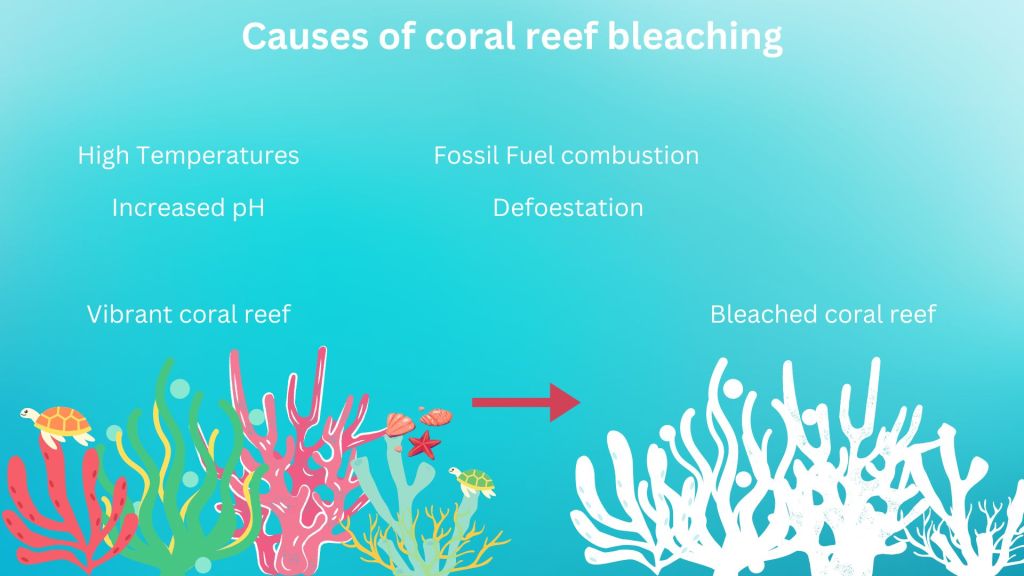
Coral reefs are particularly vulnerable to calcium carbonate conundrum as it is challenging to maintain their structure, leading to coral reef bleaching. Bleaching of coral reefs means that they lose their vibrant colours due to stress caused by rising temperatures and other environmental changes. This stress weakens the symbiotic algae within the coral leading to a white appearance and coral’s health deteriorating. Thus, destroying habitats for many marine species.
This is because ocean acidification disrupts the life cycle of marine species, affecting small to large fish. Consequently, this disruption will have a negative impact on the livelihoods of those dependent on fishing to survive. Apart from this, ocean acidification can alter marine species behaviour, which can affect their ability to avoid predators, find food and navigate their environment.
Mitigating Ocean Acidification
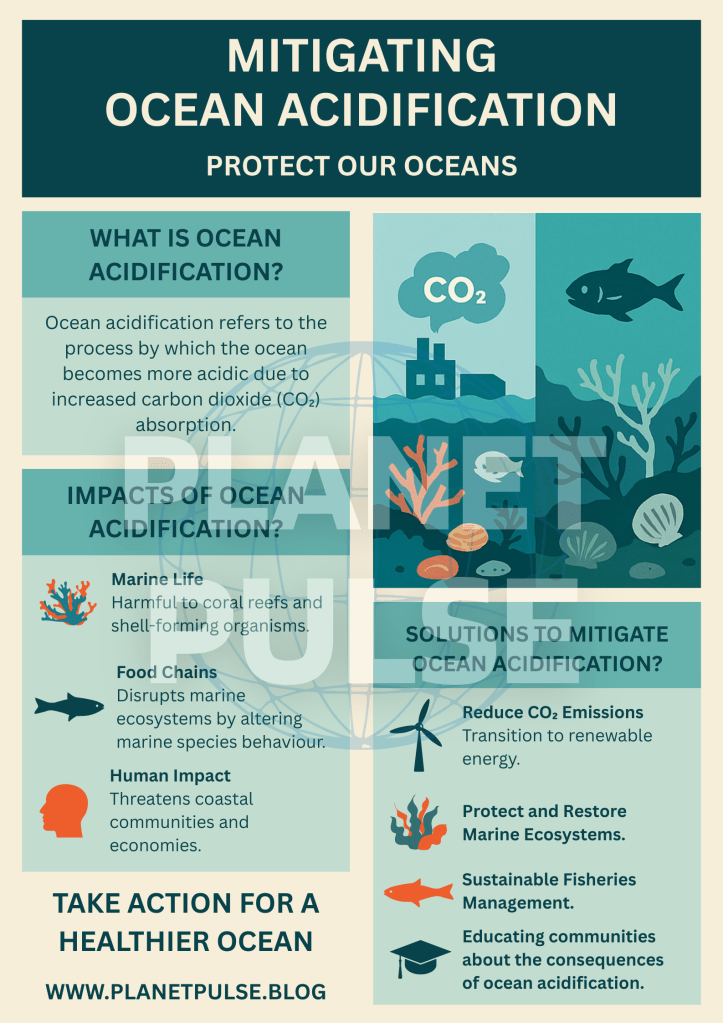
Here are some solutions to mitigate ocean acidification:
Reduce Carbon Emissions by transitioning to renewable energy sources such as wind turbines, solar energy, biomass energy and more. These sources can improve energy efficiency and promote sustainable transportation, which can reduce carbon dioxide in the atmosphere.
Sustainable fishing practices can help maintain marine ecosystems that are resilient to acidification. Also, the implementation of fishing quotas and protecting critical habitats and avoiding destructive fishing methods can help increase ecosystem stability.
The establishment of marine protected areas can also protect vulnerable marine ecosystems such as the Great Barrier Marine Park, located off the coast of Queensland, Australia. It is approximately 344,400 square kilometres and includes a diverse range of habitats. The area provides legal protection for marine life and their habitats.
Restoration of coastal habitats such as mangroves and salt marshes can improve water quality and provide habitats for marine species and restore their ecological functions.
Sustainable coastal development and management practices can help reduce pollution runoff, which can prevent excess nutrient from entering the ocean, which can increase acidification.
Monitoring changes in ocean chemistry and its impacts on the ecosystem will enable the identification of vulnerable areas. This will allow for the development of strategies to protect the area.
Carbon capture and storage of carbon dioxide from industrial processes can reduce the emissions of CO2 in the atmosphere, reducing the impact of acidification.
Educating communities about the consequences of ocean acidification will enable them to become more aware of the importance of ocean health, which can allow for call to action for conservation and policy changes.
Love this design? Download the high-resolution, printable version here.
Conclusion
Ocean acidification is a crisis that demands our attention and action, by reducing CO2 emissions, implementing sustainable practices and a global commitment to ocean health, we can protect our marine life and ensure the well-being of both our current and future generations. The time to act is now, before the harmony of our oceans is irreversibly damaged.




 Planet Pulse
Leave a comment