
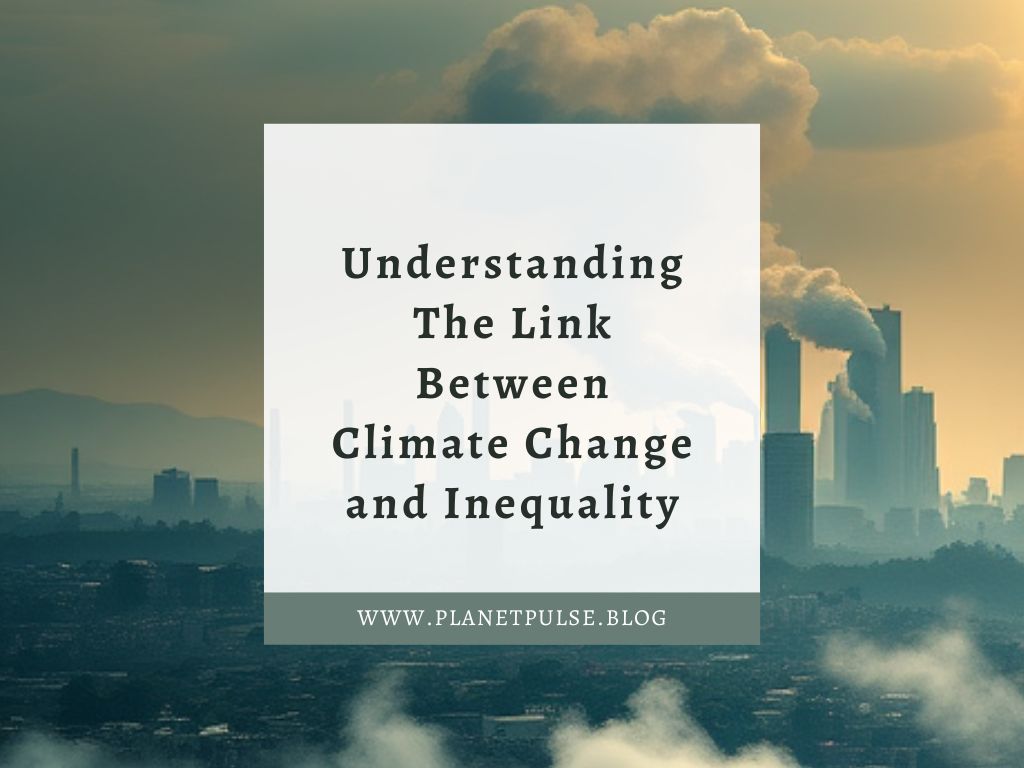
From the megacities of the Global North to remote rural communities in the Global South, the link between inequality and climate change is becoming impossible to ignore. As climate impacts accelerate, the poorest and most marginalised are hit first and hardest, even though they have contributed least to the crisis.
In this article, we explore how inequality both drives and amplifies climate vulnerability, and how climate change then deepens economic and social gaps.
In this Article
Why Inequality Matters in the Climate Crisis
Economic Disparities and Emissions
- The top 10% of global emitters account for nearly 48% of carbon emissions, while the bottom 50% contribute just around 16%.
- Since 1990, the global top 1% has been responsible for 23% of emissions growth.
- In high-income countries, per-capita emissions often exceed 30 times those of low-income nations.
These disparities show that climate responsibility is unevenly distributed and that high emitters have far more capacity and obligation to mitigate.
How Inequality Drives Climate Vulnerability
- Poorer communities often live in riskier zones (floodplains, informal settlements) with weak infrastructure and limited safety nets.
- Marginalised groups, such as women, racial minorities, Indigenous peoples tend to have less political power and fewer resources to adapt.
- Energy and infrastructure gaps exacerbate exposure: in climate-driven outages, low-income and minority communities often face longer blackout durations.
Thus, inequality means that climate harms are not shared equally; they compound existing social injustice.
Climate Change Worsens Inequality
- Climate change has worsened economic inequality as climate stress hits agricultural yields, labour productivity, and economic growth, especially in warm, tropical regions,
- A recent multi-model study estimates that by 2100, climate impacts could raise global inequality (Gini index) by ~1.4 points under a business-as-usual scenario.
- A Stanford study shows that warming since the 1960s increased the wealth gap: poorer countries are now 25% further behind than if climate change had not occurred.
- In the U.S., rising temperatures correlate with greater income inequality, especially over the longer term.
In short, climate change doesn’t just impact the poor more, it can actively push more people into poverty and widen the rich-poor divide.

That level of concentration in emissions makes the fight for equity essential, not just moral, but practical.
| Region / Group | Average Emissions (per capita) | Vulnerability Index | Share of Global Emissions | Exposure to Climate Hazards |
|---|---|---|---|---|
| High-income countries (top 10%) | Very high | Moderate | ~ 50% of global emissions | Medium to high |
| Middle-income countries (middle 40%) | Medium | Moderate-to-high | ~ moderate share | High |
| Low-income countries (bottom 50%) | Low | Very high | ~12% share | Very high |
| Marginalised communities within countries | — | Very high | — | Very high |
Policy & Action: How to Break the Cycle
1. Climate Justice & Redistribution
- Implement progressive carbon pricing or wealth taxes to shift responsibility onto high emitters.
- Use revenues to fund adaptation and resilience in marginalised communities.
- Strengthen international climate finance (e.g. for loss & damage) with a fairness lens.
2. Inclusive Governance & Participation
- Ensure that women, Indigenous peoples, and marginalised groups have a seat at decision-making tables.
- Embed equity assessments into climate policy (e.g. social impact review).
- Use community-based and Indigenous knowledge in adaptation planning.
3. Infrastructure & Resilience Investments
- Improve basic services such as water, sanitation and power in underserved areas.
- Invest in resilient housing, flood protection, early warning systems.
- Expand green infrastructure such as urban parks and cooling systems, especially in low-income neighbourhoods.
4. Education, Health & Social Safety Nets
- Strengthen education and social protection to buffer climate shocks.
- Encourage “just transition” programs in high-carbon sectors, so workers aren’t left behind.
- Promote public awareness of climate justice to build stronger support for equitable policies.
5. Data, Monitoring & Accountability
- Track emissions inequality at national and global scale. For example, by income decile.
- Monitor who benefits and who bears costs of climate policies.
- Hold governments and corporations accountable for disproportionate emissions.
Frequently Asked Questions (FAQs)
How does inequality affect climate change?
Inequality shapes who emits and who bears the impacts. The wealthy emit far more per capita and also wield more power in shaping climate policy, while the poor have fewer means to adapt, putting them at higher risk.
Which countries are most affected by climate inequality?
Low-income countries, especially in Sub-Saharan Africa, South Asia, and small island states, are among the worst hit. Within every country, the poorest and most marginalised communities usually suffer the most from climate extremes, floods, heat, and droughts.
What can be done to make climate action more equitable?
Interventions include progressive carbon pricing with redistribution, inclusive governance, resilience investments in vulnerable areas, social protection schemes, and stronger climate finance flows into disadvantaged regions.
Does limiting warming to 1.5 °C help reduce inequality?
Yes. Research suggests that more ambitious mitigation reduces the long-term inequality impacts of climate change. For example, by 2100, limiting warming can cut the projected Gini-increase by up to two-thirds compared to a high-emission scenario.
Can individuals make a difference, or is this purely a structural issue?
While systemic change is essential, individuals can influence through lifestyle choices (e.g. lower consumption, ethical investment), advocacy, supporting equitable climate policies, and holding leaders accountable.
Conclusion
The link between inequality and climate change is more than a side issue, it is central to both understanding and solving the climate crisis. Without intentional equity measures, climate policies risk deepening divides. But through just governance, finance, and climate action rooted in fairness, we can break the cycle: reduce emissions, uplift vulnerable communities, and build a more resilient and just future.



 Planet Pulse
Leave a comment