

As late summer heatwaves intensify across the globe, air conditioning (AC) has become an indispensable tool for maintaining comfort and protecting public health. Once regarded as a luxury, AC is now considered a necessity in many regions. However, the widespread reliance on cooling technology carries significant environmental consequences.
Air conditioning is one of the fastest-growing drivers of energy demand worldwide and a substantial contributor to greenhouse gas emissions. This article examines the environmental and social costs of AC use, the feedback loop between cooling and climate change, and sustainable alternatives that can reduce reliance on energy-intensive systems.
In this Article
The Global Expansion of Air Conditioning
Over the past several decades, air conditioning has shifted from a convenience enjoyed by the affluent to a global expectation. Currently, more than 2 billion units are in operation, with projections suggesting that this number could triple by 2050, particularly in rapidly urbanising and warming regions.
This expansion reflects both rising incomes and escalating global temperatures. While AC enhances comfort and safety, its environmental implications requires closer scrutiny.
The Environmental Costs of Cooling
1. Energy Consumption
Air conditioning is among the most energy-intensive household and commercial appliances. During heatwaves, cooling can account for up to 50% of peak electricity demand in some urban areas. Meeting these spikes often requires utilities to activate additional fossil fuel–based power plants, undermining efforts to decarbonise the grid.
2. Greenhouse Gas Emissions
The problem goes beyond electricity. AC systems rely on refrigerants, often hydrofluorocarbons (HFCs), which can be up to a thousands times more potent than CO₂ when they leak into the atmosphere.
3. A Dangerous Feedback Loop
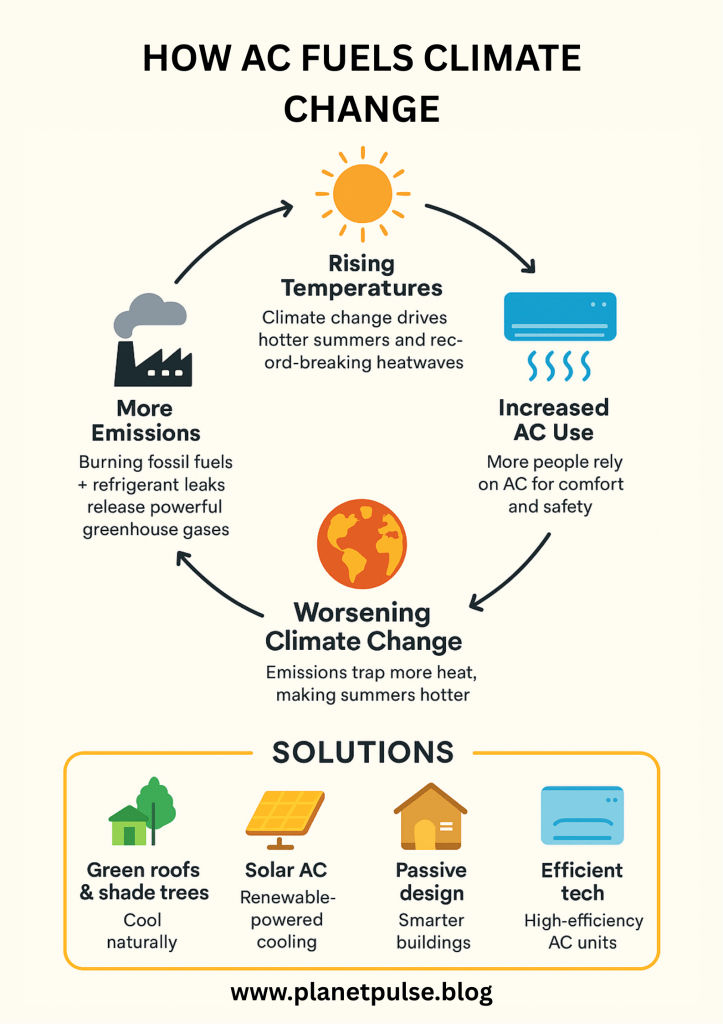
The hotter the world gets, the more we rely on AC. The more we use AC, the more emissions we produce. Those emissions make the world hotter. This becomes a vicious cycle that locks us deeper into the crisis.
The Human and Social Impacts
Cooling isn’t distributed equally. In wealthier areas, AC keeps households comfortable and safe, while in poorer communities, rising energy bills force people to choose between comfort and affordability.
Lack of cooling can also be deadly. Heatwaves are now among the leading weather-related killers, and those without access to AC are at far greater risk. Meanwhile, cities absorb heat through asphalt and concrete, creating “urban heat islands” that drive up local temperatures even higher.
Sustainable Alternatives to Traditional AC
1. Energy-Efficient Cooling
Modern inverter-based AC units use significantly less energy than older models. Proper installation and maintenance also prevent harmful refrigerant leaks.
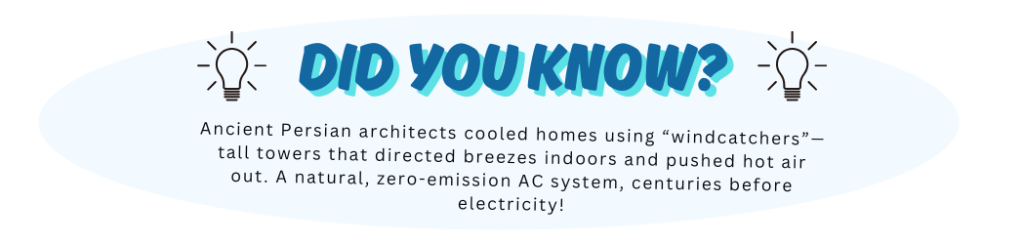
2. Passive Cooling Strategies
Before air conditioning, people relied on architecture to keep cool. For instance:
- Designing buildings with cross-ventilation and shaded courtyards.
- Using reflective roofs or green roofs to deflect heat.
- Planting trees and increasing green space to naturally cool neighbourhoods.
These approaches remain powerful and affordable.
3. Renewable-Powered Cooling
Solar-powered AC units are emerging as a game-changer, especially in sun-drenched regions. When paired with smart grids and home batteries, they can reduce reliance on fossil fuels dramatically.
4. Policy and Collective Action
Governments and organisations are beginning to act:
- Stricter building codes that require energy-efficient design.
- Phasing out HFCs under international agreements like the Kigali Amendment to the Montreal Protocol.
- Incentives and rebates for households to upgrade inefficient cooling systems.
What You Can Do at Home
Big solutions matter, but small actions add up. Here are a few ways you can stay comfortable while reducing your footprint:
- Set your thermostat just a few degrees higher.
- Use ceiling or floor fans to circulate air.
- Keep blinds or curtains closed during peak heat hours.
- Regularly clean filters and maintain your AC to keep it running efficiently.
- Explore rebates for eco-friendly units if you’re replacing an old system.
Frequently Asked Questions (FAQs)
Is air conditioning truly harmful to the environment?
Yes. Air conditioning contributes to climate change both indirectly (via electricity consumption, much of which comes from fossil fuels) and directly (through refrigerant leakage).
Why are refrigerants particularly damaging?
Refrigerants such as HFCs have extremely high global warming potentials, often thousands of times greater than CO₂, making their release highly destructive.
Are fans more environmentally friendly than AC?
Yes. Fans consume about 90% less energy than air conditioners and are an effective complement for reducing AC use.
Conclusion
Air conditioning has transformed modern life, but it comes with a hidden cost: it’s heating up the planet even as it cools our homes. With smarter technology, thoughtful design, and collective action, we can stay cool without driving climate change. The key is balance.





 Planet Pulse
Leave a comment