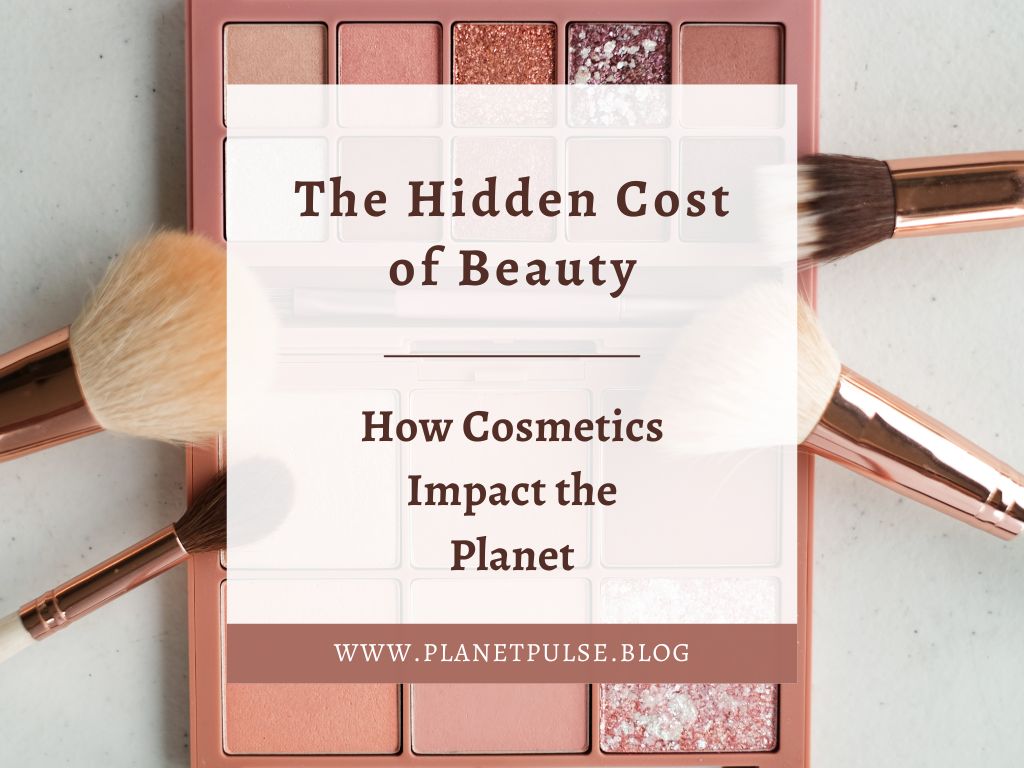
Every morning, millions of people around the world reach for their favourite moisturiser, lipstick, or shampoo. The beauty industry is worth over half a trillion dollars globally and is continually growing fast. Yet behind the promise of glowing skin and glossy hair lies an uncomfortable truth: our beauty routines leave a lasting mark on the environment.
Cosmetics may seem small and harmless, yet from ingredient sourcing to packaging disposal, each step contributes to pollution, waste, and carbon emissions. This article explores the full life cycle of cosmetics and reveals how the pursuit of beauty is quietly shaping the planet’s future and what we can do to change that.
In this Article
The Life Cycle of Cosmetics
Every cosmetic product follows a similar journey, from raw materials to production, packaging, usage, and disposal. Understanding this cycle helps uncover where the environmental costs truly lie.
1. Raw Material Extraction
Many beauty ingredients come from nature. For example, oils, waxes, and plant extracts, while others are synthetic. Both have environmental consequences, and the sourcing stage is often where the damage begins. For example:
- Deforestation is a major concern, especially for ingredients like palm oil and shea butter. Forests are cleared to make way for monoculture plantations, threatening biodiversity and contributing to climate change.
- Mining for mica, a mineral used to add shimmer to eyeshadows and highlighters, not only scars landscapes but also raises serious human rights concerns, including child labour in some regions.
- Overharvesting rare botanicals for “natural” formulas can deplete ecosystems and endanger native plant species.
- Synthetic alternatives, while avoiding agricultural strain, often rely on non-renewable fossil fuels and generate chemical waste during production.
Even ingredients marketed as “clean” or “green” can have hidden environmental costs if not responsibly sourced. If you’re curious about what “clean beauty” really means and how labels can mislead. Check out our article What Does the Label “Clean Beauty” Really Mean?.
2. Manufacturing and Production
Once ingredients are gathered, they’re processed in factories that consume large amounts of energy and water, releasing carbon emissions and chemical by-products.
- The creation of fragrances, preservatives, and colourants involves complex chemical reactions. These processes can release volatile organic compounds (VOCs) and other pollutants into the air and water.
- In countries with weak environmental regulations, untreated waste from cosmetic production may be discharged directly into rivers and lakes, harming aquatic life and nearby communities.
- Water usage is also significant. From cleaning equipment to formulating products, manufacturing can strain local water supplies, especially in drought-prone regions.
The environmental footprint of production is often invisible to consumers, yet it’s a critical part of the beauty equation.
3. Packaging and Distribution
Packaging is one of the most visible and problematic aspects of the beauty industry’s environmental impact.
- Most beauty packaging is made from plastic, often in small sizes or mixed materials, like pumps, mirrors, and metallic finishes, that make recycling difficult or impossible.
- Glass and metal containers, while more recyclable, require more energy to produce and transport.
- The rise of luxury packaging such as heavy jars, ornate boxes, and layered wrapping, adds to the waste without improving product performance.
- Global distribution means products are shipped across continents, adding to their carbon footprint through transportation emissions.
4. Usage and Disposal
Even after purchase, cosmetics continue to impact the environment. For instance:
- When we wash off cleansers or rinse out shampoos, microplastic, silicone, and other chemicals flow into wastewater systems. Most are not filtered out, ending up in rivers and oceans.
- Sunscreens and other rinse-off products can harm coral reefs and aquatic ecosystems, especially those containing oxybenzone or octinoxate.
- Empty containers often cannot be recycled due to product residue or mixed components. Pumps, droppers, and mirrors complicate the recycling process, and many consumers are unaware of how to properly clean or separate materials.

The Invisible Footprint
The environmental cost of beauty products is easy to overlook. After all, a tube of mascara or a face cream jar seems insignificant compared to large-scale industries. Yet, when multiplied by billions of consumers, the effect becomes massive.
Each product carries a chain of environmental costs:
- Energy for production and transport.
- Water used in formulation and cleaning.
- Packaging that outlives the product by hundreds of years.
- Chemical residues that persist in ecosystems long after use.
This invisible footprint follows every item, from factory to bathroom shelf to landfill. And because beauty products are often used daily, their cumulative impact is far greater than we realise.
Why Awareness Matters
The first step toward change is awareness. Once consumers understand how beauty habits affect the planet, they can make informed choices and influence industry practices.
- Supporting eco-conscious brands that minimise packaging and disclose sourcing practices.
- Choosing refillable, compostable, or biodegradable products.
- Avoiding products with microplastics, non-biodegradable ingredients, or excessive packaging.
- Reading ingredient labels and looking for certifications like COSMOS, ECOCERT, or Cradle to Cradle.
Consumer pressure drives innovation. Brands are increasingly responding with cleaner formulas, transparent supply chains, and circular packaging systems. But meaningful change requires both industry accountability and consumer engagement.
What You Can Do Today
Ready to make greener choices? Start here:
- Switch to solid shampoo bars or refillable containers to reduce plastic waste.
- Look for third-party certifications that verify sustainability claims.
- Support brands with take-back programs, refill stations, or minimal packaging.
- Download our Sustainable Skincare Checklist to guide your next purchase.
- Use products mindfully. A little goes a long way, and reducing consumption is one of the most powerful steps you can take.
Small changes in your routine can add up to a big difference, especially when shared and multiplied across communities.
Conclusion
Our beauty routines are deeply personal, tied to self-expression, confidence, and care. But they also connect us to a much larger environmental story. The true cost of beauty isn’t just printed on a price tag. It’s reflected in the forests cleared, the carbon emitted, and the plastic drifting in our oceans.
The good news? Awareness is growing. More brands and consumers are rethinking what “beautiful” means, not just for people, but for the planet.

Let’s Keep the Conversation Going
What’s one product in your routine you’d consider swapping for a greener alternative?
Drop a comment below or share this article with someone who loves beauty and cares about the planet.

 Planet Pulse
Leave a comment