
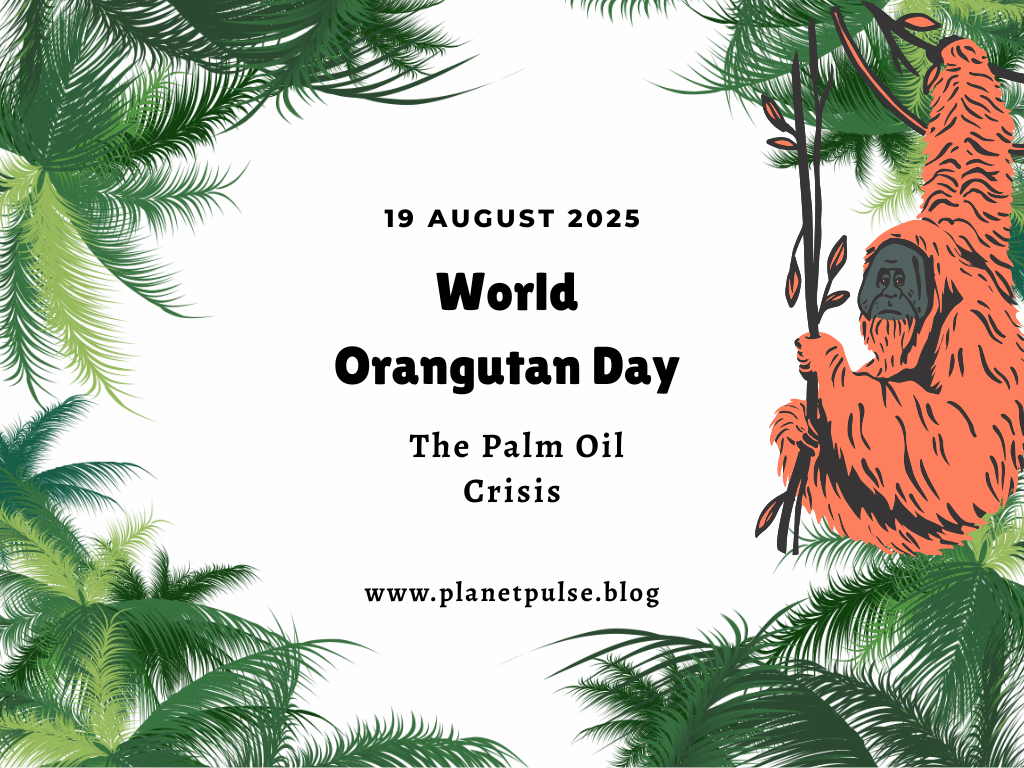
The Orangutans are facing a rapid decline in the wild. Over the past few decades, populations have dropped dramatically, placing all three species on the Critically Endangered list. The primary driver is large-scale deforestation, particularly for the expansion of palm oil plantations.
Palm oil, found in roughly half of all packaged consumer goods, from food to cosmetics has become a major contributor to habitat loss in Indonesia and Malaysia, the only regions where orangutans live. As forests disappear, so too does the orangutan’s chance of survival.
This World Orangutan Day (August 19), it is important to examine the role palm oil plays in this crisis and consider what actions governments, companies, and consumers can take to protect the species.
In this Article
Palm Oil and Deforestation
Palm oil is the most widely produced and consumed vegetable oil in the world due to its high yield, low cost, and versatility. However, its cultivation comes at a significant environmental cost.
- Deforestation: Large areas of primary rainforest are cleared to make way for oil palm plantations.
- Biodiversity loss: Orangutans, tigers, hornbills, and numerous other species lose their habitats.
- Climate impact: Deforestation and peatland drainage release substantial carbon emissions, accelerating climate change.
Indonesia and Malaysia together produce more than 80% of global palm oil. These regions also represent the last remaining habitats for wild orangutans, creating a direct conflict between industry expansion and species survival.
Impact on Orangutans
The loss of forest habitat has placed orangutans in an increasingly vulnerable position. Below are the approximate number of orangutans left in the world today:
- Bornean Orangutan: Fewer than 104,700 remain.
- Sumatran Orangutan: Approximately 14,000 remain.
- Tapanuli Orangutan: The rarest great ape, with fewer than 800 individuals.
Habitat fragmentation forces orangutans into smaller and less viable territories, leading to food shortages and higher mortality. In some cases, displaced orangutans come into conflict with humans, where they may be killed or captured for the illegal wildlife trade.
The Human Cost
The palm oil industry does not only affect orangutans but also affect local communities. Indigenous groups often lose access to ancestral lands, while land rights disputes have led to social and economic instability. Although palm oil provides employment and export revenue, these short-term gains are offset by environmental degradation and the long-term loss of ecosystem services.
Sustainable Alternatives and Solutions
Palm oil itself is not inherently unsustainable. In fact, compared to other oil crops, it is more efficient in terms of yield per hectare. The challenge lies in ensuring production does not continue to drive deforestation.
- Certified Sustainable Palm Oil (CSPO): Offers a framework for reducing environmental damage, though enforcement and adoption remain inconsistent.
- Corporate accountability: Companies can adopt transparent supply chains and commit to zero-deforestation policies.
- Consumer responsibility: Choosing certified products and supporting responsible brands can help influence market demand.
- Alternative oils: Options such as sunflower, rapeseed, or algae oil exist but carry their own environmental trade-offs.
Practical Actions for Consumers and Organisations
- Support NGOs engaged in orangutan conservation and rainforest protection.
- Demand that companies source palm oil responsibly.
- Check for CSPO certification labels on products.
- Reduce reliance on highly processed goods containing palm oil.
- Contribute financially or through volunteer programs to orangutan rehabilitation centers.
Frequently Asked Questions (FAQs)
Why is palm oil considered a major threat to orangutans?
Because plantations are concentrated in the only two countries where wild orangutans live, deforestation directly removes their habitat.
Is boycotting palm oil the best solution?
Not necessarily. Replacing palm oil with other oils can result in greater land use and deforestation elsewhere. Supporting certified sustainable palm oil is a more effective approach.
What products typically contain palm oil?
It is found in a wide range of processed foods, cosmetics, soaps, detergents, and even biofuels.
Can palm oil be produced sustainably?
Yes, through adherence to rigorous certification standards, stronger enforcement, and consumer demand for sustainable products.
How can individuals contribute to orangutan conservation?
By supporting conservation organisations, choosing certified sustainable products, and raising awareness.
Conclusion
The future of orangutans depends on decisions made today. While palm oil will remain a global commodity, its production does not need to come at the cost of species extinction and irreversible ecosystem damage. Through improved industry practices, stronger regulations, and informed consumer behavior, it is still possible to protect orangutans and the rainforests they inhabit.
This World Orangutan Day, stakeholders across governments, corporations, and civil society must recognise the urgency of the crisis and commit to solutions that ensure orangutans remain part of our shared natural heritage.




 Planet Pulse
Leave a comment