

Heatwaves, once considered sporadic and regional, are now global and increasingly deadly. With global average temperatures on the rise due to human activity, heatwaves are becoming longer, hotter, and more frequent. According to the World Meteorological Organisation, 2023 was one of the hottest years on record and the trend is continuing. These prolonged periods of extreme heat have far-reaching effects on human health, infrastructure, ecosystems, and the economy.
In this Article
What Is a Heatwave?
A heatwave is generally defined as a period of unusually high temperatures, often combined with high humidity, that lasts for two or more consecutive days. However, this definition varies by region. For instance:
- In the U.S., it’s typically 3 or more days above 90°F (32°C).
- In Europe, a heatwave is defined relative to historical temperature norms.
- In India, the Indian Meteorological Department uses both absolute temperature and deviation from normal to define a heatwave.
The important commonality? Heatwaves cause stress on the human body, agriculture, infrastructure, and natural ecosystems.
Why Heatwaves Are Getting Worse?
There are many reasons why heatwaves are becoming more intense, frequent, and longer-lasting. Such as:
1. Climate Change and Global Warming
The Earth’s average surface temperature has increased by approximately 1.2°C (2.2°F) since pre-industrial times. This rise, driven by carbon dioxide (CO₂) and methane (CH₄) emissions, means more energy is trapped in the atmosphere, intensifying heat events.
2. Jet Stream Disruption
Melting Arctic ice affects the jet stream, a high-altitude wind current that influences weather patterns. A weaker, wavier jet stream causes heat domes, persistent areas of high pressure that trap hot air over a region for days or even weeks.
3. Soil Desiccation
As temperatures rise, soil moisture evaporates faster, leading to soil desiccation, or the drying out of the ground. Normally, moist soil cools the air through evaporation. But when the soil is dry, this natural cooling is lost, and the sun’s energy goes directly into heating the ground and air, making heatwaves more intense.
Dry soils also create a feedback loop:
- Heat dries the soil.
- Dry soil boosts air temperatures.
- Hotter air causes even more drying.
This cycle amplifies and prolongs heatwaves, especially in drought-prone regions. It’s a hidden but powerful driver behind today’s extreme heat events.
4. Deforestation & Urban Expansion
Deforestation eliminates natural shade and cooling from transpiration, causing land to heat up faster. In cities, concrete and asphalt absorb and trap heat, creating the Urban Heat Island effect, where urban areas stay significantly hotter than rural ones. Together, deforestation and urban growth intensify and prolong heatwaves, especially in populated regions.
The Health Implications of Extreme Heat
Extreme heat doesn’t just make us uncomfortable, it can be harmful to health. As heatwaves grow more intense, their impact on human health becomes more severe and widespread. Below, we explore the direct and indirect health risks posed by rising temperatures.
Direct Health Effects
Some of the direct heath effects of heatwave are:
- Heat Exhaustion & Heatstroke: Failure of the body’s cooling system. Can lead to death if untreated.
- Dehydration: Especially dangerous for infants and the elderly.
- Kidney failure: Caused by water loss and heat stress.
- Exacerbation of chronic illnesses: Including cardiovascular and respiratory diseases.
Indirect Health Effects
Heatwaves can have indirect health impacts on us, such as:
- Overwhelming emergency services and hospitals.
- Power outages impacting access to fans, ACs, and medical devices.
- Increased air pollution levels during heat, worsening asthma and lung conditions.
Who Is Most at Risk from Heatwaves?
Certain populations are more vulnerable than others, due to age, health, economic, or social factors:
| Group | Risk Factor |
|---|---|
| Children and the Elderly | Reduced ability to regulate body temperature |
| Outdoor workers | Prolonged exposure to direct sun |
| Low-income households | Limited access to cooling systems |
| People with disabilities or chronic illnesses | Difficulty accessing aid or adapting to conditions |
The Urban Heat Island Effect
Cities are particularly at risk due to the Urban Heat Island (UHI) effect:
- Concrete and asphalt retain heat far longer than natural surfaces.
- Lack of vegetation and green spaces limits natural cooling.
- Air conditioning units release waste heat, further warming urban areas.
Environmental and Economic Impacts
Apart from health implications, heatwaves have other environmental and economic impacts as well such as:
Agriculture
- Crops like wheat and maize are sensitive to heat stress.
- Droughts combined with heatwaves reduce yields and threaten food security.
Energy Demand
- Surge in electricity usage due to air conditions (ACs).
- Power grid failures are more likely under strain.
To learn more about how you can reduce your energy consumption, Buy our Energy Conservation Checklist.
Ecosystems
- Forests and wetlands may dry out, increasing wildfire risk.
- Heatwaves in oceans lead to coral bleaching and biodiversity loss.
Mitigation and Adaptation Strategies
Government-Level Solutions
- Develop Heat Action Plans (like in Ahmedabad, India).
- Fund public cooling centres.
- Implement urban greening and reflective roofing policies.
- Promote climate-resilient infrastructure.
Community and Individual Actions
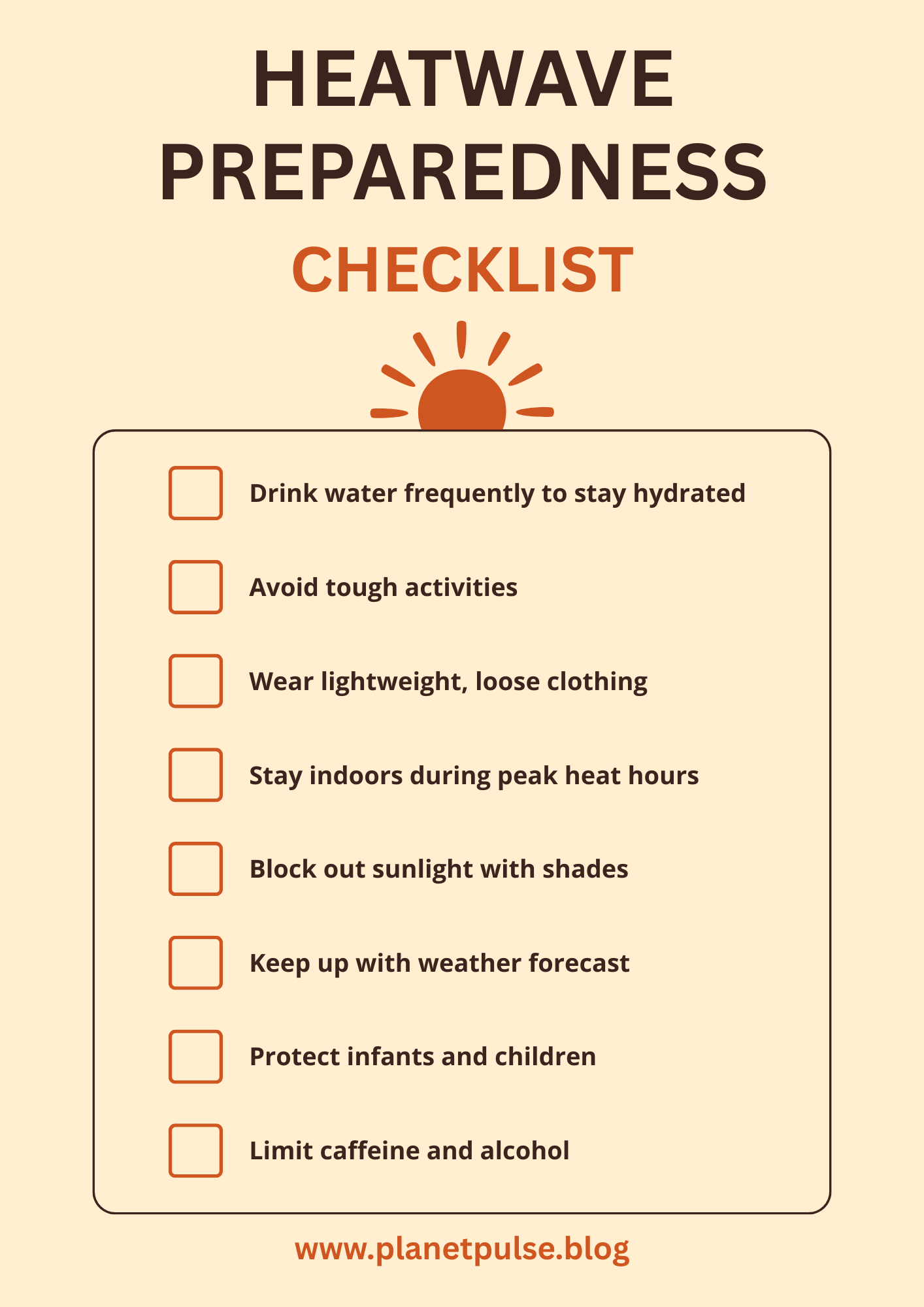
- Stay indoors during peak heat (11am–4pm).
- Drink water regularly, even if not thirsty.
- Check on neighbours and vulnerable people.
- Block sunlight using curtains or shades.
Download our Free Heatwave Preparedness Checklist Now, to stay safe.
Frequently Asked Questions (FAQs)
Why do heatwaves kill more people than other weather events?
Because they are silent and prolonged. People may not realise the health danger until symptoms are severe or it’s too late.
Can heatwaves be prevented?
While natural heatwaves can’t be avoided entirely, their severity and frequency can be reduced by mitigating global warming.
Is climate change the only factor?
No, but it’s the primary driver. Urbanisation, land-use change, and socio-economic inequality also contribute to risk.
Are heatwaves affecting my region?
Yes. Every continent is seeing a rise in heatwave days. Check with your local meteorological agency for forecasts and alerts.
Conclusion
Heatwaves are intensifying, and they’re no longer rare. From physical health to economic disruption, their consequences are vast and growing. But there is hope. Through informed policy, local planning, and personal preparedness, we can adapt to the changing climate and reduce heatwave related deaths and disruption.




 Planet Pulse
Leave a comment