
When we think about deforestation, we often focus on the loss of biodiversity and the release of stored carbon. But what’s often overlooked is the critical role forests play in regulating the global water cycle. Trees are nature’s hydrologists: they absorb, filter, release, and even transport water through complex biological and atmospheric processes.
As global deforestation accelerates, particularly in tropical regions, the disruption to these processes has become increasingly evident. From decreasing rainfall to more severe droughts and depleted aquifers, the cutting down of forests poses a serious threat to water security for ecosystems and human populations alike.
In this Article
How Forests Regulate the Water Cycle
Forests do far more than provide shade and oxygen. They are a key driver of the hydrological or water cycle, helping to regulate rainfall, maintain soil moisture, and recharge groundwater supplies.
1. Transpiration and Rainfall Generation
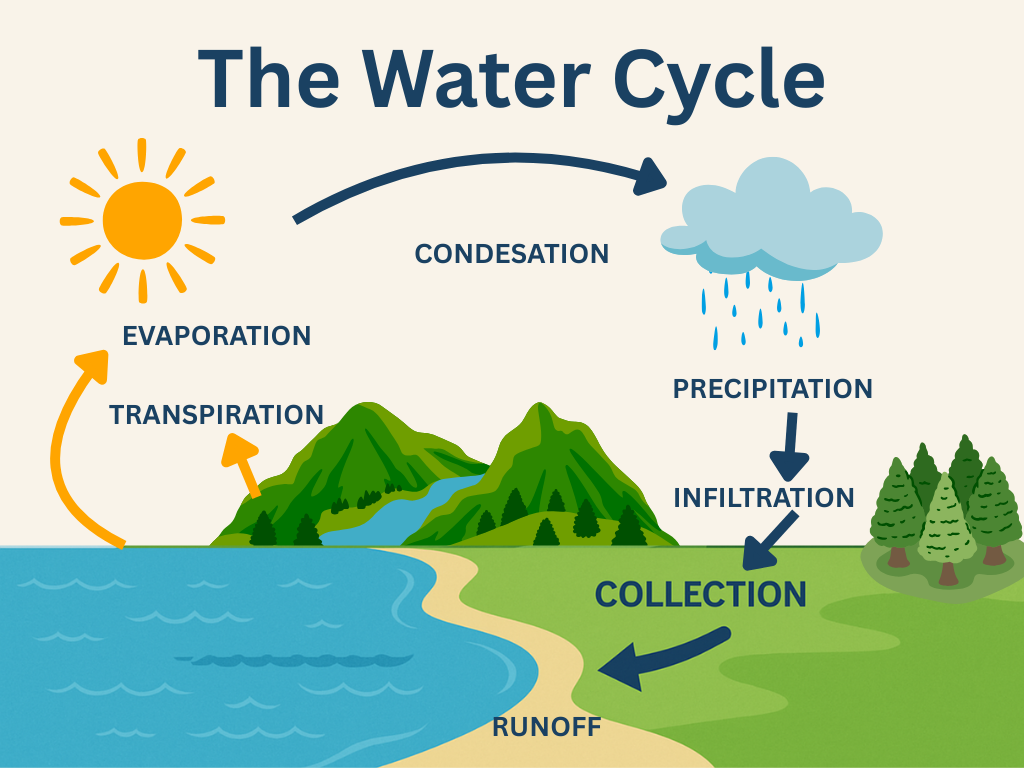
Trees absorb water from the soil through their roots and release it into the atmosphere through a process called transpiration. This water vapor contributes significantly to cloud formation and local precipitation. In tropical rainforests like the Amazon, transpiration can account for up to half of the region’s rainfall.
Without forests, the cycle is broken, which leads to less transpiration. This results in fewer clouds and reduced rainfall, especially in regions that depend on forest-generated weather patterns.
2. Soil Moisture and Groundwater Recharge
Tree roots create channels in the soil that help water infiltrate deeply into the ground. This process enhances groundwater recharge and maintains soil moisture, both crucial for sustainable agriculture and drinking water supplies.
Deforestation compacts the soil, reduces infiltration, and increases surface runoff. This not only limits water availability but also leads to soil erosion, further degrading the land.
3. Temperature and Climate Regulation
Forests help cool the surrounding environment through evapotranspiration, which in turn stabilises local climates and helps maintain consistent rainfall patterns. Without this cooling effect, deforested areas tend to become hotter and drier, a feedback loop that makes it even harder for vegetation to return.
Deforestation and Water Crisis in Action
Amazon Rainforest: The Tipping Point
The Amazon generates about half of its own rainfall through transpiration. But rampant deforestation for cattle grazing and agriculture is weakening this water cycle. Some parts of the Amazon are now emitting more CO₂ than they absorb, and dry seasons are growing longer and more intense. This has major consequences not just locally, but globally, as reduced rainfall can affect agriculture in faraway regions, including the United States.
Southeast Asia: Palm Oil and Vanishing Rainfall
In countries like Indonesia and Malaysia, rainforests are being cleared at alarming rates for palm oil plantations. These monocultures lack the water-holding capacity of natural forests and contribute to declining regional rainfall. Studies have shown a significant drop in stream flow and groundwater levels in areas surrounding deforested zones.
Central Africa: Congo Basin Drying Up
The Congo Basin is the second-largest rainforest in the world. Deforestation here is driven by logging, charcoal production, and mining. Which is contributing to shortened rainy seasons and prolonged droughts. Since millions rely on rain-fed agriculture, these changes threaten food and water security.

Consequences of Deforestation on Water Availability
- Decreased Rainfall: Loss of tree cover means less moisture in the air, reducing cloud formation and precipitation.
- Drier Soils: Without canopy cover, soils are exposed to the sun and wind, which increases evaporation and lowers soil fertility.
- Reduced Water Quality: Increased runoff leads to more sediment, fertilizers, and pollutants entering rivers and lakes.
- Water Scarcity: Aquifers are less frequently replenished, leading to falling water tables and dried-up wells.
Solutions for a Sustainable Future
1. Reforestation and Afforestation
Replanting trees in deforested areas helps restore the water cycle by improving transpiration, groundwater recharge, and soil stability. Initiatives like the Great Green Wall in Africa aim to reverse desertification and promote water resilience.
2. Sustainable Forestry and Land Use
Practices such as agroforestry, selective logging, and community-managed forests can preserve tree cover while allowing for economic development. Integrating trees into agricultural systems helps maintain water retention and reduce erosion.
3. Protecting Existing Forests
Legal protections, enforcement against illegal logging, and indigenous land rights are critical for preserving primary forests. These ecosystems are often the most effective in regulating water cycles due to their biodiversity and established root systems.
4. Public Awareness and Policy Change
Education, consumer choices (like buying sustainably sourced products), and governmental regulations can all influence deforestation rates. International cooperation is also vital, as the effects of deforestation cross borders.
Frequently Asked Questions (FAQs)
How quickly can deforestation affect water availability?
The effects can be immediate, such as reduced rainfall within a single season, or long-term, leading to desertification over years or decades.
Are plantations like palm oil a good substitute for forests?
No. While they are green, monocultures lack biodiversity and do not provide the same hydrological functions as natural forests.
How does deforestation affect urban water supply?
Cities often rely on forest-fed rivers and aquifers. Deforestation can reduce water quantity and quality, affecting both supply and treatment costs.
Conclusion
The link between forests and freshwater is undeniable. Trees are not just carbon absorbers, they are the foundation of the global water cycle. As deforestation continues unchecked, we risk not only biodiversity loss and climate disruption, but also a future where clean water becomes increasingly scarce.
To protect global water supplies, we must prioritise forests. Whether through reforestation, sustainable land management, or supporting conservation efforts, every action counts.


 Planet Pulse
Leave a comment