

Water is the essence of life, flowing through every ecosystem, nourishing every living being, and cycling endlessly across our planet. Behind every rainfall, every river, and every glass of water is a powerful natural system known as the water cycle. As climate change accelerates, water scarcity becomes a global issue. Understanding the water cycle is not just important. It’s essential to our survival.
In this article, we dive deep into the stages of the water cycle. We explore its impact on ecosystems and the climate. We examine the ways in which human activity disrupts it. We also discuss what we can do to preserve its balance for generations to come.
In this Article
What Is the Water Cycle?
The water cycle, or hydrological cycle, describes the constant flow of water within the Earth and its atmosphere. The distribution and purification of Earth’s water are handled by the water cycle. It is the natural process by which water is recycled. This process makes it available in a variety of climates and geographical areas.
Main Stages of the Water Cycle
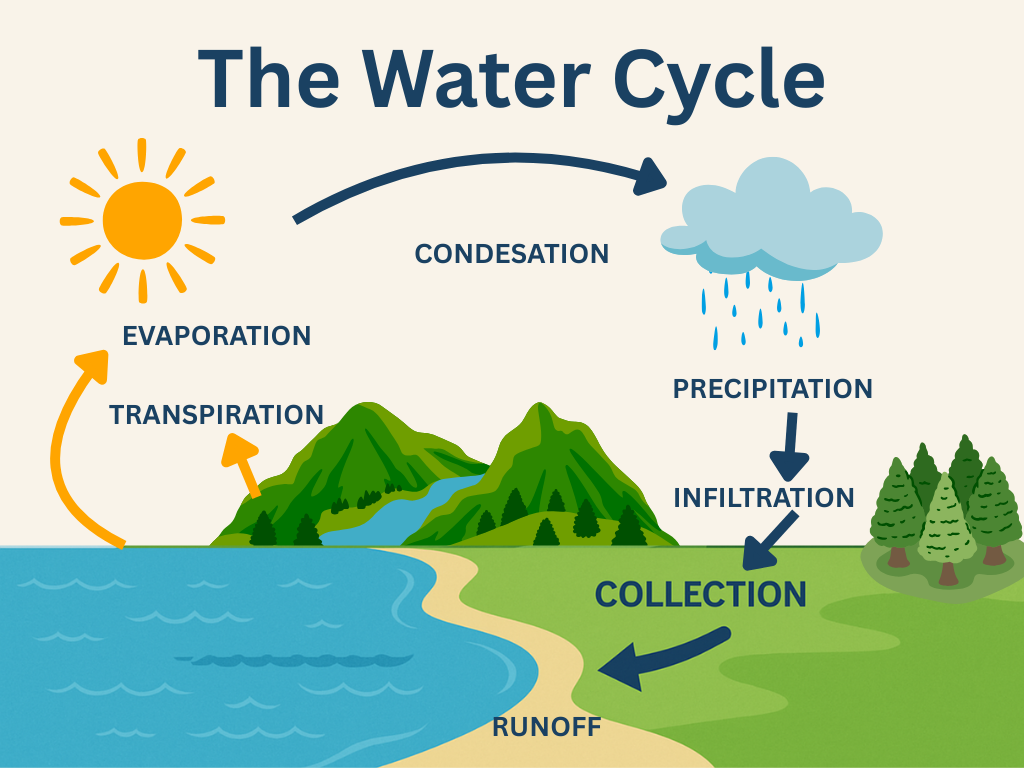
- Evaporation: Solar energy heats up water from oceans, lakes, and rivers. This heat transformation turns it into water vapor. The vapor then rises into the atmosphere.
- Transpiration: Plants release water vapor into the air from their leaves, contributing to overall moisture in the atmosphere.
- Condensation: As water vapor rises, it cools and changes back into liquid droplets, forming clouds.
- Precipitation: When droplets in clouds combine and grow heavy, they fall to Earth as rain, snow, sleet, or hail.
- Collection: Water gathers in rivers, lakes, oceans, and underground aquifers, restarting the cycle.
- Infiltration: Some water soaks into the ground, replenishing groundwater sources and feeding into aquifers.
- Runoff: Water that doesn’t infiltrate runs over the land, flowing into streams and rivers.
The Importance Of The Water Cycle Important
1. Supports Life on Earth
- Hydration: All living organisms need water to survive. The water cycle ensures the ongoing availability of this resource.
- Agriculture: Plants depend on rainfall and soil moisture, both of which are regulated by the water cycle.
- Ecosystems: Wetlands, rivers, forests, and oceans rely on consistent water movement to maintain biodiversity.
2. Regulates The Climate
- Weather Formation: The water cycle drives weather patterns by moving heat and moisture across the globe.
- Cooling Effect: Evaporation cools the Earth’s surface, while clouds reflect sunlight.
- Global Rainfall: Transpiration and evaporation contribute to precipitation patterns, influencing global climate zones.
3. Naturally Purifies Water
- Evaporation and Condensation: These stages remove impurities and salt, essentially distilling water.
- Infiltration: Soil acts as a natural filter, cleaning water before it enters underground aquifers.
4. Replenishes Freshwater Sources
- Aquifer Recharge: Groundwater reservoirs are filled through infiltration.
- Surface Water Renewal: Precipitation and runoff restore lakes, rivers, and wetlands.
Human Impacts on the Water Cycle
Human activities are changing the natural rhythm of the water cycle. This alteration leads to unintended consequences for both people and the planet. From urban expansion to climate change, our influence is reshaping the way water moves through the environment.
1. Urbanisation
Urbanisation has significantly impacted the natural flow of the water cycle. As cities expand, the replacement of permeable surfaces like soil with concrete and asphalt prevents water from infiltrating the ground. This leads to increased surface runoff, which not only elevates the risk of urban flooding but also diminishes groundwater recharge.
The water would have seeped into aquifers. Instead, it is rapidly channeled into storm drains and waterways. This disrupts the delicate balance of local hydrological systems. Moreover, sprawling urban development reduces green spaces that facilitate evapotranspiration, altering local humidity and precipitation patterns.
2. Deforestation and Agricultural Practices
Deforestation and unsustainable agricultural practices pose significant threats to the natural functioning of the water cycle. When forests are cleared, we lose a major contributor to transpiration.
Transpiration is the process through which trees release water vapor into the atmosphere. This reduction in transpiration leads to drier air. It results in diminished cloud formation. Ultimately, this causes decreased rainfall, particularly in tropical regions like the Amazon.
In agriculture, poor land management depletes soil quality and structure. Compacted or eroded soils have reduced capacity to absorb water, which disrupts infiltration and increases runoff. This runoff often carries with it fertilizers, pesticides, and other pollutants. These substances then enter rivers, lakes, and groundwater sources. They damage aquatic ecosystems and contaminate drinking water supplies.
Large-scale irrigation practices can also contribute to water scarcity by depleting freshwater sources more quickly than they can be replenished. These activities, when combined with monoculture farming and chemical dependency, can severely impair the natural filtering processes of the soil. They also reduce biodiversity. Both of these impacts are vital for a balanced hydrological system.
3. Climate Change
Climate change disrupts the natural water cycle in profound ways. As global temperatures rise, evaporation rates increase, causing soils and freshwater sources to dry out more quickly. This leads to prolonged droughts in some areas and contributes to the formation of intense weather systems in others.
In many regions, climate change causes unpredictable shifts in rainfall patterns. Some places face more intense storms and flooding. Other areas experience chronic water shortages. Melting glaciers and reduced snowpack in mountain regions change the flow of rivers. These rivers rely on seasonal meltwater. This change impacts drinking water and irrigation supplies downstream.
Additionally, warmer temperatures result in more water vapor in the atmosphere. This can intensify storms and lead to more extreme precipitation events. These changes make it harder for communities to manage water resources effectively, putting stress on agriculture, ecosystems, and urban infrastructure.
4. Industrial and Domestic Water Use
Industrial and domestic activities significantly disrupt the water cycle. Industries often withdraw large amounts of water for production and cooling, leading to reduced river flows and depleted aquifers. They may also release heated or contaminated water back into the environment, affecting ecosystems and altering evaporation rates.
Domestically, excessive use, like overwatering lawns or inefficient appliances, adds to water demand. Wastewater, when untreated or poorly managed, introduces pollutants that degrade water quality. Promoting water-efficient technologies and responsible usage habits can help reduce these impacts and maintain the water cycle’s natural balance.
These impacts show the urgent need for sustainable water management practices. These practices should align human development with the integrity of the planet’s water systems.

How We Can Protect the Water Cycle
1. Conserve Water at Home
- Install low-flow fixtures.
- Fix leaks promptly.
- Collect rainwater for irrigation.
To learn more about how you can reduce your water consumption, Buy our Water Conservation Checklist.
2. Support Reforestation and Conservation
- Trees play a critical role in transpiration.
- Forest conservation helps maintain rainfall and biodiversity.
3. Reduce Carbon Emissions
- Lower energy consumption.
- Choose renewable energy sources.
- Advocate for climate-friendly policies.
To learn more about how you can reduce your water consumption, Buy our Energy Conservation Checklist.
4. Use Green Infrastructure
- Green roofs and rain gardens reduce runoff.
- Permeable pavements enhance groundwater recharge.
Frequently Asked Questions (FAQs)
Can the water cycle stop working?
No, but human activities can disrupt its balance, leading to environmental crises like droughts and floods.
Is all water in the cycle drinkable?
No. While the cycle purifies water naturally, pollution and overuse can compromise water quality and safety.
What happens when we remove forests?
Deforestation reduces transpiration, disturbs rainfall patterns, and increases surface runoff.
How does climate change affect the water cycle?
It intensifies evaporation, causes erratic rainfall, and disrupts seasonal water availability.
Conclusion
The water cycle is Earth’s circulatory system, a delicate, dynamic process that sustains life and regulates the planet. Understanding and protecting it is crucial in a time of growing environmental challenges.
Whether you live in a rainy city or a drought-prone region, the water cycle touches every part of your daily life. Protecting it means securing a healthier, more resilient future for all.

 Planet Pulse
Leave a comment