
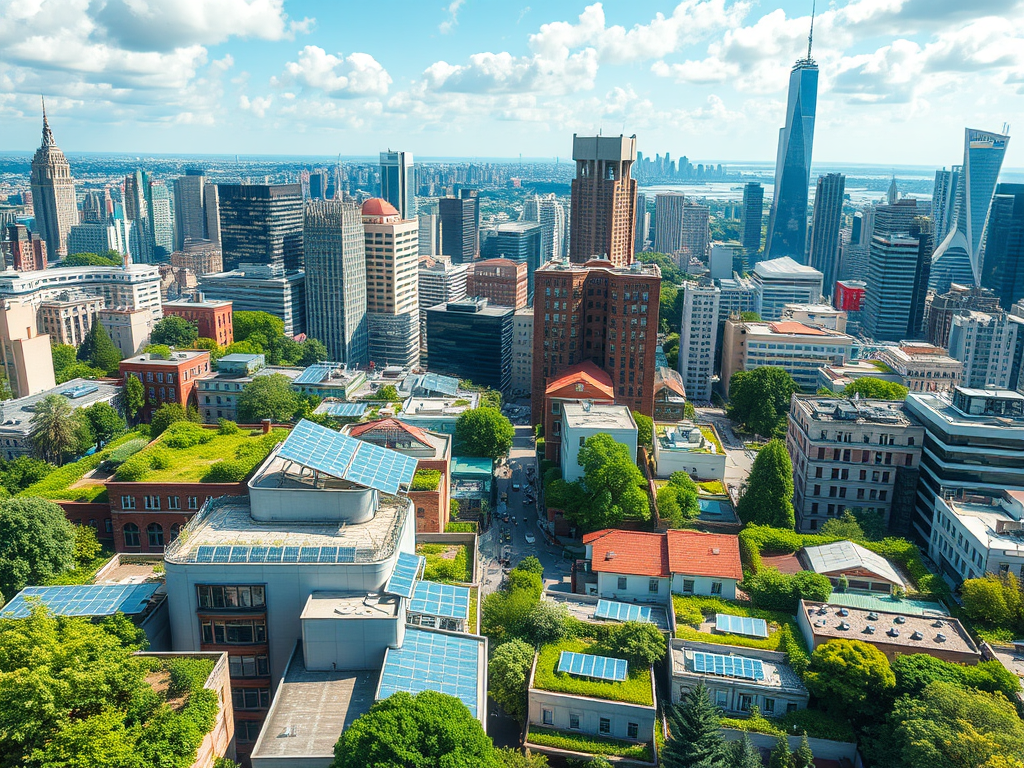
With over half of the world’s population now living in urban areas, cities are at the epicentre of both climate challenges and innovative solutions. From rising sea levels and heatwaves to flooding and infrastructure strain, urban environments must adapt quickly to protect people, resources, and ecosystems.
Thankfully, many cities are rising to the occasion, embracing climate-resilient planning and sustainable infrastructure to ensure a liveable future. This article explores examples of climate resilient cities to understand how urban planning has benefited these cities.
In this Article
What Is Urban Climate Resilience?
Urban climate resilience refers to a city’s ability to prepare for, respond to, and recover from climate-related shocks and stresses. It combines physical infrastructure, environmental planning, and community engagement to reduce risk and enhance adaptability.
Key components include:
- Green infrastructure: Green roofs, permeable pavements etc.
- Water management systems: Retention basins, rain gardens etc.
- Urban planning policies that promote density, sustainability, and biodiversity.
- Early warning systems and emergency preparedness.
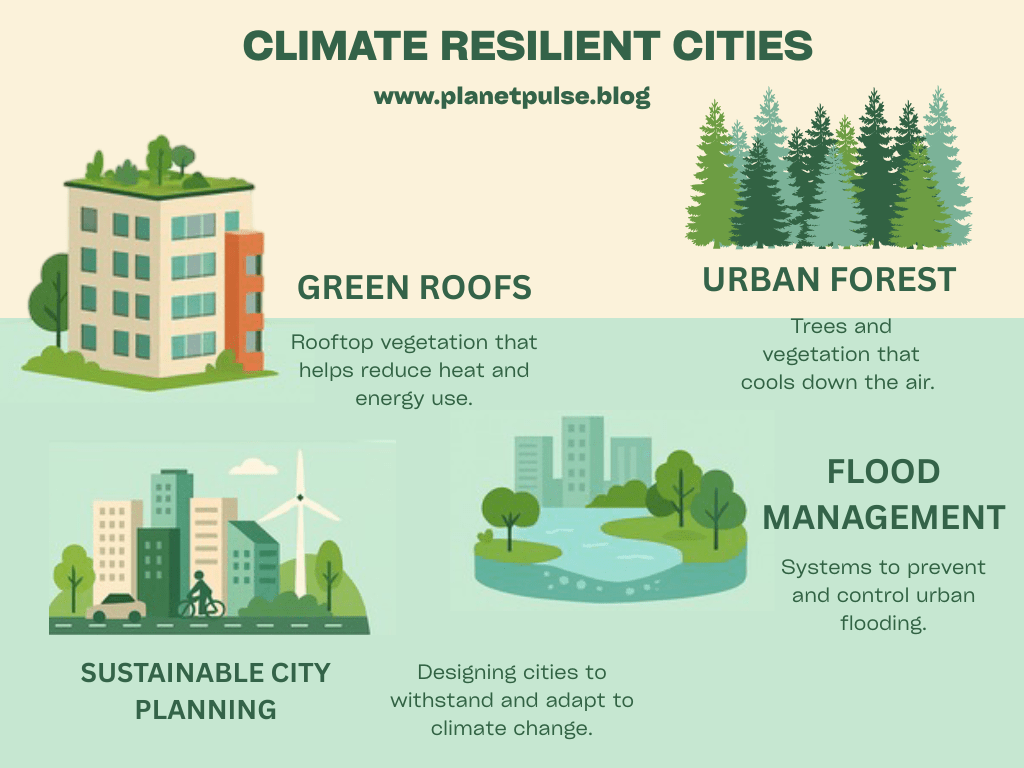
Urban resilience not only addresses current climate risks but also lays the foundation for sustainable growth. It ensures that cities remain functional and equitable in the face of long-term environmental pressures.
Climate-Resilient Cities
1. Copenhagen, Denmark
Faced with a devastating cloudburst in 2011 that caused over €800 million in damages, Copenhagen launched its ground-breaking Cloudburst Management Plan. Rather than relying solely on underground drainage, the city reimagined its public spaces as part of its stormwater strategy.
Key Features:
- Sunken parks like Tåsinge Plads that act as water basins during heavy rains.
- Permeable pavements in neighbourhoods such as Østerbro to absorb and slow down runoff.
- Multi-functional streets that temporarily direct excess water to safe overflow zones.
Results:
- Infrastructure savings of €300 million compared to traditional drainage systems.
- Enhanced biodiversity in urban green areas.
- Recognition as a global model for adaptive climate infrastructure.
2. New York City, USA: Greening the Skyline for Urban Cooling
After Hurricane Sandy caused $19 billion in damages in 2012, NYC made resilience a top priority. Through programs like PlaNYC and OneNYC, the city incentivized private and public investment in green roofs and heat mitigation strategies.
Highlights:
- The Javits Centre green roof, one of the largest in the U.S., reduces the building’s energy use and hosts pollinators and bird species.
- Cool Neighbourhoods NYC targets low-income, heat-vulnerable communities with tree planting, cool roofs, and climate awareness campaigns.
- Zoning incentives allow developers to increase floor area in exchange for installing green infrastructure.
Results:
- Temperatures reduced by 1.5–2°C in some neighbourhoods.
- Increased stormwater absorption and improved public health in heat-stressed communities.
- Over 5,000 new street trees planted annually.
3. Singapore: Biophilic Urbanism at Scale
Singapore’s proactive planning turned it into a leader in nature-based climate adaptation. The city-state transformed from a concrete jungle into a lush, interconnected ecosystem.
Core Strategies:
- “City in a Garden” vision integrates vegetation into homes, offices, and public buildings.
- The Bishan-Ang Mo Kio Park converted a concrete canal into a meandering river with floodplain greenery.
- Use of Smart Water sensors to monitor and manage rainfall and water supply.
Results:
- Urban heat island effect reduced in heavily vegetated areas.
- Enhanced quality of life and mental health for residents.
- Regularly ranks among the greenest cities globally.
4. Rotterdam, Netherlands: Designing for Water, Not Against It
As a low-lying delta city, Rotterdam has embraced living with water. Instead of building ever-larger dikes, it developed layered water management approaches that combine protection, accommodation, and awareness.
Innovative Adaptations:
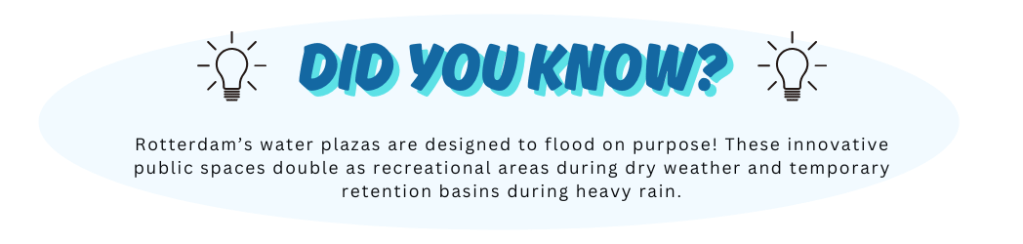
- The Water Square Benthemplein, a sunken plaza that doubles as a basketball court and rainwater basin.
- Floating Pavilion, a prototype for climate-resilient architecture on water.
- Integrated systems that use real-time data to operate locks, pumps, and reservoirs during storms.
Results:
- Resilience integrated into urban life without sacrificing public enjoyment.
- International recognition for climate-forward architecture and public engagement.
- A central hub for knowledge sharing on climate resilience strategies.
| City | Key Strategy | Primary Benefit |
|---|---|---|
| Copenhagen | Green stormwater infrastructure | Reduced flooding and enhanced biodiversity |
| New York City | Green roofs | Cooler buildings, better air quality |
| Singapore | Nature-integrated urban planning | Urban cooling, increased green space |
| Rotterdam | Floating infrastructure | Sea-level rise adaptation |
Challenges to Urban Climate Resilience
While many cities are innovating, urban resilience faces challenges such as:
- Funding limitations for large-scale infrastructure upgrades.
- Policy inertia or lack of political will.
- Inequitable access to green spaces and resources.
- Community resistance to new development plans.
Overcoming these hurdles requires cross-sector collaboration, inclusive planning processes, and robust education campaigns.
How You Can Support Climate-Resilient Cities
Whether you’re a city planner or a concerned citizen, here are ways to help promote climate resilience:
- Support local green projects: Volunteer for tree-planting or urban gardening programs.
- Advocate for sustainable zoning policies.
- Use sustainable transportation: Walk, bike, or use public transit.
- Educate others about climate adaptation and resilience.
- Push for climate-conscious leadership in local elections.
Frequently Asked Questions (FAQs)
Why do cities need to focus on climate resilience?
Urban areas are vulnerable to extreme weather, rising temperatures, and infrastructure strain. Building resilience helps protect lives and reduces economic losses.
Are green roofs expensive to install?
While upfront costs may be higher, green roofs provide long-term savings through energy efficiency, longer roof life, and stormwater management.
Can smaller cities also adopt these strategies?
Absolutely. Many resilience strategies like rain gardens, green spaces, and energy-efficient building codes are scalable and adaptable to smaller communities.
What role do communities play in resilience?
Community engagement ensures that resilience strategies address local needs and gain public support, making them more effective and sustainable.
Conclusion
The climate crisis is here, but cities are not standing still. Through a combination of innovation, sustainability, and community involvement, urban areas are becoming beacons of resilience. As more cities adopt climate-smart strategies, they pave the way for a future where both people and the planet can thrive.
To truly transform cities, resilience must be built into every layer of governance, from infrastructure investment to community outreach. It’s not just about bouncing back, it’s about bouncing forward with greater equity, efficiency, and environmental harmony.




 Planet Pulse
Leave a comment