
In this Article
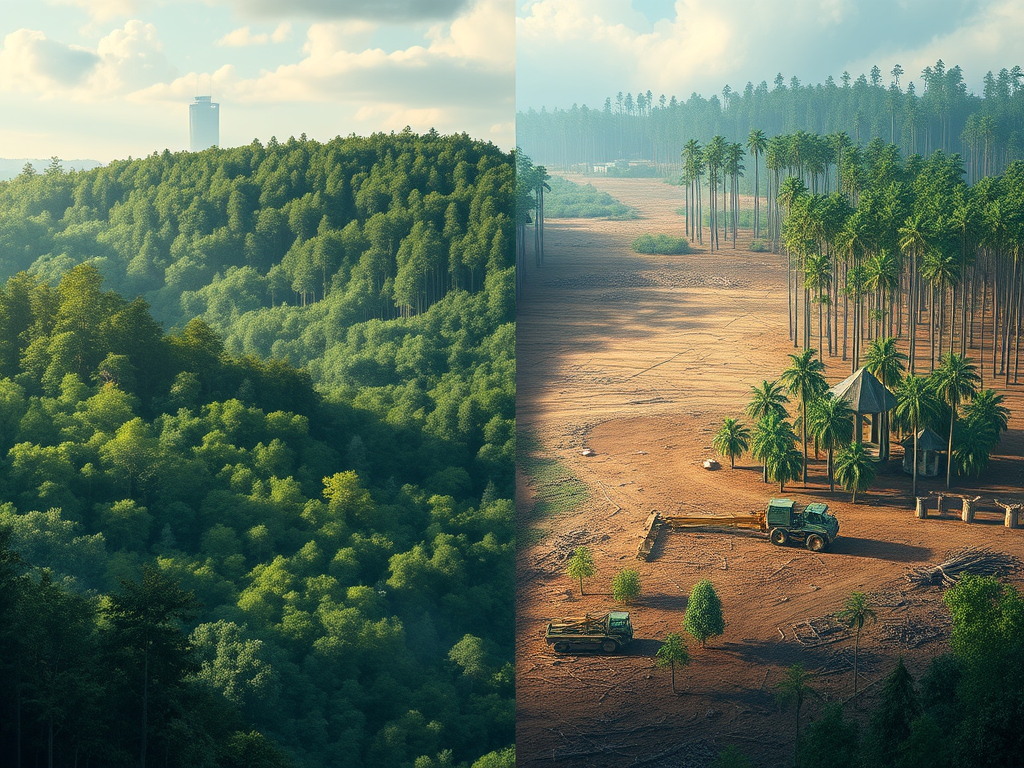
Deforestation is one of the most pressing environmental issues of our time. It refers to the large-scale removal of forests, often to make way for agriculture, urban development, or industrial activities. This practice has significant consequences for the environment, biodiversity, and climate. Understanding the basics of deforestation is essential for recognising its impact and taking steps toward sustainable solutions.

Causes of Deforestation
Deforestation occurs due to various human and natural factors. The most common causes include:
Agricultural Expansion
Agriculture is the leading cause of deforestation. Forests are cleared to make way for large-scale commercial farming and subsistence agriculture. Key agricultural drivers include:
- Cattle Ranching: Large tracts of forests, especially in the Amazon, are cleared to provide grazing land for cattle.
- Commercial Crops: The demand for crops like soy, palm oil, and coffee results in extensive deforestation. Palm oil plantations, in particular, have led to the destruction of vast forested areas in Indonesia and Malaysia.
- Slash-and-Burn Farming: Small-scale farmers often use this method, cutting down trees and burning vegetation to create farmland.
Logging
Logging, both legal and illegal, is a major driver of deforestation worldwide. Large-scale commercial logging operations clear vast forested areas to harvest timber for construction, furniture, and paper products. Even selective logging involves cutting down specific trees rather than clear-cutting. This practice can severely degrade forests. It opens up previously undisturbed areas to further exploitation. This practice weakens the overall ecosystem by making forests more vulnerable to fires, soil erosion, and fragmentation.
Illegal logging is often carried out without proper regulations or oversight. This accelerates forest loss. The issue is most prevalent in regions with weak governance and high demand for valuable hardwoods. The destruction caused by logging extends beyond just tree loss. It disrupts wildlife habitats. It endangers biodiversity and contributes significantly to global carbon emissions.
Urbanisation and Infrastructure Development
As human populations continue to expand, forests are increasingly cleared to accommodate growing urban areas. This includes the construction of residential housing, commercial centers, and public infrastructure such as roads, bridges, and transportation networks. Infrastructure projects like highways and railway expansions often cut through forested areas, fragmenting habitats and disrupting ecosystems.
Large-scale projects require extensive deforestation. These include hydroelectric dams, industrial zones, and energy production facilities. This leads to long-term environmental degradation. The demand for land due to urbanisation further drives illegal deforestation. This exacerbates the issue and makes it more difficult to regulate and control forest loss.
Mining and Industrial Activities
Mining operations require extensive land clearing, often resulting in large-scale deforestation and habitat destruction. Extracting minerals like gold, coal, and oil removes trees. It also causes soil erosion, water contamination, and air pollution.
Open-pit mining and strip mining are particularly destructive. They remove entire layers of vegetation and topsoil. This process makes it difficult for the land to recover. The use of toxic chemicals, such as mercury and cyanide in gold mining, further pollutes nearby rivers. These chemicals contaminate groundwater sources. They pose serious health risks to local communities and wildlife.
Additionally, mining activities contribute to climate change in multiple ways. They release stored carbon from forested areas. Mining activities also increase methane emissions from coal extraction. In many cases, illegal mining accelerates deforestation, especially in protected forest areas, where enforcement is weak. Mining has a profound cumulative impact on forests and ecosystems. Stricter regulations are needed. We also require sustainable extraction practices. Reforestation efforts are essential to mitigate its damage.
Natural Causes
Wildfires, pests, and diseases are natural phenomena that can lead to forest loss. However, their frequency and severity have been significantly increased by human activities. Rising global temperatures due to climate change have led to prolonged droughts. These droughts create drier conditions. Such conditions make forests more susceptible to wildfires. In some cases, wildfires are deliberately set to clear land for agriculture, further compounding the problem.
Additionally, changing climate patterns have altered the natural balance of ecosystems. This has led to outbreaks of pests such as bark beetles. These pests weaken and kill trees. These infestations can decimate vast forested areas, leaving them more vulnerable to further destruction.
Diseases that affect trees, such as sudden oak death and Dutch elm disease, have spread more aggressively. This is due to human-induced changes in the environment. Poor forest management has also contributed to these issues. This includes lack of controlled burns, inadequate pest control, and insufficient monitoring of tree health.
We can mitigate the impact of these natural threats on global forests by addressing climate change. Improving forest management strategies and implementing early detection systems also contribute to this mitigation.
Conclusion
Deforestation is a complex issue driven by various human activities, from agricultural expansion and logging to infrastructure development and urbanisation. Each of these causes contributes to the degradation of our forests. This has significant consequences for biodiversity. It also affects climate change and local communities.
In the next post, we’ll dive into the profound effects deforestation has on our environment, wildlife, and communities. From the loss of biodiversity to the acceleration of climate change, the consequences are far-reaching and deeply interconnected. Stay tuned as we explore how deforestation impacts global weather patterns. We’ll also examine the livelihoods of people who depend on forests for survival. You can read all about it Here.
 Planet Pulse
Leave a comment