
Although winter storms have always been a powerful natural force, they have become more intense and unpredictable in recent years. This is because weather patterns are changing due to climate change, resulting in more frequent ice storms, longer cold snaps, and harsher blizzards. In 2026, being prepared involves more than just stockpiling goods, but also entails implementing climate-smart tactics that protect both people and the environment.
This article combines conventional safety precautions with environmentally friendly options to provide useful, timeless advice for winter storm preparedness. Households can lessen their environmental impact and remain safe during catastrophes by making strategic preparations.
In this Article
Understanding Winter Storm Risks
Winter storms come in many forms, such as:
- Blizzards, that brings heavy snowfall and strong winds, reducing visibility and immobilising communities.
- Ice storms coat roads, power lines, and trees with dangerous layers of ice.
- Polar vortex events causes temperatures to drop well below freezing, putting vulnerable populations at risk and taxing heating systems.
These risks are increasing due to climate change. Storms may arrive earlier, persist longer, or hit areas not used to harsh winter weather due to warmer waters and changing jet streams. Therefore, the first step to resilience is to identify these changing threats.
Home Preparedness
The key component of being prepared for winter storms is having a secure, energy-efficient home.
1. Insulation and Energy Efficiency
- Think about environmentally friendly materials like recycled denim or cellulose insulation.
- To save heat, seal drafts around windows and doors.
- Improve wall and attic insulation.
For more information on how to reduce your energy consumption, Check Out our Energy Conservation Checklist.
2. Backup Heating Options
- Avoid indoor use of gas generators, which pose carbon monoxide risks.
- Clean, reliable backup power is provided by solar panels with battery storage.
- Essential devices can be powered by portable solar generators.
Emergency Supplies Checklist
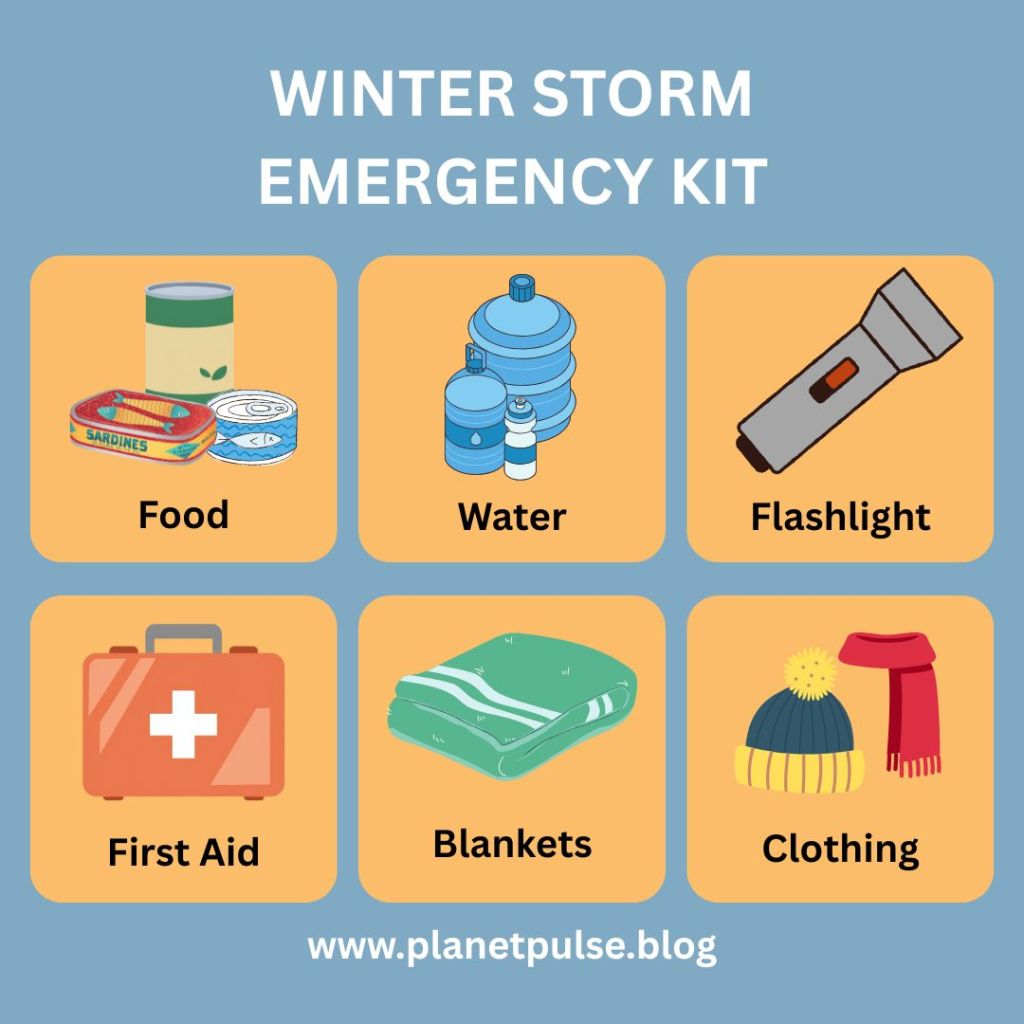
Every household should maintain a climate‑smart emergency kit:
- Shelf‑stable foods with minimal packaging such as dried beans, rice, oats etc.
- Refillable water containers or water purification tablets.
- LED lanterns with rechargeable batteries.
- First aid kit with biodegradable bandages where possible.
- Wool blankets and thermal sleeping bags.
Personal Safety & Health
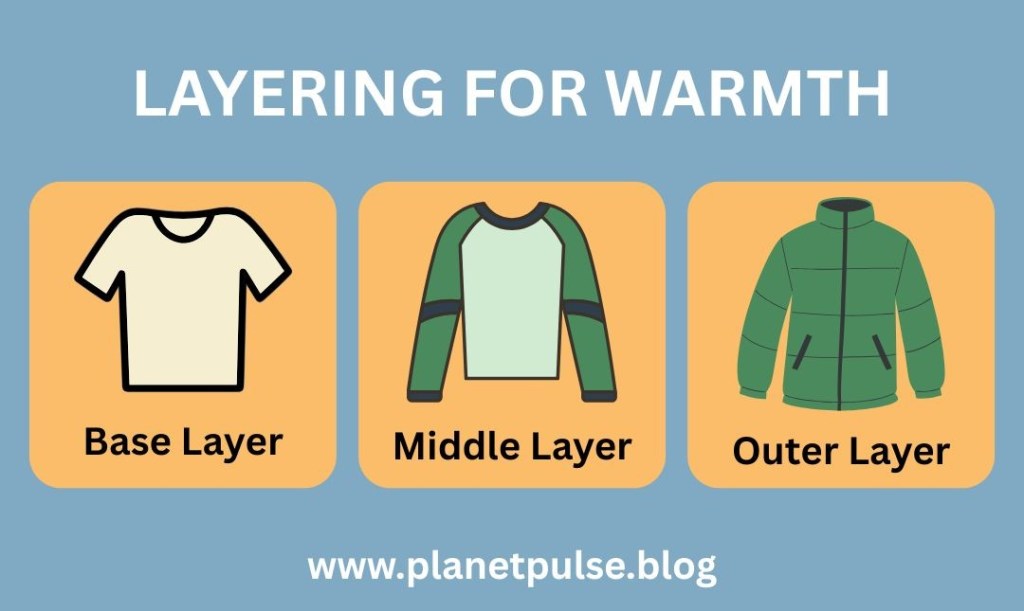
Cold weather can be life-threatening without sufficient protection. This means that appropriate winter attire is required to keep healthy. This emphasises the importance of layers. Consider using moisture-wicking textiles like organic cotton or bamboo for the base layer. The second layer should consists of warming wool or fleece, while the outer layer is a waterproof and wind-resistant jacket produced from recycled materials.
By taking care of our personal safety, we can prevent health risks such as frostbites and hypothermia, which are major concerns. To avoid this, limit outdoor exposure and keep exposed skin covered.
Furthermore, we should protect interior air quality by venting carefully when utilising backup heating and keeping prescription drugs accessible and stored properly.
Travel & Mobility
Storms frequently disrupt transport, making mobility difficult. To prevent accidents, it’s important to properly prepare our vehicles by installing winter tires, using eco-friendly antifreeze, and carrying an emergency kit with blankets, food, drink, a torch, and phone charger.
Furthermore, we should make sustainable travel choices by using public transit wherever available. Avoid needless travel to lower emissions and risks. Also, if travel is inevitable, consider carpooling or using an electric vehicle.
Community & Climate‑Smart Actions
Individual homes are not alone in their preparedness. As a community, we should:
- Check on elderly or vulnerable neighbours.
- Share resources, such as food and blankets.
- Use reusable containers in emergency supplies instead of single-use plastics.
- Promote resilient infrastructure, such as underground power lines and renewable energy grids.
Community cooperation is important because it not only saves lives, but also builds resilience against climate-related disasters.
Long‑Term Climate Resilience
Winter storm preparedness is part of a larger climate resilience plan. We should consider:
- Investing in renewable energy systems for residences.
- Encouraging local policies that promote sustainable infrastructure.
- Practice year-round carbon-reducing activities, such as composting, energy saving, and sustainable transportation.
Integrating climate-smart activities into daily living helps households contribute to long-term solutions to reduce future storm risks.
Frequently Asked Questions (FAQs)
How much food and water should I store?
Store at least three days’ worth per person, focusing on low-waste, shelf-stable food and clean drinking water.
What’s the safest backup heating method?
Solar or battery-powered systems are safest and climate-friendly. Avoid indoor use of gas generators.
How can I prepare my car for winter storms?
Install winter tires, keep an emergency kit in your vehicle, and consider using eco-friendly antifreeze.
How do I help my community during a storm?
Check on elderly neighbors, share resources when possible, and reduce unnecessary travel to keep roads safe.
Why is climate-smart preparedness important?
It ensures personal and community safety while reducing long-term environmental impact, aligning preparedness with global climate goals.
Conclusion
In 2026, winter storms require climate-smart solutions to protect lives and the environment, in addition to standard preparedness measures. Households may endure storms safely and responsibly by insulating their homes, using renewable energy, wearing environmentally friendly clothing, and encouraging community resilience.
Preparedness is more than just surviving the next snowfall; it is about creating a future in which safety and sustainability co-exist. As climate change continues to impact our winters, the best course of action is to plan ahead, live sustainably, and be safe.

 Planet Pulse
Leave a comment