
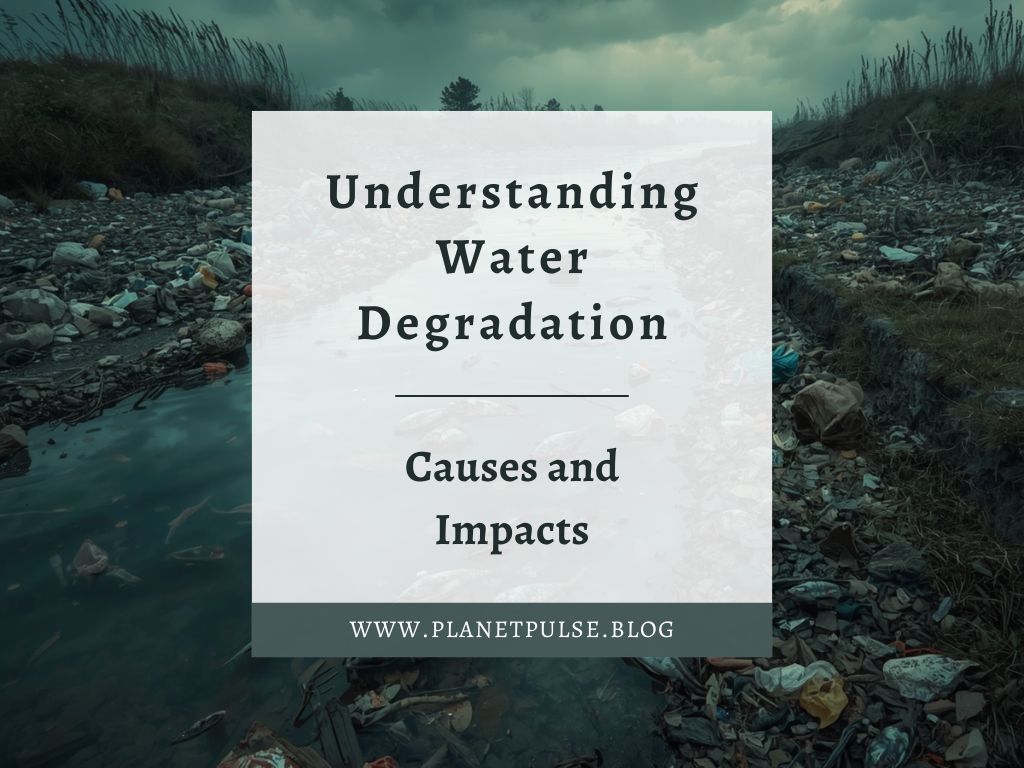
Water is one of the most important resources on the planet. However, this critical resource is under increasing pressure around the world. This is because rivers are becoming polluted, lakes are turning green with algae, groundwater is depleting faster than it can replenish and coastal areas are losing their ecological diversity. These changes are not isolated incidents but are an indications of a larger environmental issue known as water degradation.
This article provides an understanding what water degradation is, why it occurs, how it impacts both people and the environment as well as solutions to combat water degradation.
In this Article
What Is Water Degradation?
Water degradation is the reduction in the quality, quantity and ecological function of water resources. It is a broad phrase that encompasses a variety of environmental harms, including chemical pollution, physical changes in water bodies and biodiversity loss.
As opposed to water scarcity, which focuses on water availability or water pollution, which focuses on contaminants, water degradation includes all of the ways in which water systems become damaged or incapable of supporting life.
At its core, water degradation has three interconnected characteristics, such as:
- Chemical Indicators: When hazardous substances enter water bodies, including industrial chemicals, heavy metals, pesticides, medicines and excess nutrients like nitrogen and phosphorus. This means that chemical degradation can make water hazardous to drink, endanger aquatic life and alter entire food chains.
- Physical Indicators: Refers to changes in the physical properties of water. Increased sedimentation from soil erosion, rising water temperatures caused by climate change and higher turbidity from urban runoff all falls under this category. This means that physical degradation of water can restrict light penetration, suffocate habitats and disrupt the natural flow of rivers and streams.
- Biological Indicators: Refers to the loss of biodiversity and the disturbance of ecological processes. This can occur when invading species outcompete native organisms, pollution causes hazardous algal blooms or habitat damage impairs ecosystems’ ability to operate.
Together, these forms of degradation reduce water systems’ resilience, making them more vulnerable to climate change, overuse and pollution.
Causes of Water Degradation
Water degradation is driven by a combination of human activities and environmental pressures. For instance:
- Industrial pollution: Factory, mining, and manufacturing enterprises frequently discharge untreated or inadequately treated effluent into rivers and lakes. These discharges may contain harmful substances such as mercury, lead and synthetic chemicals, which remain in the environment and accumulate in the food chain.
- Agricultural Runoff: Fertilisers and pesticides are frequently used in modern agriculture, which can wash into bodies of water during rainfalls. Excess nutrients promote eutrophication, which causes fast algae growth, depletes oxygen and suffocates aquatic life. Manure runoff from livestock farming also pollutes waterways, introducing diseases and organic debris.
- Urbanisation: Intensifies water degradation by increasing sewage discharge, stormwater runoff and plastic pollution. Many cities lack proper wastewater treatment facilities, resulting in untreated sewage entering rivers and coastal areas. Urban surfaces such as roads and pavements prevent water from soaking into the ground, resulting in contaminated runoff flowing directly into drainage systems.
- Deforestation: When forests are removed for agriculture, mining or development, the soil becomes more vulnerable to erosion. Sediment washed into rivers can choke them, degrade water quality and harm habitat. Also, land-use change impacts natural hydrological cycles, including groundwater recharge and river flow.
- Over-extraction of Water: For irrigation, industry or domestic usage depletes water resources in rivers, lakes and aquifers. When water levels fall, toxins become more concentrated and ecosystems lose the conditions required to live. In extreme circumstances, rivers can run dry and wetlands can completely disappear.
- Climate Change: Rising temperatures heat water bodies, lowering dissolved oxygen levels and harming aquatic life. Changed rainfall patterns cause more frequent droughts and floods, both of which harm water quality. Extreme weather events can overload sewage systems, wash contaminants into rivers, and hasten erosion.
Impacts of Water Degradation
One of the most immediate consequences of water degradation is on human health. This is because contaminated water may include germs that cause diseases such as cholera, dysentery and typhoid.
Apart from this, chemical pollution can cause long-term health concerns such as cancer, neurological difficulties and reproductive troubles. In many areas, communities rely on untreated surface water, making them particularly vulnerable.
Water Degradation is also harmful to our ecosystems. Fish kills, declining amphibian populations and the loss of wetlands are all common indicators of environmental stress. Wetlands, in particular, play an important role in pollutant removal, carbon storage and wildlife habitat. When they degenerate, entire ecosystems cease to operate.
The impacts of water degradation extends to food and agriculture. Poor water quality affects agriculture production, contaminates irrigation systems and increases soil salinity. Fisheries suffer as aquatic environments deteriorate, threatening food security and livelihoods for millions of people.
Additionally, water degradation has a significant economic cost. Governments and companies must make significant investments in water treatment, infrastructure maintenance and environmental restoration. Also, tourism may suffer when beaches, rivers and lakes become filthy or dangerous.
Water degradation can increase social and political problems in some areas, particularly if water supplies are already restricted. Conflicts over access to clean water can deepen inequalities and cause displacement.
Real‑World Examples of Water Degradation
Water degradation takes many different forms all throughout the world. Eutrophication is a common issue in freshwater systems. Explosive algal bloom occurs in nutrient-overloaded lakes and rivers, obstructing sunlight and reducing oxygen levels. Fish and other aquatic life cannot survive in the dead zones that emerge from this.
Microplastic pollution of the oceans has become a worldwide issue. In maritime habitats, tiny plastic particles from clothing, packaging and industrial waste build up, endangering species and getting into the food chain.
Contamination of groundwater is another major problem. Millions of people who depend on shallow wells for drinking water are impacted by arsenic contamination in several parts of the world including Argentina, Bangladesh, Cambodia, Chile, China, India, Mexico, Pakistan etc. Prolonged exposure to arsenic can result in serious health issues, such as cancer and skin sores.
Preventing and Reversing Water Degradation
Water degradation involves coordinated action across policy, technology, and communities. Strong governance is essential, which means governments must enforce water quality regulations, limit industrial discharge and engage in monitoring to hold polluters accountable and manage resources sustainably.
Sustainable farming, such as buffer zones, precise fertiliser usage, integrated pest management and soil restoration, reduces runoff and erosion. Expanding modern wastewater treatment, especially in fast‑growing cities, prevents fertilisers, pathogens and microplastics from entering rivers.
Resilience is strengthened by nature-based solutions. Wetland restoration enhances filtration, reforestation stabilises soils and increases groundwater recharge and river restoration revitalises ecosystems while lowering the risk of flooding.
Community involvement is also essential. Citizen science, education and clean-up initiatives foster stewardship and awareness. Long-term water protection is further supported by technological advancements, such as low-cost filters, real-time sensors and advanced desalination.
Conclusion
Although water degradation is a difficult and pressing problem, it is not impossible to overcome. From policy reforms and technological innovation to community engagement and individual responsibility, solutions exist at every level. We can safeguard and repair our water systems by being aware of the causes and effects.



 Planet Pulse
Leave a comment