
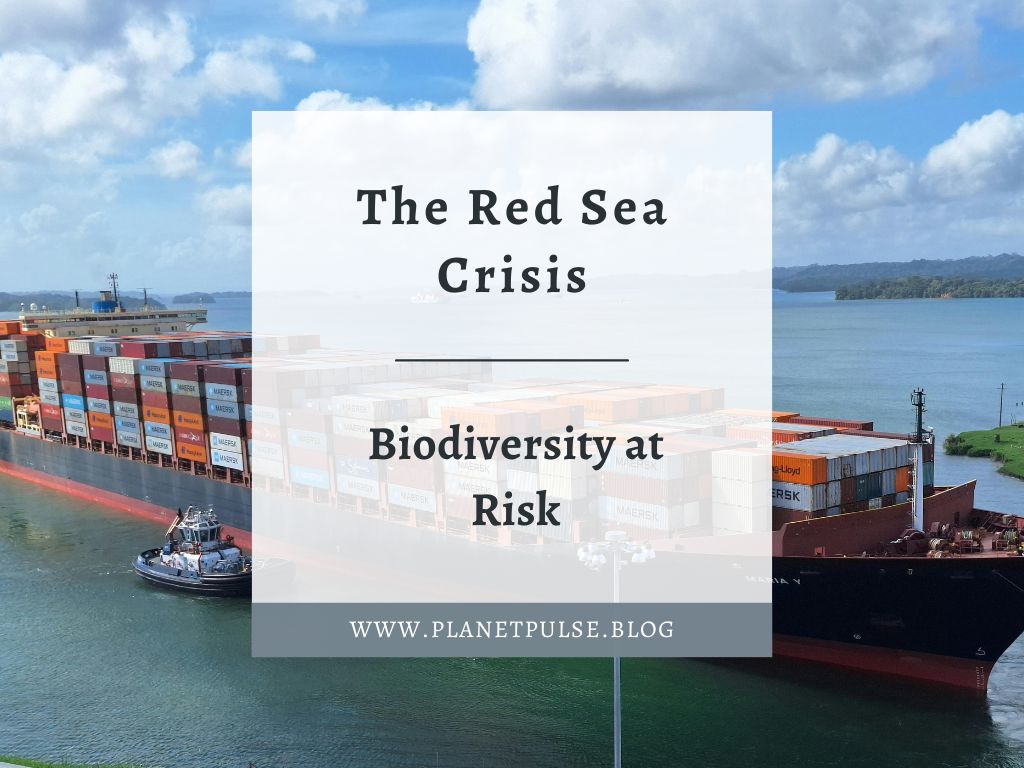
The Red Sea has become one of the world’s most vulnerable maritime regions, not just politically, but environmentally. There have been concerns about a possible large-scale oil spill in recent months due to tanker strikes, vessel damage, and intensifying violence. According to scientists, environmental organisations, and maritime specialists, the area is unprepared for such a catastrophe.
This isn’t just another narrative about environmental danger. It’s a clear example of how ecological vulnerability is increased by geopolitical instability and how a single tanker disaster could have far-reaching effects outside of the Middle East.
The Red Sea is a climate-resilient marine ecosystem, a hotspot for biodiversity, and a major shipping route worldwide. However, it is currently on the verge of a crisis that has the potential to reverse decades of conservation gains and cause economic instability across the three continents.
The ecological risks, geopolitical factors, economic ramifications, and the pressing need for concerted international action are all covered in this article.
In this Article
Why the Red Sea Matters: A Biodiversity Hotspot Under Threat
The Red Sea is home to some of the most extraordinary marine environments on Earth:
- Coral reefs that tolerate extreme heat, offering rare hope in a warming world.
- Over 1,200 species of fish and more than 200 types of coral thriving within its depth.
- Mangrove forests and seagrass meadows that act as carbon sinks and coastal defences.
- Critical nursery grounds for fisheries that support millions of people.
Red Sea corals have adapted to withstand high temperatures, in contrast to many reef systems that have already been severely damaged by bleaching. As a result, the area is home to some of the few remaining climate-resilient reefs, which serve as a natural laboratory for studying adaptation in an ocean that is warming.
It’s crucial to understand that heat-tolerant corals are not the same as oil-tolerant corals. This is because hydrocarbons harm fish, suffocate reefs, obstruct sunlight, and upset the delicate microbial balance that sustains coral life. Because oil seeps into their root systems and causes them to die off over decades, mangroves and seagrass habitats are considerably more at risk.
This shows that a major spill could erase the Red Sea’s ecological advantages in a matter of days.
How Conflict Is Increasing the Likelihood of a Major Spill
There is a greater chance of a significant oil spill due to recent conflict because:
A region unprepared for disaster
Despite its ecological significance, the Red Sea is unprepared for disasters because has:
- Limited ability to respond to an oil spills
- Fragmented governance across several countries
- Minimal co-ordination during conflict
- Inadequate deep-water containment equipment
Many nations that border the Red Sea lack the skimmers, booms, specialised vessels, and skilled workers required to respond swiftly. Access is further restricted by conflict, which postpones any emergency action.
The nightmare scenario
Experts warn that a worst‑case spill could:
- Spread across coral reefs within hours
- Smother coastlines from Yemen to Sudan
- Disrupt fisheries for years
- Trigger mass die‑offs of marine life
- Create long‑term toxic residues in sediments
Once oil enters the Red Sea’s narrow, semi‑enclosed basin, it becomes extremely difficult to disperse or remove, making it a nightmare scenario.
The Global Stakes: Why the World Should Care
The world should care about this issues because the Red Sea is a:
A major shipping chokepoint
The Suez Canal, which connects Europe, Asia, and Africa, passes through the Red Sea. About:
- 12% of global trade
- 30% of container traffic worldwide
- Every day, millions of barrels of oil flow through this corridor.
A spill might necessitate re-routing around the Cape of Good Hope, which would lengthen shipping delays by weeks and increase emissions and fuel use.
Economic Consequences
A significant spill would probably:
- Raise the cost of shipping insurance
- Increase the expense of international transportation
- Market disruption in the energy sector
- Contribute to the pressure of inflation
- Influence consumer goods, electronics, and food supply chains
This means that the economic shock would be worldwide rather than local.
Human impacts on coastal communities
Millions of people rely on the Red Sea for:
- Fishing
- Tourism
- Coastal livelihoods
- Clean water
- Cultural heritage
Oil contamination would devastate these communities, many of which already face economic hardship and climate stress.
Solutions and Policy Demands
The Red Sea, which was once thought of as just a narrow maritime boundary connecting the Mediterranean and the Indian Ocean, is now one of the most contested geopolitical regions in the world. This indicates that conflict is the new reality in the Red Sea, and solutions and policies must be improved to address these concerns.
Strengthening maritime protection
Environmental groups and maritime authorities are urging:
- Enhanced satellite monitoring
- International naval escorts for tankers
- Demilitarised shipping corridors
- Real‑time risk assessments
These measures aim to reduce the likelihood of tanker damage in conflict zones.
Building regional emergency response capacity
A coordinated response system could include:
- Shared spill‑response hubs
- Rapid‑deployment teams
- Pre‑positioned containment equipment
- Joint training exercises
This would allow countries to act collectively rather than individually.
Environmental diplomacy and cross‑border governance
The Red Sea spans seven nations. Effective protection requires:
- UN‑led coordination
- Regional environmental agreements
- Shared monitoring systems
- Transparent reporting of incidents
Environmental diplomacy is no longer optional, but essential.
Integrating climate resilience with security planning
The Red Sea crisis shows that environmental protection cannot be separated from geopolitical stability. Future planning must integrate:
- Climate adaptation
- Marine conservation
- Maritime security
- Conflict‑sensitive environmental management
This is the only way to prevent recurring crises.
Conclusion
The possibility of an oil spill in the Red Sea extends beyond the region. This is a test of the international community’s ability to prevent a climate-resilient ecosystem from becoming a casualty of conflict.
This moment necessitates global awareness, political will, and environmental leadership. The Red Sea’s future is dependent on decisions made now, not after a tragedy strikes. If the world does not act, we risk losing one of the planet’s most spectacular marine ecosystems, highlighting the fragility of global environmental governance.
 Planet Pulse
Leave a comment