
Despite its seeming calmness, winter is becoming more and more associated with hydrological extremes, such as floods, droughts, and ice hazards, which disrupt communities, infrastructure, and ecosystems. Winter is a crucial time of year for water-related hazards because of these occurrences, which are fuelled by climate change, changing weather patterns, and land use. Climate resilience depends on comprehending and being ready for these extremes as global temperatures rise.
In this Article
What Are Hydrological Extremes?
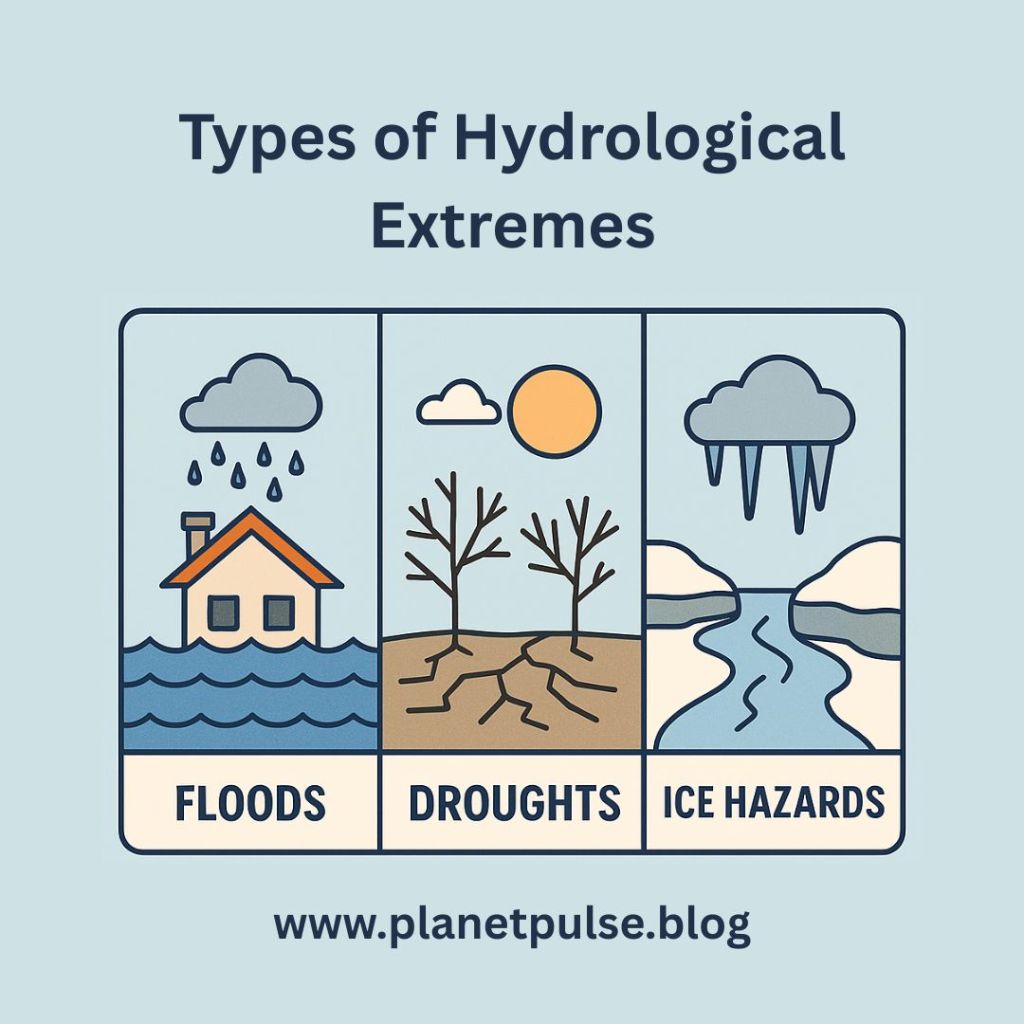
Hydrological extremes are unusual or severe water-related events that disrupt normal cycles of rainfall, storage, and flow. In winter, these extremes appear in three different forms, such as:
- Floods: Triggered by heavy rainfall, rapid snowmelt, or ice jams in rivers.
- Droughts: Less visible but equally damaging, winter droughts reduce soil moisture and water availability for spring planting.
- Ice Hazards: Frozen rivers, ice storms, and glacial surges create secondary risks for infrastructure and ecosystems.
These extremes are difficult to forecast and control because they are influenced by both human activity and fluctuations in the environment.
Floods in Winter
Flooding is one of the most destructive winter hydrological extremes. Unlike summer floods, which often result from tropical storms, winter floods are driven by unique seasonal factors:
- Snowmelt Floods: When temperatures spike, the snow that has accumulated on the ground quickly melts, overflowing reservoirs and rivers.
- Rain-on-Snow Events: Flash floods are caused when heavy rainfall accelerates runoff on frozen or snow-covered terrain.
- Ice Jams: When ice breaks apart, frozen rivers can obstruct water movement, resulting in flooding upstream.
- Examples:
- Europe: Winter floods have repeatedly damaged infrastructure and displaced thousands.
- California: Rainfall in California is so intense that it overwhelms water systems due to atmospheric rivers, which are long, narrow bands of concentrated moisture.
Winter Droughts
Winter droughts are less visible but equally dangerous. They occur when there is a decrease in precipitation, which leads to dry soils and depleted reservoirs. Unlike summer droughts, winter droughts often go unnoticed until spring planting reveals the damage.
Impacts of Winter Droughts:
- Reduced soil moisture delays crop growth.
- Lower reservoir levels threaten drinking water supplies.
- Ecosystems suffer from reduced streamflow, affecting fish and wetlands.
Climate Drivers of Winter Extremes
Several large-scale climate systems influence winter hydrology, such as:
- ENSO (El Niño–Southern Oscillation): Alters precipitation patterns globally, intensifying floods in some regions and droughts in others.
- Arctic Oscillation: Shifts cold air masses, influencing snowfall and storm tracks.
- Global Warming: Warmer winters reduce snowpack, alter rainfall intensity, and increase the frequency of extreme events.
Moreover, human activities also amplifies these drivers. For example, urbanisation reduces natural flood buffers, deforestation alters water cycles, and greenhouse gas emissions accelerate climate change, leading to winter extremes.
Impacts on Society and Ecosystems
Wintertime hydrological extremes have an impact on several sectors, for instance:
- Agriculture: Droughts lower yields and postpone planting, while floods damage crops.
- Infrastructure: Energy grids, roads, and dams are susceptible to ice and flood dangers.
- Energy Systems: Hydropower relies on steady water flows, which are disturbed by extremes.
- Ecosystems: Changed water cycles have an adverse effect on rivers, wetlands, and biodiversity.
Winter extremes are a critical social concern because they cause economic losses, health hazards, and displacement for communities.
Adaptation and Mitigation Strategies
Societies must implement proactive measures to lower risks. This can include:
- Flood Defences: Levees, dams, and floodplains designed to withstand the harsh conditions of winter.
- Early Warning Systems: Better predictions for situations involving snowmelt and rain on snow.
- Sustainable Water Management: Aquifers and reservoirs were able to balance the dangers of drought and flooding.
- Climate-Resilient Urban Planning: Cities with permeable surfaces, green infrastructure, and stormwater systems are examples of climate-resilient urban planning.
Because hydrological extremes frequently transcend national boundaries, international cooperation is also essential.
Frequently Asked Questions (FAQs)
What causes winter floods?
Rapid snowmelt, heavy rainfall, and ice jams in rivers are common triggers of winter flooding.
Can droughts really happen in winter?
Yes. Winter droughts occur when precipitation is below normal, reducing soil moisture and limiting water availability for spring.
How does climate change affect winter extremes?
Climate change intensifies both floods and droughts by altering precipitation patterns, snowpack levels, and storm intensity.
What can communities do to prepare?
Communities can invest in flood defenses, improve water storage systems, and adopt climate-resilient planning strategies.
Conclusion
As the climate changes, winter hydrological extremes are no longer a rarity but rather the new norm. Communities around the world are challenged by floods, droughts, and ice dangers, which call for awareness, readiness, and resilience. Societies can more effectively adjust to the realities of a warming planet by comprehending the causes and effects of these extremes.

 Planet Pulse
Leave a comment