
When we think of deforestation, we frequently see clear-cut summer landscapes or erosion during the rainy season. However, winter logging is a lesser-known activity with serious repercussions. While frozen soil and snow may appear to protect forests, seasonal logging during the winter can cause subtle and significant disruptions to ecosystems.
This article explores how winter deforestation impacts soil health, wildlife survival, and long-term forest regeneration.
In this Article
Why Logging Happens in the Winter
Forestry industries often prefer winter logging for practical reasons:
- Frozen soil stability: Heavy machinery may move more easily across frozen ground, lowering the likelihood of vehicles sinking into mud.
- Operational efficiency: Using ice roads and frozen rivers as natural highways improves timber transport efficiency.
- Less visible damage: Unlike spring logging, winter operations produce fewer immediate ruts, providing the impression of a lighter impact.
However, this perception is misleading. While frozen soil may prevent superficial rutting, compaction beneath the frost line can cause long-term damage. What appears efficient in the near term frequently results in ecological debt that forests struggle to repay.
Soil Freeze and Ecosystem Impacts
Winter logging interacts with the soil in unique and destructive ways.
- Compaction under frozen layers: Machinery pressure compresses the soil, reducing the pore space required for water infiltration and root growth.
- Microbial dormancy: Cold temperatures prevent microbial activity, which slows breakdown and nutrient cycling. When logging disrupts this equilibrium, the recovery is delayed.
- Erosion during thaw: Once spring arrives, compacted soil is unable to absorb meltwater properly, resulting in runoff, erosion, and sedimentation in rivers.
This chain reaction reduces forest resilience. Nutrient-deficient soils impede regrowth, while erosion harms water quality downstream, impacting both ecosystems and human areas.
Wildlife Disruption During Winter Logging
Winter creates a survival challenge for wildlife as logging during this season increases stress and creates:
- Hibernation disruption: Bears, badgers, and other hibernating species may be driven to leave their dens, depleting valuable energy supplies.
- Migration interference: Elk and caribou rely on unbroken forest corridors for seasonal travel. Logging disrupts these routes.
- Shelter loss: Birds and deer rely on extensive forest cover to stay warm in the cold. Logging removes this protection, leaving them vulnerable.
Unlike summer logging, which interferes with breeding and nesting, winter logging directly threatens survival during the coldest months. The ecological impacts spread widely, diminishing population stability and biodiversity.
Forest Regeneration Challenges
Winter logging presents unique challenges for forest regeneration, including delayed seed germination due to compacted soil that prevents seedlings from forming roots. Furthermore, winter logging also leads to:
- Slow microbial recovery: Nutrient cycling returns slowly after winter disruption, depriving young plants.
- Biodiversity decline: Sensitive species fail to re-establish, resulting in monocultures of hardy but less diversified plants.
This shows that winter deforestation is more damaging to forests than summer or fall logging. The outcome is frequently damaged ecosystems that are less resilient to climate change and human demands.
Comparison of Logging Impacts by Season
Logging affects forest ecosystems differently depending on the season. While each period presents unique challenges, winter logging often carries the highest ecological threat due to soil freeze and wildlife vulnerability.
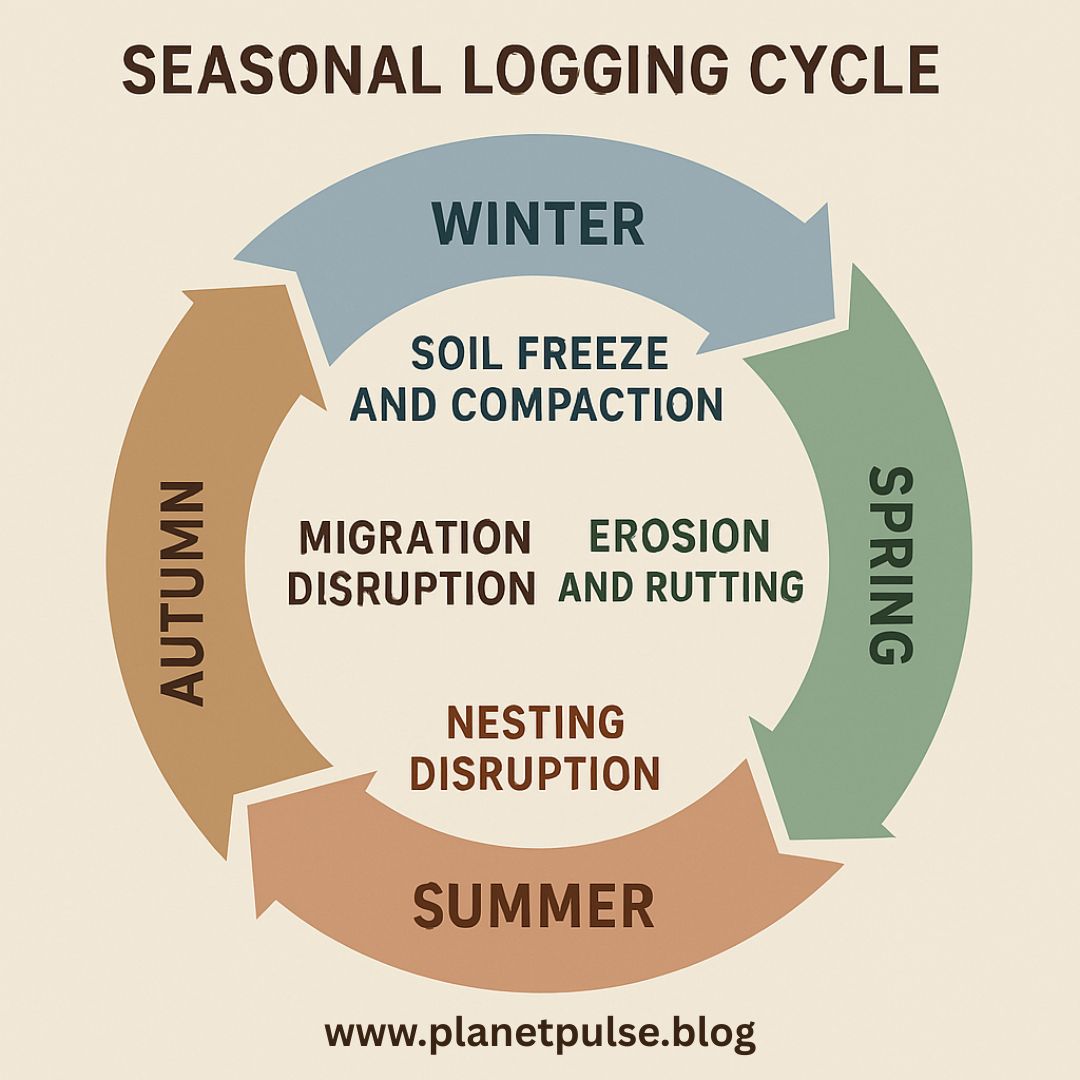
The table below highlights how winter logging is not a “safe” alternative as it carries risks equal to or greater than other seasons.
| Season | Soil Condition | Wildlife Impact | Ecosystem Threat Level |
|---|---|---|---|
| Winter | Frozen soil → compaction and delayed nutrient cycling | Disrupts hibernation, migration and survival | High |
| Spring | Wet soil → erosion, rutting | Breeding season disruption | High |
| Summer | Dry soil → less compaction | Nesting disruption | Moderate |
| Autumn | Transitional soil → moderate erosion | Migration disruption | Moderate |
Policy and Sustainable Alternatives
Forestry rules frequently focus on annual limits rather than seasonal implications. This makes ecosystems more vulnerable to winter exploitation. To mitigate damage, policies could:
- Introduce seasonal restrictions in order to limit logging during hibernation and migration.
- Mandate buffer zones to protect vital ecosystems like dens, nesting places, and migration routes.
- Encourage selective logging by harvesting only mature trees while maintaining canopy cover.
- Encourage community forestry by empowering local communities to manage forests sustainably while balancing economic requirements and environmental preservation.
Sustainable forestry is more than just eliminating logging; it’s also about timing, method, and environmental awareness.
Frequently Asked Questions (FAQs)
Why do industries prefer winter logging?
Frozen soil makes machinery transport easier and reduces rutting, but long-term environmental damage is often overlooked.
How does winter deforestation affect wildlife differently?
It disrupts hibernation and migration patterns, threatening wildlife survival during the harshest season.
Can forests recover faster from winter logging?
No. Soil compaction and delayed microbial activity slow regrowth, making forest recovery more difficult.
Are there policies regulating winter logging?
Few countries have specific seasonal regulations, leaving ecosystems vulnerable to winter exploitation.
Conclusion
Winter deforestation is not a harmless alternative to summer or spring logging. Its hidden impacts such as soil freeze disruption, wildlife survival threats, and regeneration delays, make it one of the most damaging seasonal practices. Greater awareness, stronger policies, and sustainable alternatives are essential to protect forests during their most vulnerable season.





 Planet Pulse
Leave a comment