
Summertime droughts and arid landscapes typically spring to mind when we think about water scarcity. However, winter has its own hidden water challenges. A seasonal crisis that frequently goes unrecognised is caused by frozen pipes, persistent droughts from the warmer months, and water consumption connected to heating. In order to address winter water scarcity and develop resilience against global water stress, it is essential to understand these dynamics.
In this Article
Frozen Pipes and Infrastructure Strain
Water infrastructure suffers greatly during the freezing cold winter months. When water expands during freezing, pipes burst, resulting in expensive repairs and substantial water loss. Municipalities in areas like the US Midwest and Northern Europe spend millions of dollars annually fixing pipe damage.
A single burst pipe can interrupt daily life and waste thousands of litres of water in a household. This means that infrastructure resilience, through insulation, smart monitoring and proactive maintenance, is important in preventing winter water waste.
Drought Carryover from Summer
Water scarcity doesn’t reset with the seasons. Droughts in the summer frequently persist into the winter, depleting groundwater and reservoirs. Significant recharge is not possible during the cold months because frozen ground restricts infiltration.
- Mediterranean regions face reduced rainfall and prolonged drought cycles.
- California struggles with groundwater depletion that persists into winter, affecting agriculture and urban supply.
This suggest that winter is not a “pause” in drought, but represents an extension of stress on already vulnerable water resources.
Heating-Related Water Demand
Heating systems are another hidden source of winter water consumption. Water circulation is essential for boilers, radiators, and industrial heating processes. During extended winters in colder climates such as Russia and Canada, demand rises.
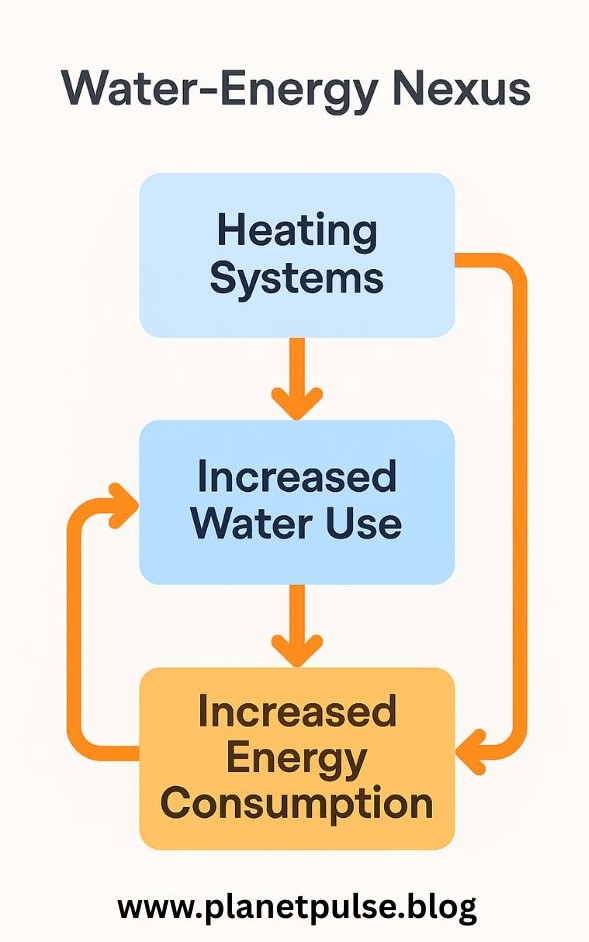
This creates a water-energy nexus as more heating means more water use, which in turn increases energy consumption and carbon emissions.
Sustainable heating solutions, such as energy-efficient boilers and district heating systems, can reduce both water demand and emissions.
To learn more about how you can reduce your energy consumption, Buy our Energy Conservation Checklist.
Global Implications
Winter water scarcity is a global issue, though impacts vary, as:
- Developed nations face infrastructure strain from frozen pipes and high heating demand.
- Developing nations struggle with affordability and access, as winter worsens existing supply challenges.
Climate change intensifies these problems, making winters harsher and droughts longer. Without adaptation, global water stress will worsen year-round.
Solutions and Conservation Tips
Households and communities can take practical steps to conserve water in winter:
- Insulate pipes to prevent freezing.
- Monitor leaks and repair them quickly.
- Use energy-efficient heating systems.
- Reduce unnecessary water use by taking shorter showers and doing mindful laundry cycles.
To learn more about how you can reduce your water consumption, Buy our Water Conservation Checklist.
At the policy level, governments must invest in resilient infrastructure, promote sustainable heating, and encourage conservation campaigns that highlight winter water stress.
Frequently Asked Questions (FAQs)
Why does winter cause water scarcity when there’s snow and ice everywhere?
Snow and ice are not immediately usable water sources. Frozen conditions block access and can damage water infrastructure.
How do summer droughts affect winter water supply?
Drought reduces groundwater recharge, leaving less available water during winter months.
Does heating really consume water?
Yes, boilers, radiators, and industrial heating systems rely on water circulation, increasing overall demand.
What can households do to conserve water in winter?
Insulate pipes, monitor leaks, use energy-efficient heating systems, and reduce unnecessary water use.
Is winter water scarcity a global issue?
Yes. Impacts vary as developed nations often face infrastructure strain, while developing nations struggle with access and affordability.
Conclusion
Winter is not a season of water abundance but more a season of hidden stress. Frozen pipes, drought carryover, and heating demand all contribute to winter water scarcity, making conservation just as important in January as it is in July. By recognising these challenges and acting on them, we can build resilience against global water stress year-round.





 Planet Pulse
Leave a comment