
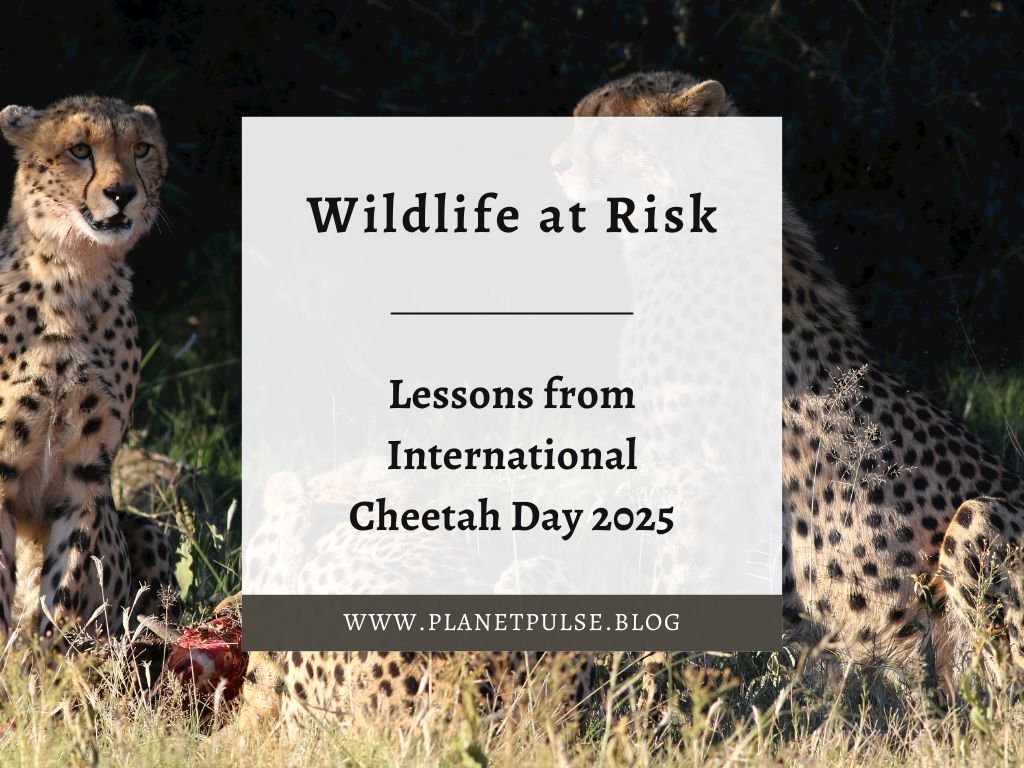
Every year on December 4, environmental activists, educators, and wildlife enthusiasts observe International Cheetah Day. The day is more than just a celebration of the world’s fastest land mammal. It is a call to action. This serves as a reminder that the cheetah’s struggle for survival symbolises a larger catastrophe. This catastrophe threatens global biodiversity.
By investigating the cheetah’s situation, we learn lessons that go far beyond one species. We gain insights about ecosystems, human responsibility and recognise the need for collective action.
In this Article
The Cheetah’s Conservation Crisis
Cheetahs once roamed across Africa, the Middle East, and parts of Asia. Now they occupy less than 10% of their historic range. With only around 7,000 individuals left in the wild, they are listed as Vulnerable on the IUCN Red List.
Cheetah’s face a unique set of challenges that make their survival especially uncertain. Some of the challenges they face are:
- Habitat Loss: Cheetahs require vast, open landscapes to hunt and roam. As farmland, roads, and settlements expand, their territories shrink, isolating populations and increasing human-wildlife conflict.
- Human-Wildlife Conflict: In regions where cheetahs share space with livestock, they are often killed by farmers trying to protect their animals. This response stems from economic vulnerability and lack of awareness and knowledge about non-lethal deterrents.
- Illegal Wildlife Trade: Cheetah cubs are trafficked for the exotic pet market, particularly in parts of the Middle East. Each year about 300 cubs are taken from their mothers when they are just a few weeks old. Many die in transit, and those that survive rarely thrive in captivity.
- Climate Change: Rising temperatures and shifting rainfall patterns affect prey availability and habitat quality, adding stress to already fragile ecosystems.
Unlike many other big cats, cheetahs suffer from extremely low genetic diversity. This bottleneck makes them more susceptible to disease and reduces reproductive success. It also limits their adaptability to changing environments, making conservation even more difficult.
Conservation Efforts and Successes
Despite these challenges, conservationists have made significant progress. For example:
- International initiatives: Organisations like the Cheetah Conservation Fund (CCF) lead research, rescue, and rehabilitation programs.
- Community engagement: Eco-tourism projects in Namibia and Kenya provide local communities with income, reducing incentives for poaching.
- Technology in action: GPS collars to track cheetahs movements. This helps conservationists understand the importance of habitats in the life of cheetahs.
- Transboundary co-operation: Countries like Botswana and South Africa collaborate on wildlife corridors that allow cheetahs and other wildlife to roam freely across borders.
These efforts show that conservation is most effective when science, policy, and community interests align.
Lessons for Global Biodiversity Protection
The cheetah’s conservation crisis is not just about one species but a blueprint for broader conservation:
- Flagship species matter: Protecting charismatic animals like cheetahs draws attention and funding, but also safeguards entire ecosystems.
- Connectivity is key: Cheetahs thrive in large, open landscapes. Their survival further emphasises the importance of habitat corridors for countless other species.
- Global cooperation is essential: Wildlife does not recognise political boundaries. Therefore international treaties and shared conservation strategies are vital.
- Integration with development goals: Conservation cannot be isolated from human needs. Therefore, linking biodiversity protection with sustainable development ensures long-term success.
Broader Implications
Saving cheetahs teaches us that protecting one species often means protecting many. Grasslands conserved for cheetahs also shelter antelope, birds, and other pollinators. Moreover, biodiversity has cultural and ethical dimensions in addition to biological ones. From tribal customs to current eco-tourism, wildlife enriches human existence in ways that science cannot quantify.
Call to Action
The lessons of International Cheetah Day extend to all of us:
- Individuals: Support conservation organisations, choose responsible tourism, and raise awareness.
- Policymakers: Enforce anti-trafficking laws, invest in habitat restoration, and integrate conservation into climate strategies.
- Global citizens: Recognise that biodiversity loss is a shared crisis. Protecting wildlife is protecting the future of humanity.
Conclusion
The cheetah, with its unparalleled speed and elegance, is more than a natural wonder; it represents urgency. International Cheetah Day serves as a reminder that this species’ fate is linked to that of countless others. Wildlife protection is not optional but necessary for the health of both our planet and ourselves.





 Planet Pulse
Leave a comment