

Here on Planet Pulse we have explored how microplastics pollute our oceans, soil, and even the food we eat. But recent studies reveal a startling new reality: microplastics are now also found in rainwater. This invisible pollution is quietly infiltrating ecosystems, drinking water, and even our bodies. Could this be the next silent environmental crisis?
In this article, we’ll explore how microplastics end up in precipitation, what it means for nature and human health, and why this phenomenon deserves urgent attention, just like any other natural disaster.
In this Article
What Are Microplastics?
Microplastics are tiny plastic particles less than 5mm in size. They come from:
- Broken-down plastic waste such as plastic bags, bottles, and packaging.
- Synthetic fibers from clothing and textiles.
- Tire dust from roadways.
- Cosmetic and cleaning products with plastic beads.
These particles are light enough to be carried by wind, lifted into the atmosphere, and eventually deposited back to Earth through rain, snow, or fog.
How Do Microplastics Get into Rainwater?
Microplastics don’t just pollute oceans, they are now part of the atmospheric cycle. Here’s how they end up in rain:
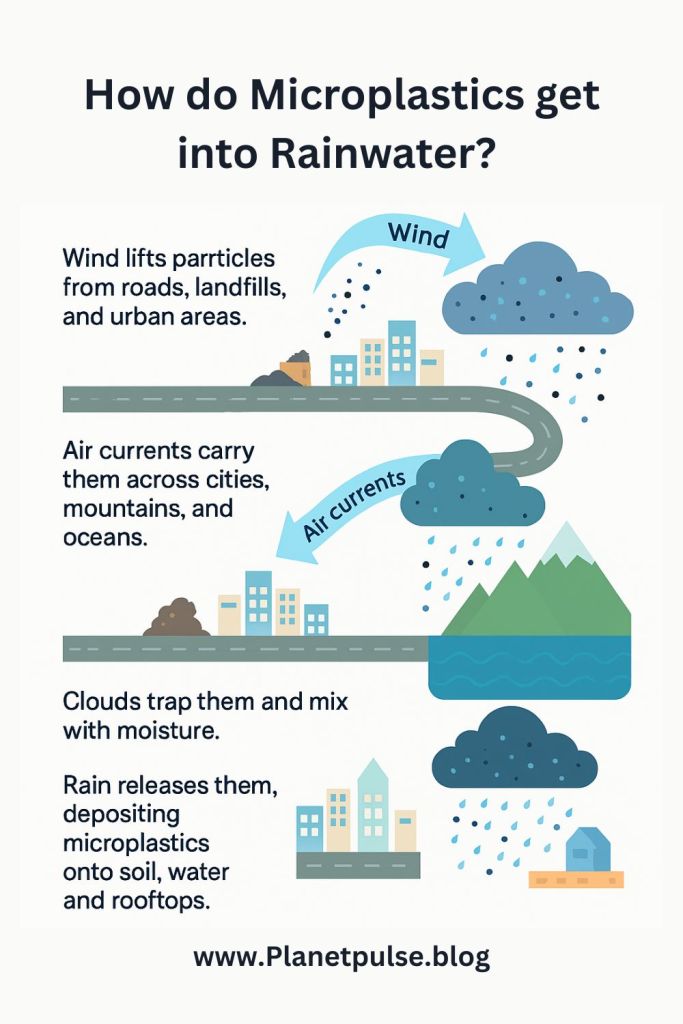
Wind Uplift: Microplastics shed from tires, synthetic clothing, packaging, and urban debris. Wind lifts these particles from roadsides, landfills, construction sites, and agricultural fields into the air.
The UK Centre for Ecology & Hydrology explains that microplastics are widely dispersed through environmental processes, including wind and surface abrasion
Atmospheric Transport: Once airborne, microplastics travel alongside dust and aerosols, with air currents capable of transporting them hundreds, or even thousands of km across cities, forests, mountain ranges, and oceans.
Studies have shown that microplastics are found in remote areas like the Pyrenees and Rocky Mountains, indicating long-range transport through the atmosphere
Cloud Capture: As these particles ascend, they interact with clouds. Microplastics can act as condensation nuclei, mixing with water vapor and becoming embedded in cloud droplets.
Though still an emerging area of research, scientists have found microplastics in cloud water samples, suggesting they mix with moisture and are suspended in the atmosphere before falling as precipitation.
Rainfall Deposition: When it rains, these contaminated droplets fall to Earth, depositing microplastics onto soil, rivers, lakes, rooftops, and even crops. This process is known as atmospheric wet deposition.
Microplastics have been detected in rainfall across continents, including in remote and mountainous regions, confirming their presence in the hydrological cycle.
Researchers have now detected microplastics in rainfall across multiple continents including remote, seemingly pristine regions like the Pyrenees, the Rocky Mountains, and even parts of the Arctic. This suggests that microplastic pollution is not just a local issue but a global phenomenon, infiltrating ecosystems far from any urban source
Alarming Data from Recent Studies
The numbers are sobering:
- A study in Jakarta found up to 1,500 microplastic particles per square meter per day in samples collected from Jakarta’s coastal areas..
- In the U.S., researchers detected plastic rain in 11 protected areas, including national parks.
- Microplastics have been found in rainwater, snow, and fog even in places with no nearby plastic sources.
Impact on Ecosystems
Microplastic rain doesn’t just affect cities but other ecosystems as well. Here’s how it harms ecosystems:
Soil Contamination
- Microplastics in soil can alter its physical structure, affecting water retention and aeration.
- They interfere with microbial communities, which are essential for nutrient cycling and plant health. Studies show shifts in microbial diversity and enzyme activity when microplastics are present.
- Over time, this leads to reduced soil fertility, making it harder for crops and native plants to thrive, especially in agricultural zones and forest floors.
Freshwater Pollution
- Rainwater runoff carries microplastics from urban surfaces, agricultural fields, and landfills into lakes, rivers, and streams.
- These particles accumulate in sediments and surface waters, where they can absorb toxins like heavy metals and pesticides, compounding their ecological impact.
- This not only affects aquatic life but also compromises water quality for human use and irrigation.
Food Chain Disruption
- Aquatic organisms from plankton to fish, ingest microplastics, mistaking them for food.
- These particles can cause internal injuries, blockages, and reduced energy intake, weakening the organisms over time.
- As predators consume contaminated prey, microplastics move up the food chain, potentially reaching birds, mammals, and even humans.
Long-Term Consequences
- Reduced biodiversity: Sensitive species may decline due to habitat degradation and food contamination.
- Weakened plant growth: Poor soil health and water quality hinder vegetation, affecting carbon sequestration and ecosystem resilience.
- Ecosystem imbalance: Disrupted food webs and altered microbial dynamics can destabilise entire habitats.
Human Health Risks
Microplastics aren’t just an environmental issue but also a public health concern. Studies show:
- Humans may inhale or ingest up to 68,000 microplastic particles per year.
- Microplastics have been found in human blood, lungs, liver, and even the brain.
- Potential health effects include:
- Inflammation
- Oxidative stress
- Hormonal disruption
- Neurotoxicity
- Fetal development risks
While research is ongoing, the presence of plastic in vital organs is deeply concerning.
Why This Is a Natural Disaster in Disguise
We typically think of natural disasters as sudden, visible events like earthquakes, floods, wildfires. Microplastic rain is different, as it is:
- Invisible but widespread
- Chronic rather than acute
- Global in scale
- Difficult to reverse
Like climate change, it’s a slow-moving crisis with long-term consequences. It affects air, water, soil, and health, making it a multi-dimensional threat.
What Can We Do?
While governments and industries must lead the charge, individuals can make a difference too.
- Policy and Innovation:
- Support bans on single-use plastics.
- Advocate for better air and water filtration systems.
- Push for eco-friendly packaging and textile innovation.
- Personal Actions:
- Reduce plastic use: switch to reusable bags, bottles, and containers.
- Choose natural fibers over synthetics.
- Use microplastic filters in washing machines.
- Support clean-up initiatives and sustainable brands.
Frequently Asked Questions (FAQs)
Can I still harvest rainwater safely?
Only with proper filtration. Microplastics can contaminate untreated rainwater.
Are microplastics visible in rain?
No. They’re microscopic and require lab analysis to detect.
Is this only happening in big cities?
No. Microplastics have been found in rainfall even in remote mountains and forests.
What’s the link to climate change?
While not directly caused by climate change, plastic pollution and atmospheric transport are influenced by climate patterns and human activity.
Are there regulations in place?
Some countries are beginning to address airborne microplastics, but global regulation is still limited.
Final Thoughts
Microplastic rain may not make headlines like hurricanes or wildfires, but its impact is just as profound. It’s a hidden disaster, one that demands awareness, action, and innovation. By understanding the science and taking steps to reduce plastic pollution, we can protect our ecosystems, our health, and our future.

 Planet Pulse
Leave a comment