A good glow-up is something we all enjoy, but what if your go-to exfoliant or dazzling highlighter is quietly damaging the environment? We looked at the life cycle of cosmetics in The Hidden Cost of Beauty: How Cosmetics Impact the Planet, we explored the life cycle of cosmetics.
Now, we’re diving deeper into the environmental hazards hiding inside your beauty bag. From microplastics that pollute oceans to toxic ingredients that contaminate water systems, this article reveals the ugly side of beauty and why it’s time to rethink what we put on our skin and into the environment.
In this Article
Microplastics in Cosmetics
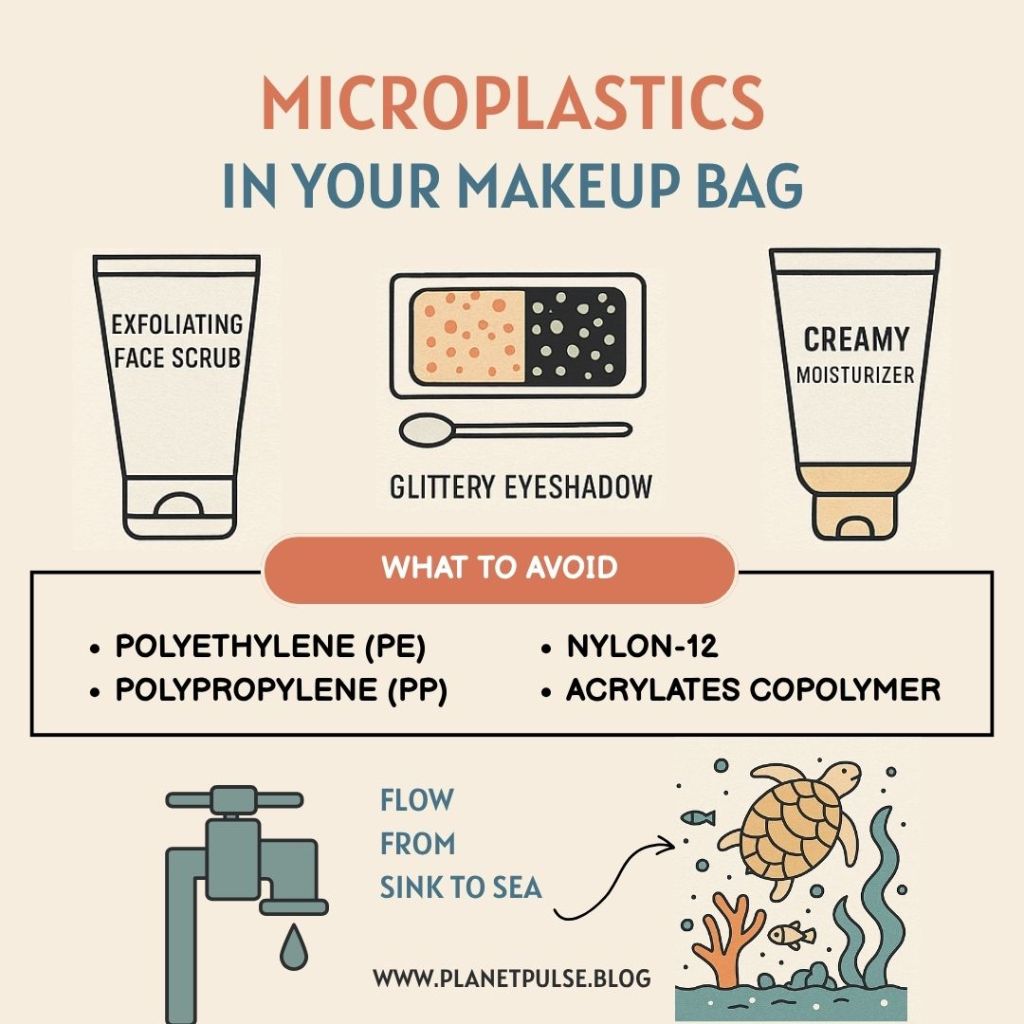
Microplastics are tiny plastic particles and are often smaller than 5mm that are intentionally added to many personal care products. They’re used to create texture in exfoliants, add shimmer to makeup, and stabilize formulations in creams and lotions. While they may enhance product performance, their environmental impact is anything but beautiful.
Once rinsed down the drain, microplastics bypass most wastewater treatment systems and flow directly into rivers, lakes, and oceans. Marine organisms often mistake them for food, leading to ingestion and bioaccumulation up the food chain, including in seafood consumed by humans.
A 2023 report by the European Chemicals Agency estimated that over 42,000 tonnes of microplastics are released into the environment annually from cosmetics and personal care products alone.
Some countries have taken action. The UK, Canada, and several EU nations have banned microbeads in rinse-off products. However, many loopholes remain, especially for leave-on products like lotions and makeup, or for glitter, which is often made from PET plastic and aluminium.
What to avoid:
Polyethylene (PE)
Polypropylene (PP)
Nylon-12
Acrylates copolymer
Sustainable swaps:
Jojoba beads or ground walnut shells for exfoliation
Mica-free shimmer made from mineral pigments
Biodegradable glitter made from eucalyptus cellulose
Toxic Chemicals and Water Contamination
Beyond microplastics, many beauty products contain synthetic chemicals that persist in the environment long after they’re washed off. These include preservatives, UV filters, and synthetic fragrances, all of which can leach into water systems and disrupt ecosystems.
Common culprits:
- Parabens: Used to prevent microbial growth, but linked to hormone disruption in wildlife and humans.
- Phthalates: Found in synthetic fragrances, associated with reproductive toxicity.
- Oxybenzone and Octinoxate: UV filters in sunscreens that contribute to coral bleaching and marine toxicity.
These substances are often classified as “emerging contaminants”, pollutants that are not yet fully regulated but are increasingly detected in water bodies worldwide. Because they’re designed to be stable and long-lasting, they resist breakdown in wastewater treatment plants.
What you can do:
- Choose “reef-safe” sunscreens with non-nano zinc oxide or titanium dioxide.
- Look for fragrance-free or naturally scented products.
- Support brands that fully disclose their ingredient lists and avoid persistent pollutants.
Packaging Waste and Recycling Myths
The beauty industry is one of the largest contributors to packaging waste, producing an estimated 120 billion units of packaging every year. While many brands claim their packaging is “recyclable,” the reality is far more complicated.
Why most beauty packaging isn’t truly recyclable:
- Mixed materials: Pumps, droppers, and mirrored compacts often combine plastic, metal, and rubber, making them unrecyclable.
- Small formats: Lipstick tubes and sample sachets are too small to be sorted by recycling machines.
- Product residue: Leftover creams or oils can contaminate recycling streams.
Even glass, which is technically recyclable, becomes problematic when paired with plastic lids or decorative coatings. And while some brands offer take-back programs, participation rates remain low due to inconvenience or lack of awareness.
Better packaging choices:
- Refillable containers e.g., lipstick cartridges, shampoo bottles and more.
- Compostable materials such as bamboo, sugarcane bioplastics etc.
- Minimalist packaging with clear recycling instructions.
The Carbon Footprint of Beauty
While packaging and ingredients get the most attention, the overall carbon footprint of beauty products is another major concern. From sourcing raw materials to manufacturing, distribution, and disposal, each step emits greenhouse gases that contribute to climate change.
Key emission sources:
- Ingredient production: Synthetic ingredients often require energy-intensive chemical processes.
- Transportation: Global supply chains mean ingredients and finished products are shipped across continents.
- Luxury packaging: Heavy glass jars and elaborate boxes increase shipping weight and emissions.
- Overconsumption: Frequent repurchasing of small-sized products leads to more waste and emissions.
How to reduce your beauty footprint:
- Choose locally made or regionally sourced products.
- Opt for multi-use items such as tinted balms, solid cleansers etc.
- Support brands that use carbon-neutral shipping or offset programs.
- Buy less and focus on quality, longevity, and refillability.
Environmental Justice and Industry Accountability
It’s important to recognise that the environmental impact of beauty isn’t just about individual choices, it’s also about systemic issues. Many of the communities most affected by pollution from cosmetic manufacturing or ingredient extraction are in the Global South, where environmental regulations may be weaker and labour protections limited.
- Mica mining in India has been linked to child labour and unsafe working conditions.
- Palm oil plantations in Southeast Asia contribute to deforestation and displacement of Indigenous communities.
- Chemical runoff from poorly regulated factories can contaminate local water supplies.
As consumers, we can push for transparency and accountability by supporting brands that:
- Disclose their supply chains.
- Commit to fair trade and ethical sourcing.
- Invest in circular systems and closed-loop packaging.
Conclusion
The beauty industry is evolving, but the environmental challenges are still vast. Microplastics, toxic ingredients, and packaging waste aren’t just cosmetic concerns; they’re ecological ones. As consumers, we have the power to demand better: cleaner formulas, transparent sourcing, and packaging that doesn’t outlive the product.
By making informed choices, we can reduce our impact and help shape a more sustainable future for beauty, one that’s as kind to the planet as it is to our skin.

 Planet Pulse
Leave a comment