
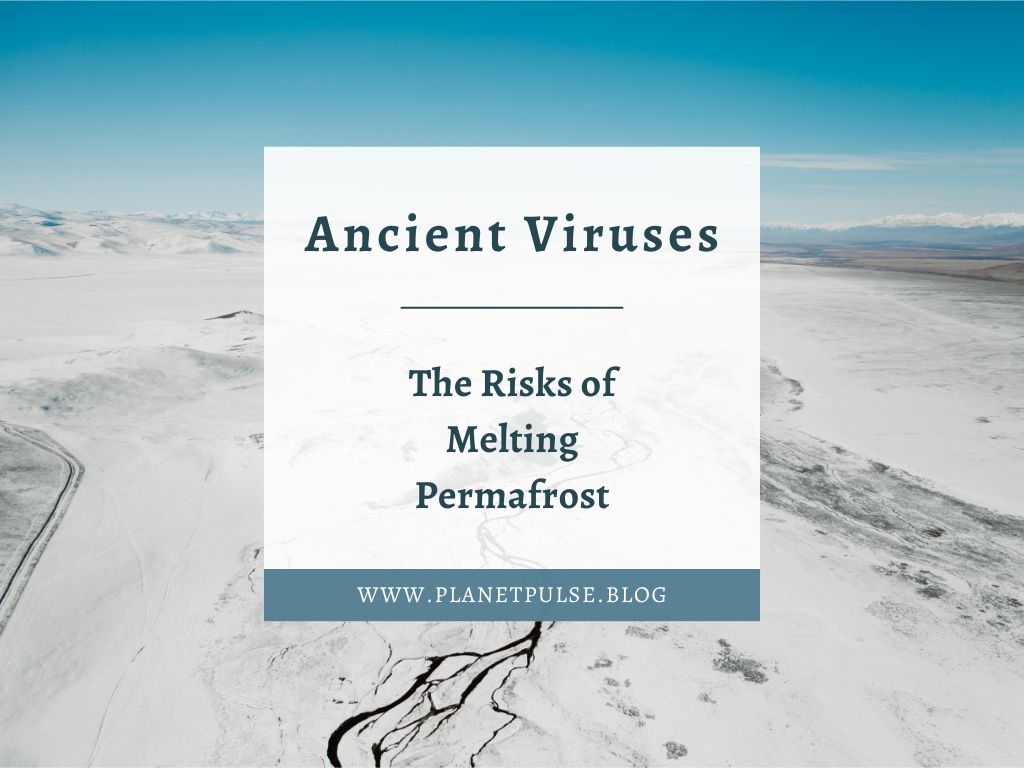
In 2014, scientists revived a 30,000-year-old virus from Siberian permafrost. It didn’t infect humans, only amoebas. But the discovery sent a chill through the scientific community. If one virus could survive tens of millennia, what else might be waiting?
Permafrost isn’t just frozen soil. It’s a natural deep-freezer that has preserved the remains of mammoths, ancient plants, and microscopic life forms for tens of thousands of years. Now, as the Arctic warms nearly four times faster than the rest of the planet, this icy vault is cracking open.
And with it comes an unsettling possibility: ancient pathogens re-emerging into a world unprepared for them. This article explores how permafrost acts as nature’s freezer, what we’ve already uncovered, and why thawing ice could pose risks that extend far beyond the Arctic.
In this Article
Permafrost as Nature’s Freezer
Permafrost is more than just frozen dirt, it’s a time capsule of Earth’s past. Locked inside are the remains of creatures, plants, and microbes preserved in a deep freeze that can last for tens of thousands of years.
What’s Been Found So Far
- Animal Remains: Woolly mammoths, cave lions, and even a perfectly preserved foal with intact blood.
- Plants: Moss and seeds that can still germinate after being frozen for millennia.
- Microbes: Bacteria and viruses, some dating back to the Ice Age, dormant but not destroyed.
The reason these life forms endure is simple:
- No sunlight → prevents decay.
- No oxygen → halts decomposition.
- Extreme cold → keeps cells and genetic material intact.
In effect, permafrost works like the world’s most ancient freezer, one that has held onto life forms from eras when humans didn’t yet exist. But as global warming accelerates and this freezer door creaks open, scientists are no longer just digging up history, they’re confronting the possibility of revived biology.
Documented Cases of Ancient Pathogens Emerging
The idea of ancient microbes awakening sounds like science fiction. However, we’ve already seen glimpses of it happening in real life.
1. 2016 Anthrax Outbreak in Siberia
- A summer heatwave thawed reindeer carcasses buried in permafrost.
- Dormant anthrax spores were released into the soil and water.
- Result: Over 2,000 reindeer died, dozens of people were hospitalised, and a 12-year-old boy lost his life.
- Lesson: Even well-known pathogens can make a deadly comeback after decades or centuries underground.
2. Revived Giant Viruses
- In 2014 and 2015, French scientists revived Pithovirus sibericum and Mollivirus sibericum, both about 30,000 years old.
- These giant viruses only infect amoebas, but their survival shows viruses can remain infectious for millennia.
3. Other Finds
- Ancient bacteria discovered with natural resistance to antibiotics, predating modern medicine.
- Fragments of influenza DNA recovered from frozen graves of 1918 flu victims in Alaska.
Each case highlight the same point: thawing permafrost doesn’t just release carbon and methane. It can also release dormant pathogens that humanity thought it had left behind.
The Risks: Could Ancient Viruses Infect Us?
Not every microbe thawing out of permafrost is a threat. Many are harmless, or they infect only single-celled organisms. But the concern is that some could be pathogenic to humans, animals, or plants and we have no natural immunity against them.
Why the Risks Are Growing
- Rising Arctic Temperatures: The Arctic is warming nearly four times faster than the global average, accelerating permafrost thaw.
- Industrial Activity: Mining, oil exploration, and new shipping routes disturb once-sealed frozen ground.
- Wildlife Contact: Thawing landscapes bring humans and animals closer to habitats of reawakened microbes.
Potential Threats
- Zoonotic Diseases: Viruses could jump from thawed wildlife remains to humans, as anthrax did from reindeer.
- Immunity Gap: Unlike anthrax, which we can treat, other ancient microbes may be entirely new to our immune systems.
- Unknown Unknowns: Scientists estimate permafrost may hold trillions of dormant microbes, many never before identified.
Balancing Perspective
It’s important to note that the probability of a devastating ancient virus outbreak is still relatively low compared to other climate risks. But as thaw accelerates, the possibility grows and so does the urgency of monitoring and preparation.
Modern Vulnerabilities
If ancient pathogens were to re-emerge, the world of today is far more vulnerable than the Ice Age ever was. This could be the result of:
1. Globalisation
- Air travel and shipping mean a local outbreak in Siberia could spread internationally within days.
- Remote Arctic zones are no longer isolated as they’re linked to global trade and tourism.
2. Strained Public Health Systems
- After COVID-19, many healthcare systems remain underfunded and overstretched.
- Pandemic fatigue has reduced political will and public patience for aggressive containment measures.
3. Limited Arctic Medical Capacity
- Many communities in the Arctic rely on small clinics with minimal staff and equipment.
- Evacuations are costly and logistically difficult, especially in winter.
- A serious outbreak could overwhelm local infrastructure within days.
4. Rising Human Activity in the North
- Oil, gas, and mineral exploration are bringing more workers to thawing permafrost regions.
- New shipping lanes are opening as ice retreats, increasing traffic in once-isolated areas.
In other words, the combination of ancient microbes and modern connectivity could turn even a rare release into a global public health event.
Preparing for the Unseen
The risks of ancient microbes aren’t science fiction. However, they also aren’t inevitable disasters. With foresight and planning, humanity can reduce the dangers that come with thawing permafrost.
1. Monitoring & Research
- Expand permafrost sampling projects to identify and sequence microbes before they reawaken.
- Build global databases of ancient DNA to track potential threats.
2. Early Warning Systems
- Develop disease surveillance networks across the Arctic.
- Train local communities and health workers to recognize unusual outbreaks quickly.
3. Biosecurity & Lab Safety
- Ensure strict safety protocols in labs handling ancient samples.
- International cooperation to prevent unsafe experiments that could accidentally release microbes.
4. Community Preparedness
- Indigenous and Arctic residents are the first line of contact and so their knowledge and readiness are essential.
- Investment in health infrastructure: better clinics, airlift capacity, and rapid response systems.
Ultimately, preparing for the unseen is about recognising that climate change has invisible consequences as well as visible ones. Addressing them requires science, cooperation, and respect for the communities most at risk.
Frequently Asked Questions (FAQs)
Have any ancient viruses from permafrost infected humans yet?
No confirmed cases so far. However, bacteria like anthrax have already caused deadly outbreaks after thawing.
How long can viruses survive frozen?
Some can remain infectious for tens of thousands of years under stable, frozen conditions.
Is this just a problem for the Arctic?
While the microbes are locked in Arctic permafrost, globalisation means that any outbreak could spread worldwide.
Are scientists intentionally reviving viruses?
Only under strict lab conditions, and mainly for research to understand risks. These studies follow rigorous safety protocols.
Conclusion
Permafrost isn’t just frozen soil. It’s an ancient archive of life, preserved in ice for tens of thousands of years. As climate change accelerates thaw, that archive is starting to open, revealing not just fossils but potentially forgotten diseases.
The risk of a global pandemic triggered by permafrost remains uncertain, but the consequences of ignoring it could be severe. Preparing now, with stronger surveillance, better Arctic healthcare, and international cooperation, is far wiser than reacting later.
In the end, thawing permafrost is a reminder that climate change doesn’t just alter our future. It can also resurrect our past.
Curious to learn more about what’s really happening beneath the ice? Check out the rest of our deep-dive articles on permafrost. (Links to be Added).
- Melting Permafrost: The Climate Threat Nobody’s Talking About
- Methane Bombs Beneath the Ice: How Permafrost Fuels Global Warming
- Sinking Cities: The Permafrost Crisis Explained



 Planet Pulse
Leave a comment