
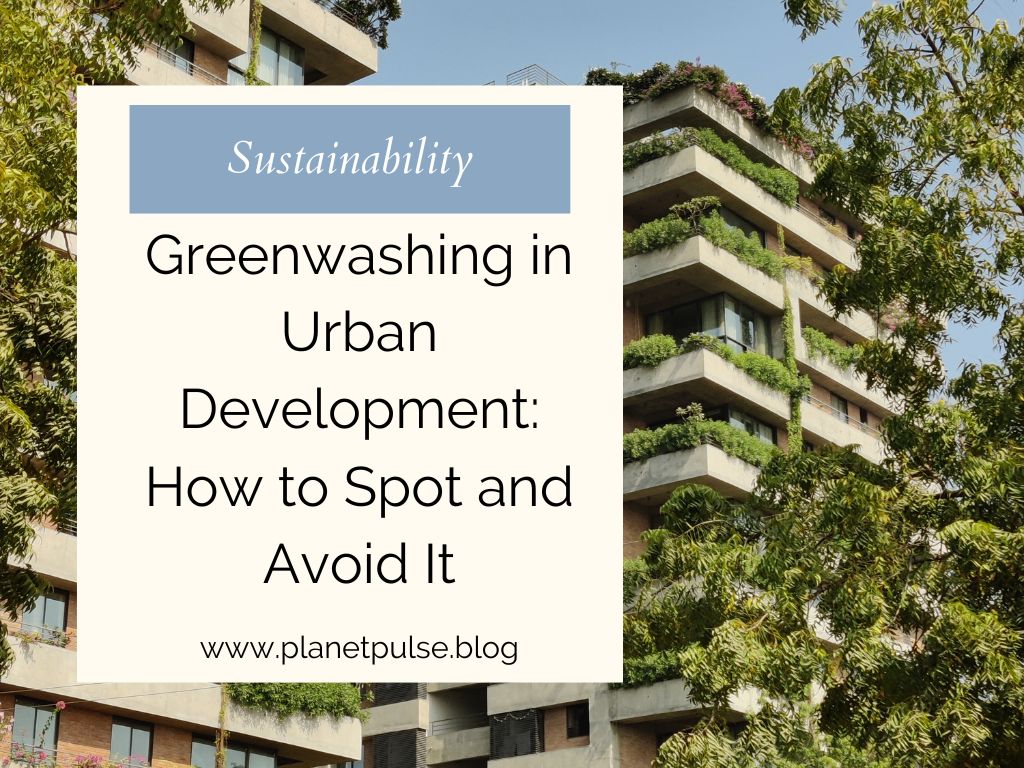
As cities continues to face increasing environmental challenges, sustainability has become a buzzword in urban development. But not all “green” claims are genuine. Greenwashing is the practice of exaggerating or faking environmental benefits. It is increasingly used by developers and municipalities to gain public approval or funding.
This article explores how to recognise greenwashing in urban projects. It highlights how transparency, credible certifications, and informed scrutiny can help ensure real sustainability.
In this Article
What Is Greenwashing in Urban Development?
Greenwashing in urban development occurs when buildings, neighbourhoods, or infrastructure projects are presented as environmentally friendly. However, there are often no substantial or verifiable efforts to support those claims. Originally coined in the 1986, the term shows how marketing can mislead the public. It creates a belief that a project is more sustainable than it actually is.
In urban contexts, greenwashing can take many forms, such as:
- A high-rise claiming to be “eco-friendly” because it has a few solar panels.
- A new housing development advertised as “green living” despite poor public transport access.
- A city boasting about tree planting while expanding car-centric infrastructure.
The consequences are significant. Misleading green claims can divert funding and public support from truly sustainable projects. They delay urgent climate action. They also erode public trust in environmental initiatives. Ultimately, greenwashing masks the real environmental impacts of urban growth.
Common Greenwashing Tactics
Greenwashing in urban development often hides behind persuasive language and selective facts. Here are some of the most common tactics:
- Vague Buzzwords: Terms like eco-friendly, green, or sustainable are used without explanation or evidence. These words sound positive but mean little without context or measurable standards.
- Token Green Features: Developers may highlight isolated features, like a rooftop garden or bike racks etc. While ignoring the broader environmental footprint, such as high energy use or car-dependent design.
- Misused or Outdated Certifications: Some projects use expired certifications or ones that don’t reflect actual performance, relying on past achievements instead of current standards.
- Overstated Benefits: Claims such as net-zero or carbon neutral are often made without disclosing the full lifecycle impact or the reliance on carbon offsets instead of real reductions.
- Green Aesthetics Without Substance: Using natural-looking materials, green facades, or eco-themed branding to create the appearance of sustainability, without backing it up with real environmental performance.
These tactics are designed to appeal to environmentally conscious buyers, investors, and city officials. They aim to avoid the cost or effort of real sustainable design. Recognising these red flags is the first step to cutting through the green marketing haze.
Understanding Sustainability Certifications
Sustainability certifications play a critical role in distinguishing genuinely green developments from those simply claiming to be. However, not all certifications are created equal, knowing which ones to trust and what they measure is essential.
Trusted Certifications in Urban Development
- LEED (Leadership in Energy and Environmental Design): One of the most widely recognised certifications globally. LEED assesses factors like energy efficiency, water usage, materials, and indoor environmental quality. Projects earn points to reach Certified, Silver, Gold, or Platinum levels.
- BREEAM (Building Research Establishment Environmental Assessment Method): Popular in Europe, BREEAM evaluates a project’s performance across several categories. These include energy, transport, water, waste, and land use.
- WELL Building Standard: Focuses more on health and wellness within buildings—air quality, lighting, comfort, and fitness. Often used alongside environmental certifications.
What Makes a Certification Credible?
- Independent, third-party verification ensures assessments are unbiased and data-driven.
- Lifecycle approach, which considers a building’s impact from design through to operation and demolition.
- Regular audits or re-certification to confirm ongoing compliance, not just initial design intentions.
What to Watch For:
- Self-issued labels or vague claims like “green-compliant” without oversight.
- One-time awards or outdated plaques that no longer reflect current performance.
- Certifications that only assess design, not actual operation or energy performance over time.
Certifications are useful tools. But they must be current, comprehensive, and backed by measurable performance to truly mean something.
Frequently Asked Questions (FAQs)
What’s the difference between green building and sustainable development?
Green building focuses mainly on eco-friendly materials and energy-efficient design, while sustainable development takes a broader view, including social, economic, and environmental factors that support long-term community well-being.
How can I verify a project’s sustainability claims?
Check for recognised third-party certifications like LEED or BREEAM, review environmental impact reports if available, and ask for post-construction performance data to ensure ongoing compliance.
Are all eco-labels trustworthy?
No. Some labels are self-issued or lack rigorous standards. It’s best to rely on certifications backed by independent, reputable organisations.
Can older buildings be made green?
Yes. Through retrofitting such as upgrading insulation, HVAC systems, lighting, and installing renewable energy, older buildings can significantly reduce their environmental footprint.
Why do developers greenwash in the first place?
To attract investors, buyers, or public support by appearing environmentally responsible without investing in costly or challenging sustainable practices.
Conclusion
As urban areas continue to grow, ensuring true sustainability is more important than ever. Greenwashing can cloud the picture with misleading claims. However, transparency, credible certifications, and informed scrutiny empower citizens and stakeholders. These tools help distinguish real efforts from empty promises.
By asking tough questions, we can all contribute to building truly sustainable cities. Demanding accountability also aids in this effort. Supporting genuine green projects will make cities resilient and liveable for generations to come.





Leave a Reply