
As consumers grow more environmentally conscious, bioplastics have entered the spotlight as a promising alternative to traditional plastics. Marketed as “green,” “biodegradable,” and “eco-friendly,” these materials are often viewed as guilt-free substitutes. But how much of this reputation is fact, and how much is fiction?
In this article, we’ll debunk the most common misconceptions about bioplastics, explore their real environmental impact, and help you make more informed choices.
What Are Bioplastics?
Bioplastics are often described as plastics made from plants or natural materials, but the definition is more nuanced. Bioplastics typically fall into two categories:
- Bio-based plastics
- Biodegradable plastics
Some bioplastics belong to both categories, but many do not.
Bio-based plastics are derived from renewable biological sources like corn starch, sugarcane, or cassava. However, being plant-based doesn’t automatically make a plastic biodegradable. In contrast, biodegradable plastics are designed to break down over time, but this process often requires specific industrial conditions that are not commonly available.
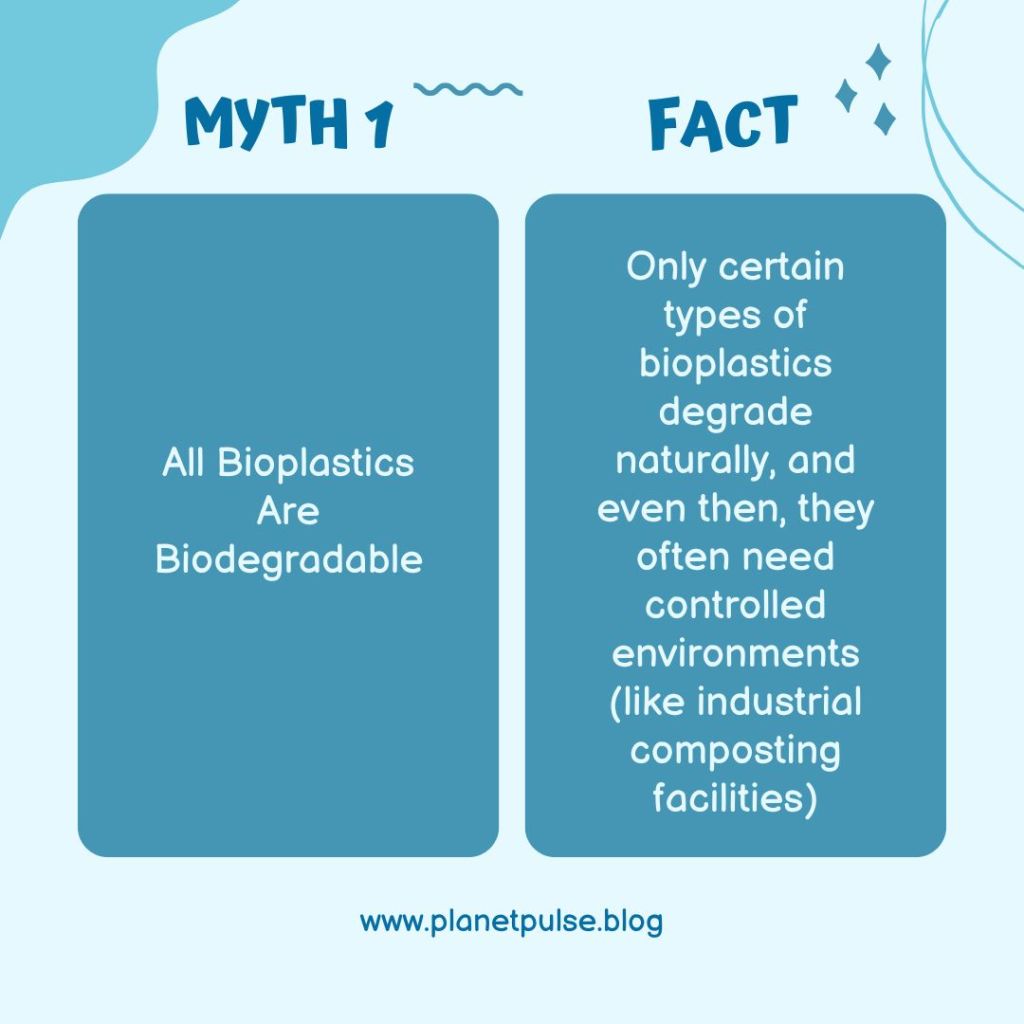
One of the most persistent myths is that all bioplastics will naturally break down in the environment. In reality, only certain bioplastics are biodegradable, and even then, the degradation process depends on specific factors like temperature, humidity, and microbial presence.
For example, polylactic acid (PLA), a common bioplastic used in compostable cups and food packaging, only breaks down in industrial composting facilities that maintain temperatures above 55°C. If disposed of in a home compost bin, landfill, or marine environment, PLA behaves similarly to traditional plastics—it persists for years without breaking down.

The term “biodegradable” suggests something that disappears without a trace, but this isn’t always the case. Biodegradable plastics can still contribute to pollution and even release greenhouse gases under certain conditions.
In landfills, where oxygen is limited, biodegradable plastics may decompose anaerobically and release methane, a potent greenhouse gas. If littered in the environment or flushed into waterways, these materials may not degrade at all, leading to microplastic pollution or physical harm to wildlife.
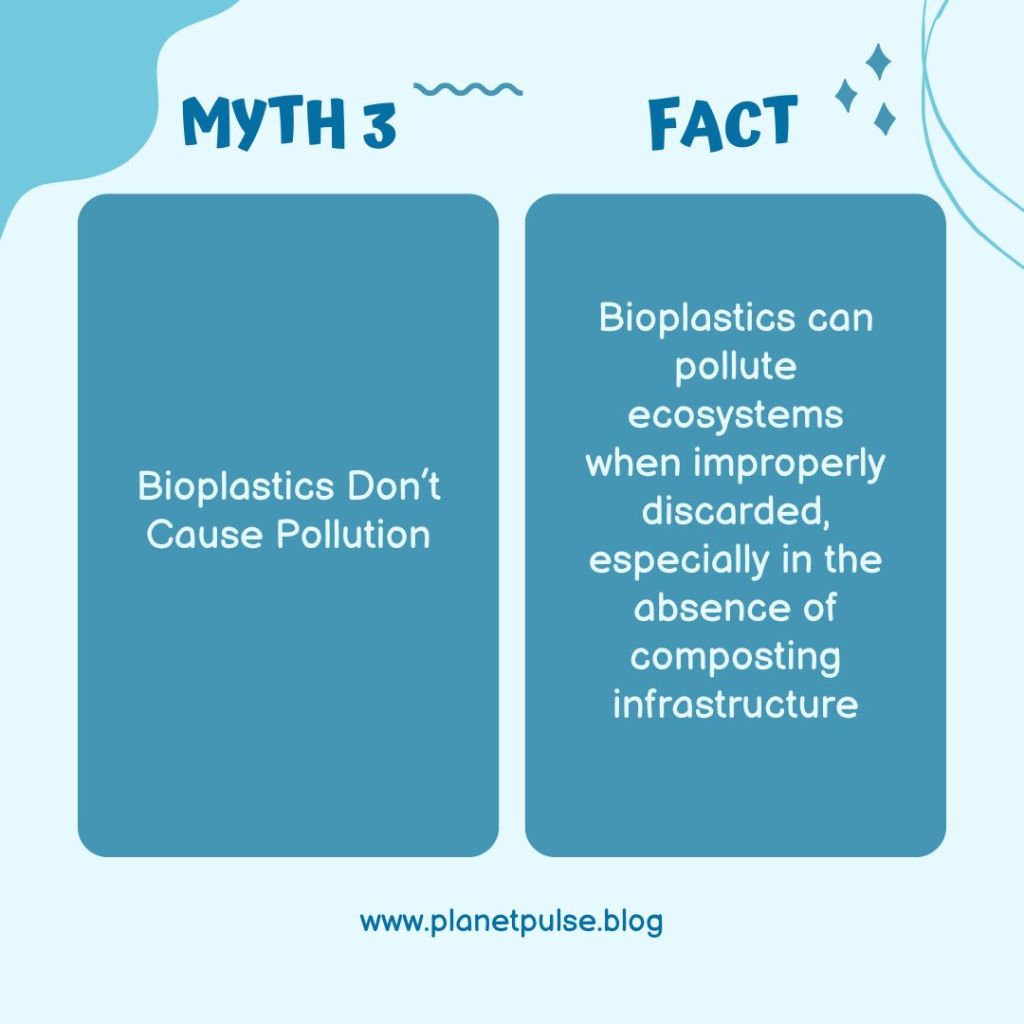
It’s easy to assume that switching to bioplastics will eliminate pollution, but that’s not necessarily true. Many bioplastics, especially when improperly disposed of, behave just like their petroleum-based counterparts.
In marine environments, most bioplastics do not degrade. They can entangle wildlife, be mistaken for food by marine animals, and fragment into microplastics that accumulate in the food chain. Without the right waste management infrastructure, bioplastics can pollute ecosystems in much the same way as conventional plastics.

Another common misconception is that bioplastics can be placed in the same recycling stream as conventional plastics. However, many bioplastics are chemically incompatible with standard recycling processes. Mixing them with traditional plastics can contaminate the entire recycling batch, leading to more waste and higher processing costs.
Most municipal recycling facilities are not equipped to handle bioplastics separately. As a result, bioplastic packaging often ends up in landfills or incinerators, undermining its environmental benefits. Clear labelling and dedicated disposal streams are needed, but they remain rare in most regions.
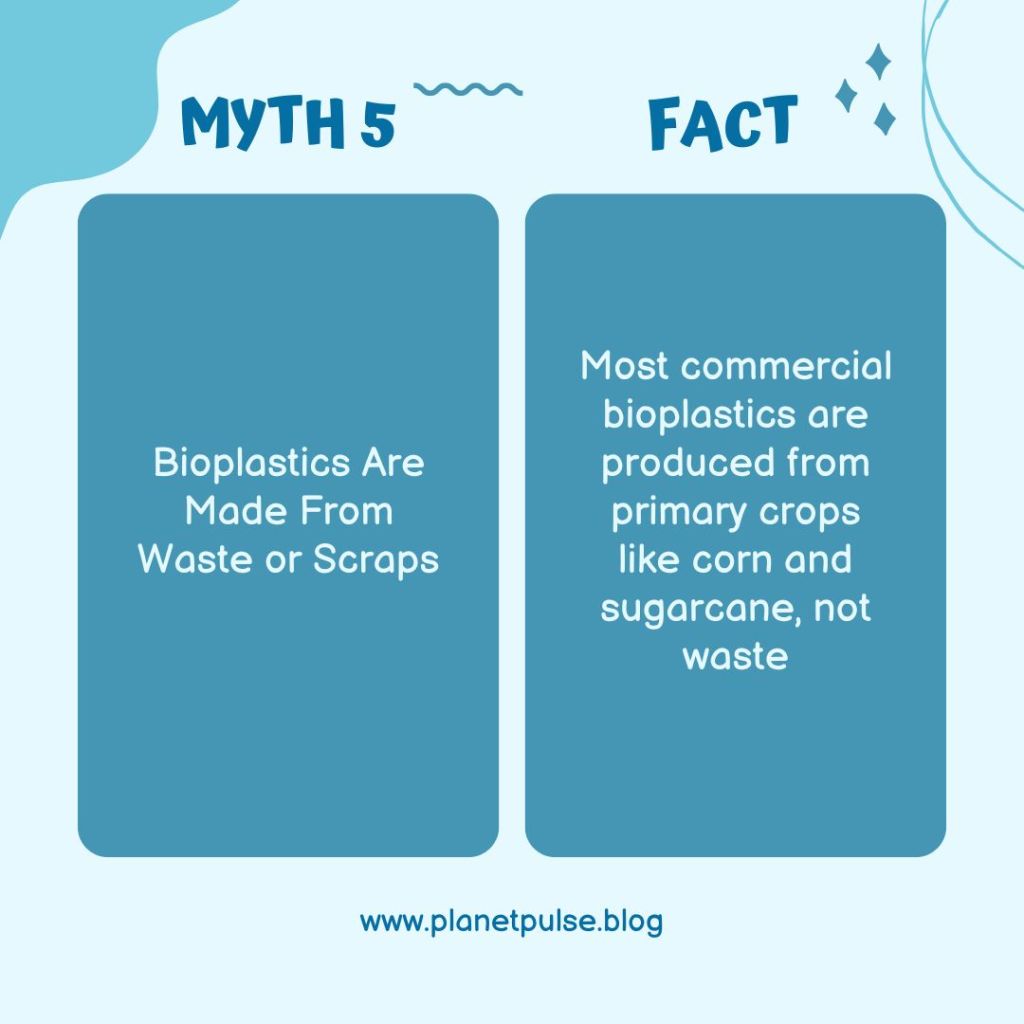
While some bioplastics are made from agricultural byproducts or waste materials, the majority are produced from primary crops like corn, sugarcane, and cassava. This raises important questions about resource use, land competition, and sustainability.
Using food crops for plastic production can contribute to deforestation, increase water consumption, and create competition with global food supplies. Although more sustainable feedstocks, like algae or agricultural waste are being researched, they have not yet reached commercial scale.

Bioplastics are sometimes promoted as the ultimate solution to plastic pollution, but this view oversimplifies the issue. Plastics, regardless of their source, contribute to environmental harm if they follow the same linear path: take, make, and dispose.
Switching from petroleum-based plastic to bioplastic does little if consumption habits remain unchanged. Relying on “eco-friendly” disposables encourages a throwaway culture. Real solutions must address the entire lifecycle of products, from design and production to reuse, recycling, or safe disposal.
What’s the Path Forward?
To make bioplastics a truly sustainable option, several things need to change. First, there must be clearer labelling that distinguishes between compostable, biodegradable, recyclable, and bio-based materials.
Second, governments and companies need to invest in infrastructure, including industrial composting and dedicated bioplastic collection systems.
Third, consumer education is essential so people know how to properly dispose of these materials.
Just as importantly, the focus should shift from replacing one material with another to rethinking our relationship with waste altogether. Reusable packaging, closed-loop systems, and reduced consumption will have a far greater impact than simply switching to new kinds of single-use plastics.
Conclusion
Bioplastics hold promise, but they are not a cure-all. While they can reduce reliance on fossil fuels and potentially improve the end-of-life footprint of plastic products, their effectiveness depends on how they’re produced, used, and disposed of. Misunderstanding their capabilities can lead to more environmental harm, not less.
To make meaningful progress, bioplastics must be integrated into a broader sustainability strategy, one that prioritises waste reduction, product reuse, and system-wide innovation over quick-fix substitutes.




 Planet Pulse
Leave a comment