
Many brands claim to be ‘eco-friendly’ and ‘sustainable,’ but how many of these claims are actually true? In this article, we uncover the dark side of greenwashing: how companies mislead consumers with deceptive marketing tactics while continuing harmful environmental practices. Learn how to spot real sustainability efforts, avoid falling for false claims, and make informed choices that truly benefit the planet.
In this Article
What is Greenwashing?
Greenwashing occurs when companies mislead consumers into believing their products or operations are more environmentally friendly than they actually are. This can involve:
- False or exaggerated claims – Stating a product is “100% sustainable” without evidence.
- Vague language – Using terms like “green,” “eco,” or “natural” without specifics.
- Irrelevant claims – Highlighting one small green feature while ignoring bigger environmental harms.
- Misleading imagery – Using green packaging, trees, and animals to suggest eco-friendliness.
- Hiding negative impacts – Promoting one sustainable effort while engaging in harmful practices elsewhere.
Real-World Examples of Greenwashing
1. H&M’s Conscious Collection
H&M launched its “Conscious Collection” in 2019, claiming it was made with sustainable materials. However, reports revealed that many items contained only a small percentage of recycled or organic fabrics, and the brand continued its fast fashion model, one of the biggest contributors to textile waste and pollution.
Additionally, Norwegian Customer Authority states that H&M used misleading sustainability scores on their products, giving the illusion that some items were more environmentally friendly than they actually were. Despite promoting its Conscious Collection, H&M still produces millions of garments per year, much of which ends up in landfills.
2. Volkswagen’s Emissions Scandal
Volkswagen marketed its diesel cars as “clean” and environmentally friendly. However, investigations found the company had installed software to manipulate emissions tests, allowing vehicles to pass regulations while actually emitting up to 40 times more nitrogen oxides than legal limits.
The scandal, known as “Dieselgate”, led to billions of dollars in fines and recalls of affected vehicles. It exposed how even large, well-respected corporations could engage in greenwashing to deceive regulators and consumers.
3. Nestlé’s Plastic Waste Claims
Nestlé, one of the world’s biggest food and beverage companies, has frequently promoted its commitment to sustainability and reducing plastic waste. However, environmental groups have repeatedly identified Nestlé as one of the world’s top plastic polluters.
While the company has introduced initiatives such as recyclable packaging, it continues to produce billions of single-use plastic products each year, many of which end up in landfills and oceans. Despite its green branding, Nestlé has faced criticism for failing to significantly reduce its plastic footprint.
4. BP’s Rebranding as ‘Beyond Petroleum’
British Petroleum (BP), one of the largest oil companies in the world, launched a massive marketing campaign rebranding itself as “Beyond Petroleum”, suggesting a transition toward renewable energy. However, despite this new eco-friendly image, over 96% of BP’s annual capital expenditures still go to oil and gas.
This kind of greenwashing misleads consumers into thinking BP is actively reducing its reliance on fossil fuels when, in reality, the company remains one of the biggest contributors to carbon emissions globally.
5. Starbucks’ “Green” Strawless Lids
Starbucks announced a switch to strawless lids as part of its sustainability efforts, claiming to reduce plastic waste. However, the new lids actually contained more plastic than the original straw-and-lid combination. This meant that while the initiative appeared eco-friendly, it did not reduce plastic waste and may have even worsened the problem.
The company faced backlash for focusing on a superficial change instead of making a more meaningful shift toward biodegradable or reusable packaging.
How to Spot Greenwashing
To avoid falling for greenwashing, look for these red flags:
1. Lack of Transparency
A truly sustainable company should provide clear details about its environmental efforts. If a brand makes vague claims like “eco-friendly” without specifics, be skeptical.
2. No Certifications
Legitimate sustainable brands often have recognised certifications, such as:
- Fair Trade Certified (ethical labour practices)
- Global Organic Textile Standard (GOTS) (organic fabrics)
- Energy Star (energy efficiency)
- Forest Stewardship Council (FSC) (responsible forestry)
3. Focusing on One Green Aspect
Some brands highlight a single sustainable feature while ignoring larger environmental harms. For example, a company might promote biodegradable packaging while still relying on unsustainable manufacturing.
4. Overuse of Green Imagery and Buzzwords
Beware of companies using excessive green colours, leaves, or nature scenes to create an eco-friendly illusion. Similarly, terms like “natural,” “clean,” and “non-toxic” can be misleading if not backed by evidence.
Supporting Truly Sustainable Brands
Want to support brands that are genuinely making a difference? Here’s how:
- Research the company’s sustainability policies – Check if they publish annual sustainability reports.
- Look for third-party certifications – Ensure claims are backed by credible organizations.
- Check their supply chain – Do they use ethical labour practices? Are they reducing waste?
- Support slow fashion and low-waste brands – Companies prioritising durability over mass production are often more sustainable.
Brands Leading the Way in Sustainability
| Brand | Sustainable Initiatives |
|---|---|
| Patagonia | Repairs old clothes, uses recycled materials, promotes fair wages |
| Allbirds | Uses natural, renewable materials like wool and sugarcane |
| Eileen Fisher | Runs a take-back program (only in US) and prioritises organic fabrics |
| Reformation | Uses sustainable production methods and minimal waste |
Frequently Asked Questions (FAQs)
Why do companies greenwash?
Companies greenwash to appeal to eco-conscious consumers and improve their brand image while continuing unsustainable practices.
How can I tell if a product is truly eco-friendly?
Look for third-party certifications, check the brand’s sustainability reports, and research whether the company engages in ethical sourcing and production.
Can big corporations ever be truly sustainable?
While some large corporations make progress, true sustainability often requires fundamental changes in production, supply chains, and waste management—something many companies still struggle to achieve.
Are there any regulations against greenwashing?
Some countries have truth-in-advertising laws, but many greenwashing claims still go unchecked. Consumer awareness is the best defense against misleading marketing.
Conclusion
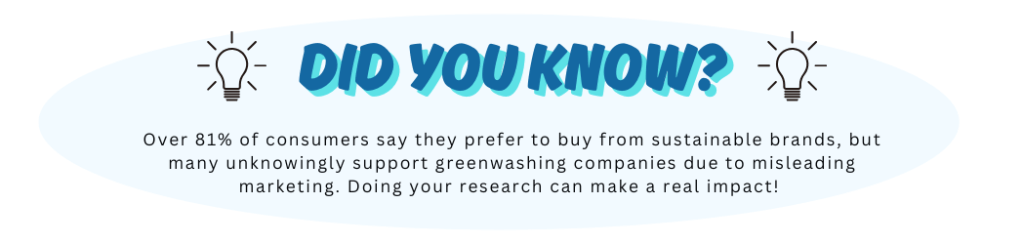
Greenwashing is everywhere, but with the right knowledge, you can spot misleading claims and support truly sustainable brands. As consumers, we have the power to demand genuine environmental responsibility from businesses. By doing our research and making conscious choices, we can drive real change in the industry.


 Planet Pulse
Leave a comment