
In this Article
Deforestation is a pressing issue, but there are numerous strategies and initiatives that can help combat its effects and promote the restoration of forests. By implementing sustainable policies and encouraging responsible consumer behaviour, we can slow and even reverse forest loss. Below are some key solutions to combat deforestation:
Reforestation and Afforestation
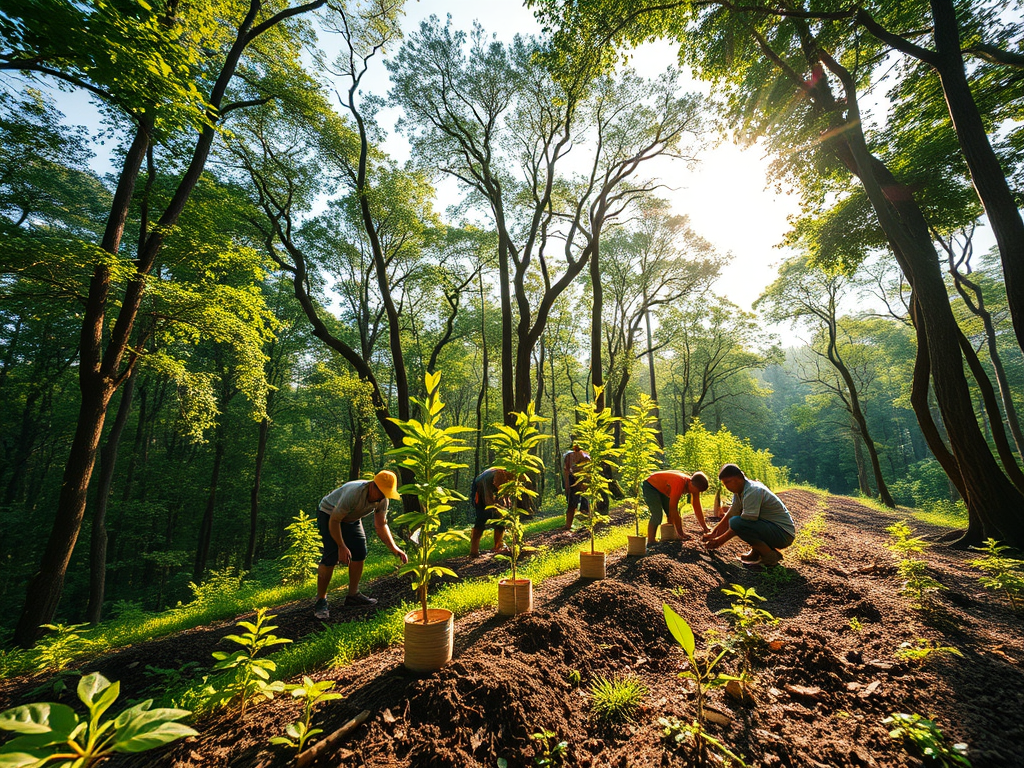
Reforestation refers to planting trees in areas that have been deforested can help restore ecosystems, increase biodiversity, and improve air quality.
Governments and NGOs have launched large-scale tree-planting programs, such as the Great Green Wall in Africa, which aims to combat desertification by planting a belt of trees across the Sahel region.
Afforestation on the other hand refers to creating new forests in areas where there were none before can help expand green cover and act as a carbon sink to reduce global warming. This method has been successfully used in regions facing severe deforestation.
Apart from this Tree-Planting Initiatives also plays an important role in encouraging individuals and corporations to participate in tree-planting programs, which can have a positive environmental impact. Many businesses are now incorporating reforestation into their corporate social responsibility (CSR) efforts.
Sustainable Forestry Practices
Instead of clear-cutting, sustainable forestry involves harvesting trees in a way that allows forests to regenerate naturally. Techniques such as reduced-impact logging (RIL) or selective logging help minimize damage to the surrounding ecosystem.
Apart from selective logging, agroforestry is also a good sustainable practice as it involves integrating trees into agricultural landscapes that can provide both economic and ecological benefits. This practice enhances soil fertility, reduces erosion, and supports biodiversity.
In addition, certification Programs that supports eco-friendly products certified by organisations like the Forest Stewardship Council (FSC) ensures that timber and paper products are sourced from responsibly managed forests.
Reducing Agricultural Expansion
Sustainable Farming: Modern agricultural techniques, such as precision farming, crop rotation, and no-till farming, can improve productivity while minimizing land use.
Alternative Crops: Encouraging the cultivation of crops that require less land and water can reduce deforestation pressures. Additionally, using agroecological practices can help farmers maintain soil health and productivity without excessive land clearance.
Supporting Local and Organic Products: Consumers can make a difference by choosing products that are sustainably sourced and do not contribute to deforestation, such as shade-grown coffee and sustainably produced palm oil.
Combatting Illegal Logging and Strengthening Policies
Governments must implement and enforce stricter laws against illegal logging and unsustainable land clearance to be able to combat deforestation. Creating protected forest reserves and conservation areas can prevent unauthorised deforestation.
Apart from this, establishing national parks, wildlife reserves, and indigenous territories can protect forests from exploitation. Providing incentives for landowners to conserve forests, such as payments for ecosystem services (PES), can also be effective.
In addition, global agreements, such as the REDD+ initiative (Reducing Emissions from Deforestation and Forest Degradation), provide financial incentives to developing countries to preserve their forests. Countries can collaborate to share best practices and develop sustainable forest management strategies.
Consumer Awareness and Responsible Consumption
Educating people about the importance of forests and the impact of deforestation can drive policy changes and encourage responsible consumer behaviour. Schools, social media campaigns, and environmental organizations play a crucial role in raising awareness.
Moreover, consumers can help reduce deforestation by opting for sustainable products, such as recycled paper, bamboo-based alternatives, and FSC-certified wood.
Since cattle ranching is a leading cause of deforestation, reducing beef consumption or choosing sustainably sourced meat can also lower deforestation rates.
Innovative Technologies for Forest Conservation
Advances in satellite technology and artificial intelligence allow scientists and conservationists to track deforestation in real time. This enables governments and organizations to respond quickly to illegal logging and forest degradation.
Some companies are using drones to plant trees rapidly in deforested areas. These automated systems can plant thousands of trees in a short time, accelerating reforestation efforts.
Developing and using alternatives to traditional wood and paper products, such as plant-based plastics and bamboo, can reduce demand for logging.
Conclusion
By addressing the causes of deforestation and implementing effective solutions, we can work toward a future where forests are preserved and restored. Governments, businesses, and individuals all play a crucial role in ensuring the sustainability of our planet’s forests. Taking collective action today can help mitigate the impact of deforestation and safeguard our environment for future generations.





 Planet Pulse
Leave a comment